An outdoor air conditioning condenser unit on a concrete pad beside a house with horizontal siding, with an electrical disconnect box on the wall and shrubs to the right in low evening light.

No phone calls to make

Does closing vents help your AC in Minnesota

Closing vents in unused rooms seems like it should ease the load on your AC, but it can do the opposite depending on your ductwork. This page gets into when it helps, when it strains the system, and what to check in your own home before you try it. Skip the search for a contractor and the back and forth of comparing quotes. A local pro who services AC systems all summer can look at your setup and tell you straight whether closing vents is doing your system any good.

Skip calling around

Closing a few vents in rooms you don't use will not help your AC and can work against it. Your system is built to move a set amount of air. Shut several vents and that air has nowhere to go, so pressure builds inside the ductwork. On a flex duct system, that extra pressure can force air out through small leaks in the ductwork before it ever reaches a register, and it makes the blower work harder to push air through the smaller opening left to it. The coil can also start running colder than it should, and in a humid Minnesota summer that raises the chance of it icing over. Closing one or two vents partway, in a room you truly don't use, usually does little harm. Closing several, or closing them all the way, is where it starts costing you comfort in other rooms and strain on the system.

Single-story house with tan horizontal siding and a dark shingled hip roof, fronted by a patchy green and brown lawn and a concrete walkway leading to the covered entry.

A 59°F dew point is about what Minnesota averages across June, July and August, by NOAA's numbers. That's air with some moisture in it, but not the kind that leaves everything feeling damp by noon. Your AC still has to pull that moisture out along with the heat, and it does that through steady airflow across the coil. Close off vents and restrict that airflow, and the coil has a harder time shedding the moisture it's collecting. You may notice the air coming from the vents feels cooler but less dry than usual, or the system running longer to get the house to the temperature you set.

NASA POWER T2MDEW county cells weighted by homes

Which Vents Are Safe to Close

Vents worth closing

  • A vent in a room with rigid metal ductwork and its own return can be closed without much issue, since the air just redirects to other rooms.
  • Closing a vent partway, not all the way, keeps some airflow moving so the blower doesn't fight a dead end.
  • A spare room you never use in summer, like a guest room with the door kept shut anyway, is a reasonable place to try it.
  • If your system has a variable-speed blower, it can adjust somewhat to the change in airflow rather than just building pressure.
  • Checking your energy bill after a month of a vent closed tells you whether it actually made a difference for your home.

Vents to leave open

  • On flex duct, closing several vents at once can cause the duct to balloon under the extra pressure and eventually leak at the seams.
  • A vent near the thermostat should stay open, since closing it can make the thermostat read the room wrong and run the AC longer than it needs to.
  • Closing vents on one whole level, like an unused upstairs, forces all the air through the other level's ducts and registers.
  • A single-speed blower has no way to adjust to blocked vents, so the extra resistance just strains the motor over the summer.
  • If a room already runs warmer than the rest of the house, closing its vent will only make that worse, not better.
A gray outdoor air conditioner condenser unit on a concrete pad beside a house with horizontal lap siding, with a wall-mounted disconnect box and conduit to its right and shrubs to the left.

Running the way it should

This condenser is doing its job with no shortcuts: a clean coil guard, a solid pad, and a disconnect box wired the right way. Airflow in and out is unrestricted. If your vents and ductwork are set up the way this photo suggests, closing a few doesn't ask much of it.


An outdoor air conditioning condenser unit on a concrete pad beside a house with horizontal lap siding, with a conduit and electrical disconnect box on the wall at right.

Already working against something

Dirt built up on the coil guard means this unit is pulling harder to move the same air. A system in this shape has less room to spare. Close vents on top of that and the extra pressure in the ductwork gives it one more thing to fight through summer.

A smiling woman with long dark hair in a gray sweater sits at a white stone counter with a glass of white wine, with a kitchen, fireplace and sofa visible behind her.
A smiling woman with dark hair in a cream sweater sits at a marble table with a glass of red wine, with a lit lamp, sofa, fireplace and kitchen counter behind her.
A woman in a cream sweater laughs while seated at a marble countertop with a glass of red wine, with a dimly lit living room and sofa behind her.
A woman in a beige turtleneck sweater with her hair up sits laughing and looking to the side at a white marble table with a glass of red wine, in a dimly lit interior with a lamp and seating area behind her.
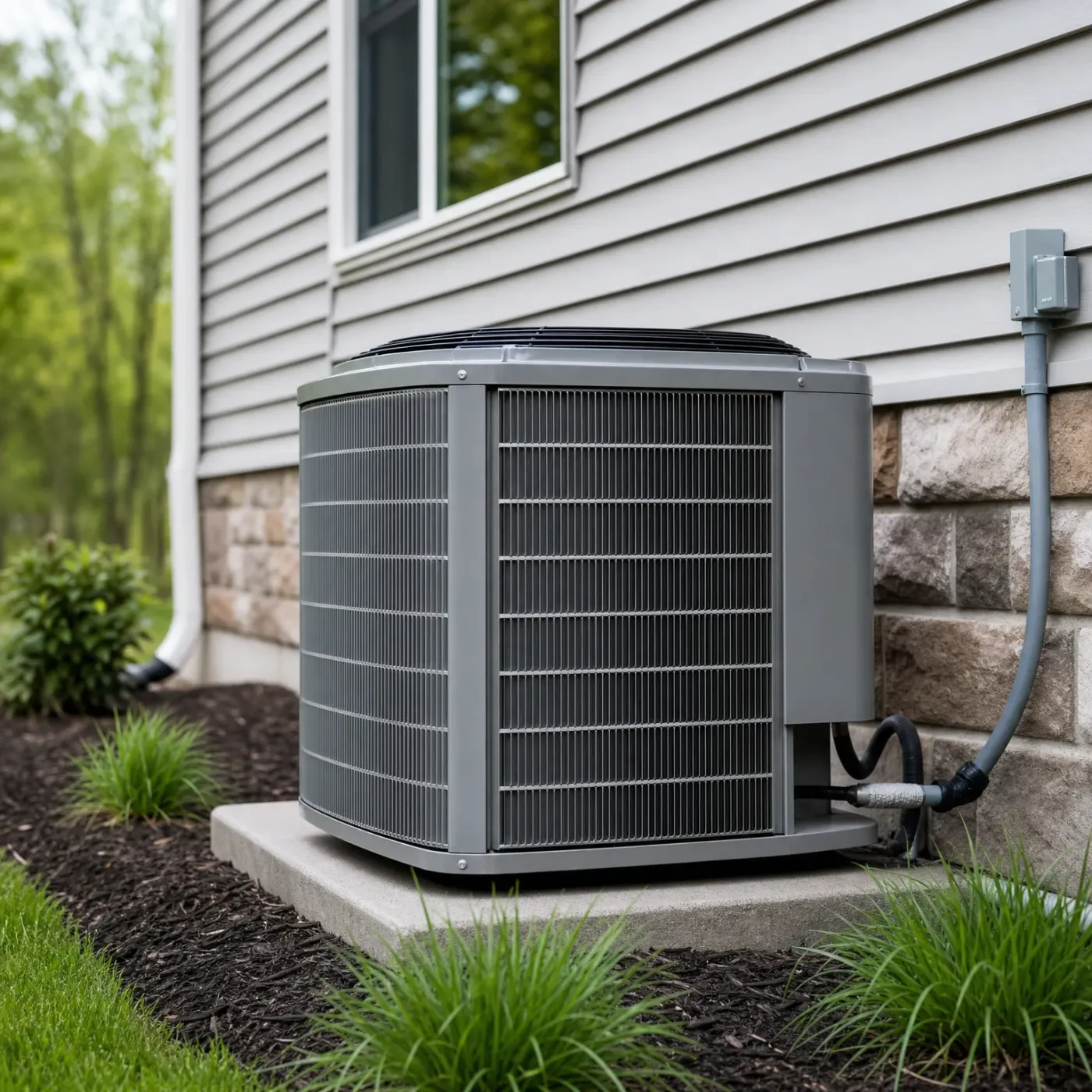
A gray outdoor air conditioner condenser unit on a concrete pad beside a house with horizontal siding and a stone veneer foundation, surrounded by mulch, ornamental grasses, and shrubs, with a conduit and disconnect box on the wall.

One form, no calling around

A licensed local pro takes the request for your air conditioner tune-up.

Answer a few questions instead of calling shop after shop.

Fill out one form

Asking costs nothing, and the choice to hire stays yours.

Why does one room stay warm when the rest of the house is fine

You closed the vent in the spare room to save a little strain on the AC, and now the air coming out of other vents feels weaker than before. Maybe you've noticed the system running longer to hit the same temperature, or a faint hiss near a duct joint in the basement. That hiss is air escaping somewhere it shouldn't. If your ducts are flex rather than rigid metal, the extra pressure from a closed vent can push air out through small gaps and seams instead of into the rooms you're trying to cool. The coil can also start icing up from reduced airflow, and a frozen coil means no cooling at all until it thaws.

A gray outdoor air conditioning condenser unit on a concrete pad beside a house with horizontal siding and a stone veneer base, with a wall-mounted disconnect box and conduit, next to a shrub bed and a concrete patio.

Pressure staying even

This pad and this disconnect box look fine because the system behind them is working the way it was designed to. Air moves out through the vents and back through the returns without a fight. Close a vent or two here and the blower still has enough path to move its air, so the coil stays cold and the compressor isn't straining against pressure it wasn't built for.

An outdoor air conditioner condenser unit on a concrete pad beside a house with light gray vinyl siding, with a gray electrical disconnect box and conduit on the wall, gravel beds and dried plants nearby, and a concrete sidewalk in the foreground.

Pressure fighting back

Nothing about this condenser's age tells you what's happening inside the ductwork, but a unit worked this hard shows it. Close enough vents on a system that wasn't built to take it and the blower pushes against air with nowhere to go. The coil can ice over, the compressor runs hotter, and a unit that looked fine for years starts failing early.

A weathered outdoor air conditioner condenser unit on a concrete pad beside a house with horizontal vinyl siding, with a conduit and disconnect box on the wall to the right.
Before you get your air conditioner maintenance
A gray outdoor air conditioning condenser unit on a concrete pad beside a house with horizontal lap siding, with a conduit and electrical disconnect box on the wall and a green shrub in mulch to the right.
After you get your air conditioner maintenance

Why the blower doesn't just slow down

A central AC runs a fixed-speed or variable-speed blower set to move a certain amount of air across the coil. It does not sense that three vents are shut and decide to push less. Most blowers just keep trying to hit that same airflow number, which means static pressure in the ducts climbs instead. Higher static pressure makes the motor work harder for the same result, and on some systems it also pulls the evaporator coil below the temperature where it can ice over. That ice blocks airflow further, which is the opposite of the easing effect closing the vent was supposed to give you.

What a sealed duct system actually needs

Your return air has to roughly match what the supply side pushes out, and that balance is set when the ductwork is sized and installed, not something you adjust room by room with a damper. A duct system that was sized and sealed correctly has a narrow range where it runs well. Shut enough supply vents and you push the system outside that range even if nothing about the equipment itself has changed. A contractor who services AC systems in Minnesota every summer can check your static pressure with a gauge in a few minutes and tell you whether your ducts have room to spare or whether the vents you have closed are already costing you something.

Power costs 15.83 cents per kilowatt-hour statewide

At 15.83 cents a kilowatt-hour, every extra hour your AC runs from a closed vent shows up on the bill. A blower fighting higher pressure pulls more power to move the same air, so the strain from closed vents costs you something even before it wears on the system.

EIA-861 2025 statewide residential average

A gray outdoor air conditioner condenser unit on a concrete pad beside a house with horizontal lap siding, with a wall-mounted disconnect box and conduit at left and a green shrub and mulch bed at right.
Airflow balanced the way the system was designed, every vent open and doing its job.
An outdoor air conditioner condenser unit on a concrete pad beside a house with horizontal lap siding, with a conduit running to a gray electrical disconnect box on the wall.
Vents closed down the hall, pressure climbing, the blower working harder to push air that has nowhere to go.
  1. Blower pushes a fixed volume of air into the duct system

  2. Closed vents cut the exits that air normally escapes through

  3. Pressure rises inside the ducts behind the closed vents

  4. Air forces its way through gaps and loose duct joints

A smiling bearded man in a navy crewneck sweater sits at a dinner table with a glass of red wine, plates and glasses in the foreground, in a dimly lit room with a lamp and framed picture behind him.
A woman in a dark gray sweater reclines on a light sofa with eyes closed and a slight smile, under a textured gray blanket with an open book resting on her lap, with a lit table lamp and plant in the background.
A closed dark laptop and a ceramic mug of coffee on a wooden dining table, with wooden chairs, a dark kitchen cabinet with cutting boards and a potted plant, and a leafy plant by a window in the background.

So leave the vents open

Closing a vent or two won't lower your bill and it won't make your AC's job easier. Open vents let your system move air the way it was built to, and that's what keeps pressure even and the blower from working past what it should. If a room runs warm, the fix is in the duct run feeding it, not in the vent cover.

A contractor who services AC systems all over Minnesota has seen what closed vents do to ductwork like yours, whether it's flex or rigid, and knows which rooms can take a closed vent and which can't. Finding that person usually means searching around, calling a few companies, and going over the same details with each one before you get an answer you can compare. Request service here and you're matched with one licensed local contractor who can look at your setup directly, instead of sorting through several quotes for a question that has a different answer in every house.

A gray upholstered sofa with a matching cushion sits beside a potted plant and a wooden table holding a small green plant in a stone pot, near a curtained window.
An outdoor air conditioner condenser unit sits on a concrete pad beside a house with horizontal siding and stone veneer, next to mulch, shrubs, and grass.

Skip the search

Tune-up, service, or cleaningCentral ACMinnesota
Step 1 of 2

What ZIP code is the job in?