Get matched with someone who does this kind of work in Dakota County.
Duct cleaning gets pitched hard, often by a voice on the phone offering a price so low you know something's missing by the time the truck shows up. That's what makes the question worth asking before you book anything. Whether it's worth it depends on what's actually going on in your ducts, and that's not something a flyer in your mailbox can tell you.
Your house in Lakeville goes through a real swing every year. Gas furnaces run hard through a Minnesota winter, and the system moves a lot of air through those ducts for months at a stretch. What builds up in there, and whether it's enough to matter, depends on your filter, your register setup, and whether anyone's done work on your ductwork recently. Those are things worth a straight answer, not a sales pitch.
That's the real value of getting a local contractor out to look. Someone who services furnaces and duct systems in Dakota County every winter has seen what actually collects in ducts here versus what gets used to scare homeowners into a cleaning they don't need. They can tell you if your system shows real buildup or if your filter's been doing its job.
When you ask through this page, you're not getting a quote blasted out to five companies competing for your business. You get matched with one licensed contractor who works in your area and knows the kind of duct systems common in homes like yours. They'll follow up with you directly, look at your actual setup, and give you a straight answer about whether cleaning makes sense for your house right now.
The rest of this page walks through what duct cleaning does and doesn't do, and what tends to make it worth the money here. But the answer for your specific ducts starts with someone actually looking at them.
Is duct cleaning worth it in Lakeville, MN?
You've probably had a call or a flyer offering duct cleaning for a price that seems too good to be true, and you're wondering if it actually does anything for your house. Maybe you've got pets, maybe you just moved in, maybe someone in the house has allergies. You're not looking to throw money at something that doesn't matter, but you don't want to ignore a real problem either.
It's worth it if you have a specific reason, not as routine upkeep
Duct cleaning helps when there's a reason behind it: a renovation that left dust in the lines, a rodent or pest problem, visible mold, or a musty smell every time the furnace kicks on. Outside of that, dust in your ducts settles and mostly stays put. It doesn't circulate through the house on its own. With Dakota County winters running the furnace hard for months, a dirty blower or a clogged filter affects your air more than dust sitting in the ductwork does. If you can see debris coming out of the vents, or you just had duct work done, cleaning makes sense. If you're doing it because a flyer said you should, it probably doesn't.
What actually collects in ducts
Dust, pet hair and skin cells settle in the low spots and bends of your ductwork over time, the same way they settle on a shelf. Most of it stays put because there isn't enough airflow to lift it back out once it's resting on sheet metal. A thin layer rarely causes trouble. It becomes worth addressing when you can see it collecting at the vent covers or when a register blows out a visible puff when the system kicks on.
Why sealed ducts matter more
A duct system with gaps or loose joints pulls air from attics, crawlspaces and wall cavities as it runs, and that's where most of the dust in a system actually comes from, not the registers themselves. Cleaning the ducts without sealing those gaps means they fill back up. If your ducts run through an unfinished basement or attic, it's worth having a contractor check the joints and connections while they're looking at the system, since that's often the part nobody thinks to ask about.
How much does your duct system actually deal with each year?
Half the homes here were built by 1988
Heat runs here from October through May, about eight months of the year. That's eight months of your furnace pulling air through the same ducts, carrying along whatever dust is sitting in them.
Heat runs October through May
Half the homes in Dakota County were built in 1988 or earlier. A duct system that old has had decades to collect dust in spots the airflow never reaches.
Cooling runs June through August
Cooling only runs three months here, June through August. The rest of the year your system is moving heated air, so ducts stay dry, which matters for what builds up inside them.
ACS 2020-2024 · NOAA nClimDiv 1991-2020
When cleaning makes sense
If you just finished a remodel, had drywall work done, or you're moving into a house where you don't know the duct history, cleaning gives you a clean start. The same goes if you pull the vent covers off and find real buildup, not just a thin layer of dust but handfuls of it. Pets that shed a lot add to what settles in the ducts too. In those cases, a contractor can pull out what's accumulated and you'll likely notice less dust settling on furniture for a while afterward.
When it's probably not needed
If your filter gets changed on schedule and nobody in the house has new or worsening allergy symptoms, your ducts are likely doing fine. Dust sitting in the ducts mostly stays put once it settles, since there isn't enough airflow in most systems to stir it back into the air you breathe. A system that's been running fine for years without complaints doesn't suddenly need cleaning just because flyers keep showing up in your mailbox. Spending money here without a clear reason doesn't buy you much.
A local pro for your ductwork cleaning
The pro who gets in touch is licensed in Minnesota and works in Dakota County.
Get matched with a Dakota County pro who cleans ducts.
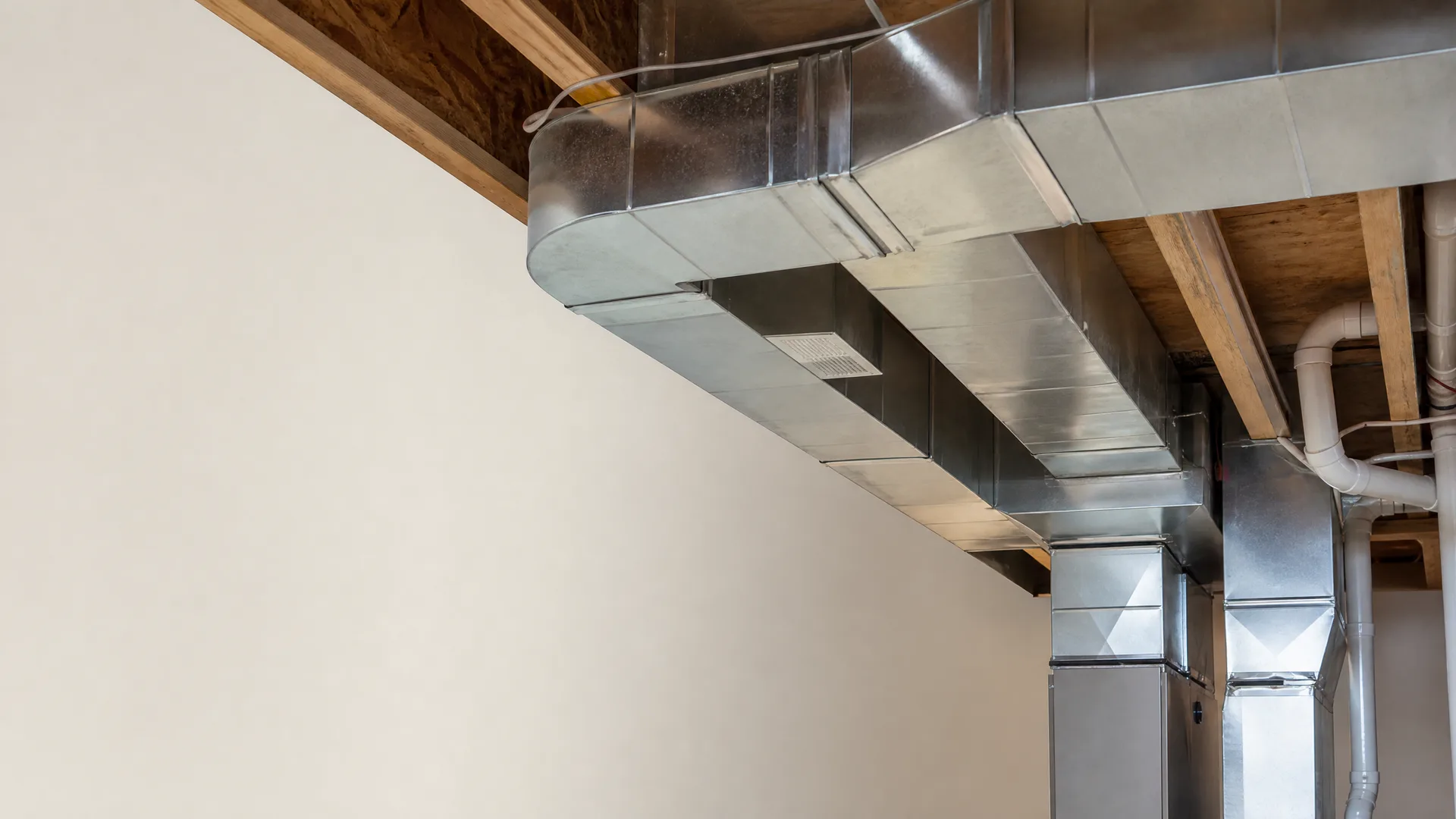
Ducts like this move air the way they're supposed to, with insulation at the walls doing its job and nothing blocking the run.
Bare concrete, exposed joists, PEX lines crowding the same space: ducts here are more likely to catch dust and skip a cleaning.
It's a Saturday afternoon in April and the sun coming through the living room window is doing you no favors. You're on the couch and you look up at the ceiling vent, the one that blows warm air all winter, and the grille is gray with dust. Not a little. Enough that you get up to look closer. There's a fine layer on the bookshelf below it too, the kind you wiped off a week ago and it's already back. You run a finger along the louver and it comes away dark. You've lived in this house through a few Dakota County winters now, and this is the first time you've really looked at that vent instead of just feeling the air coming out of it.
Skip It or Get It Done
Skip it this year
Your filter is a 1-inch pleated and you swap it every 60 to 90 days like you're supposed to.
Nobody's done remodeling or drywall work, and the vent covers look clean when you check them.
No one in the house has new allergy symptoms or a cough that started after the furnace kicked on.
The ductwork you can see in the basement is insulated and sealed at the joints, not open to bare joists or concrete dust.
You've had the system serviced each fall and the technician hasn't flagged buildup in the plenum or trunk lines.
Get it done
You pulled a vent cover and found a layer of dust thick enough to see from across the room.
A remodel, drywall job, or new flooring install happened since the last time anyone looked at the ducts.
You moved into a house where the duct history is unknown and nobody can tell you when or if it was ever cleaned.
Someone in the house started sneezing or coughing more since winter started and the timing lines up with the furnace running.
Part of your duct run sits in an unfinished space with exposed insulation fibers or sits close to PEX lines prone to shedding debris.
A duct system doing its job
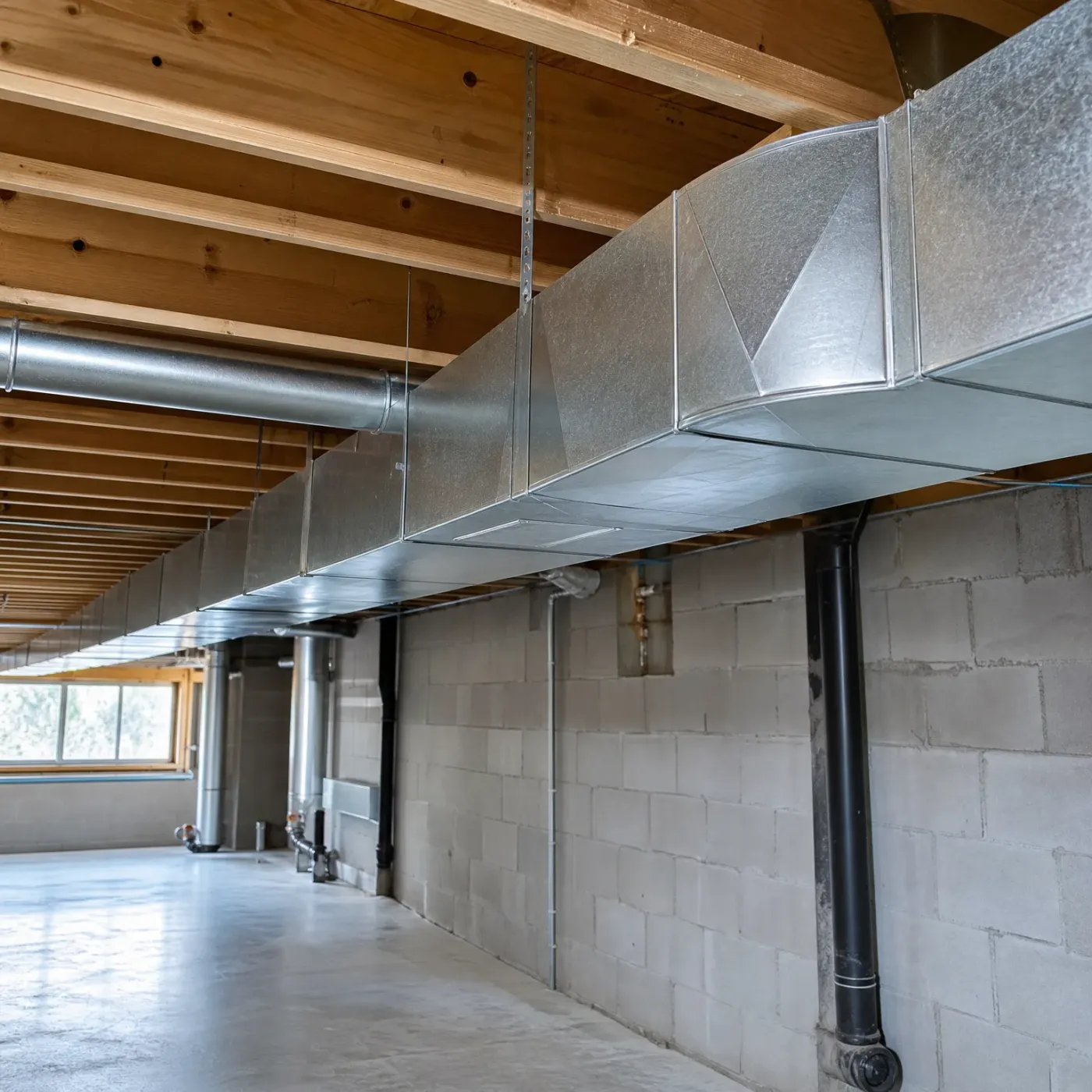
Metal runs like this move air cleanly from the furnace to the rest of the house. The basement is dry, the joists are open, and nothing is sitting in the way of airflow. A system in shape like this rarely needs more than a filter change on schedule.
A duct system worth a second look
Water staining on the foundation wall means moisture has been getting in, and moisture gives dust somewhere to stick instead of blowing through. Plumbing lines crowding the ducts make the runs harder to inspect and harder to clean if it comes to that. This is the setup worth checking before you decide.
What cleaning won't fix
A duct cleaning doesn't tighten a loose connection, add insulation to a duct running through an unheated space, or fix a return that's too small for the furnace pulling air through it. If a room runs cold every January no matter what the thermostat says, that's airflow or duct design, not dust buildup, and cleaning the ducts won't change it. Same with a furnace that short-cycles or a system that can't keep up on the coldest nights here. Those are jobs for a contractor who can look at the duct layout and the equipment together, not a cleaning crew with a vacuum truck. Worth asking about before you book a cleaning, since it changes what you're actually paying to have done.
What a cleaning does fix
What duct cleaning actually solves is the buildup itself. The dust sitting in the bends and low spots, the pet hair collected near the returns, the layer you can see when you pull a vent cover and look in with a flashlight. If that's what's there, cleaning removes it, and the air moving through your house afterward isn't carrying it anymore. That's the whole job. It doesn't make your furnace run more efficiently than it's designed to, and it doesn't replace a filter you've been forgetting to change. But if the problem is what's sitting in the ducts, cleaning is the thing that's built to handle it, and a contractor who does this work in Lakeville homes every year will know what normal buildup looks like versus what points to something else.
Before you get your ductwork cleaningAfter you get your ductwork cleaning
Power here costs 16.38 cents per kilowatt-hour
At 16.38 cents per kilowatt-hour, your furnace blower earns its keep moving air through ducts all winter, and buildup inside them makes it push harder for the same result. A cleaner duct run doesn't cost you anything extra to move air through.
EIA-861 2025
So is duct cleaning worth it in Lakeville? If the vent covers are dirty, you just finished a remodel, or someone in the house has started sneezing more than usual, yes. If your filter's on schedule and the ducts look clean when you check, hold off and save the money. The answer sits in your ductwork, not in a flyer. If you want a second opinion before you decide, a local contractor who works on furnaces and duct systems through every Dakota County winter can tell you what's actually sitting in your runs and whether it's worth clearing out. You'd be matched with one contractor, not a handful calling at once, someone who sees this same setup, the same bends and low spots, in houses like yours all season long.