Mini Split Installation in Fergus Falls, MN
A new system here will heat from September through May and cool from July through August every year. Tell us about the house, and a licensed contractor who covers Otter Tail County will get in touch.
Tell us about the job
It takes about a minute.
What Fergus Falls winters ask of a mini-split
Winter nights here average 4°F from December through February. A mini-split installed for this area has to hold heat at that temperature, not just down to freezing. Homes here need heat from September through May, nine months of the year, and cooling for July and August. That is eleven months where the system is doing one job or the other.
Any mini-split heat pump manufactured now has to clear federal minimums either way, 14.3 SEER2 for cooling and 7.5 HSPF2 for heating. In a place where the unit runs nine months on heat and averages 4°F on the coldest nights, how well it performs at that low end matters more than the rating on the sticker.
- 9 months
- September through May, your system heats
- 2 months
- July through August, it cools
- 4°F
- the average winter night it heats against
- 78°F
- the average summer afternoon it cools against
NOAA nClimDiv, 1991–2020 normals
Minnesota has no state license for HVAC contractors.
There is no state record of who does this work in Minnesota, no test and no license number to check. Anyone can call themselves an HVAC contractor here and take the job. In Otter Tail County that leaves the local building office as the only place a mini-split installation gets checked.
Most cities and counties in Minnesota require a permit for this kind of installation, with an inspection once the work is done. That permit and inspection are what stand between you and bad work here, not a license, because Minnesota does not issue one.
Source: Minnesota Office of the Revisor of Statutes
- Is a mini split worth it?
- For most homes here, yes, because a mini split heats and cools the same space with one system instead of two. Winters here average 4°F from December through February, so the unit needs to be a cold-climate model rated to keep working at that temperature. A contractor can tell you which units hold their heating output that low.
- How many rooms can a mini split cover?
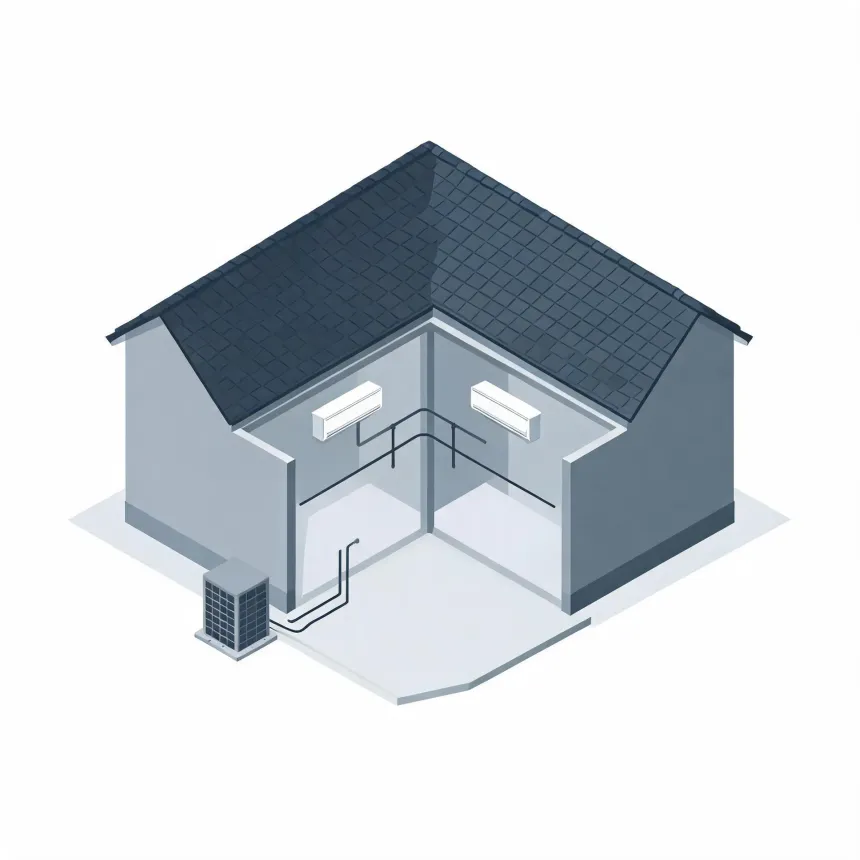
- One outdoor unit can run several indoor heads, each placed in its own room. How many rooms it can actually cover depends on the size of each room and how much heat or cooling that room needs. A contractor works this out room by room rather than fitting your house to a fixed number.
- Can a mini split heat a whole house?
- It can, if it is sized and placed for that. Homes here need heat from September through May, nine months a year, so the system has to keep up on the coldest nights, not just the mild ones. That takes a cold-climate model and indoor heads reaching every room, a layout a contractor plans around your house rather than a stock setup.