Mini Split Installation in Duluth, MN
Tell us about the house, and a licensed contractor who covers St. Louis County will get in touch.
Tell us about the job
It takes about a minute.
Duluth asks a mini-split to heat, not just cool
Winter nights here average 1°F from December through February, and homes need heat ten months of the year, September through June. A mini-split installed here is doing winter duty far more than summer duty, since summer afternoons average a mild 76°F. Whatever unit goes in has to hold up at temperatures well below zero, night after night, for months at a stretch.
Units made from 2023 on have to meet 7.5 HSPF2 for heating and 14.3 SEER2 for cooling, the same federal minimum as any split-system heat pump. That HSPF2 number is the one that matters here. The other thing worth planning around is power loss. St. Louis County has logged 179 winter storms and 284 damaging wind events over the last ten years, and statewide, 13% of households went at least 24 hours without power in 2024.
- 10 months
- September through June, your system heats
- 1°F
- the average winter night it heats against
- 76°F
- the average summer afternoon it cools against
Minnesota has no state license for HVAC contractors.
There is no state record for the contractor you hire, no test they had to pass and no license number tied to their name. Minnesota leaves HVAC work to the local building office instead of a state licensing board, so whatever protection exists comes from the city or county where the mini-split goes in, not from a state file.
For this job, that protection is the permit and inspection most cities and counties require when a mini-split goes in. The building office checks the work once it is done, since there is no state license standing behind the installer. In most places that permit is the only outside check this job gets.
Source: Minnesota Office of the Revisor of Statutes
- Is a mini split worth it?
- For a house here, yes, especially in a room that needs heat most of the year and doesn't have good duct access. Winter lows average 1°F, and a cold climate mini split is built to keep producing heat at those temperatures instead of falling back on backup heat the way older heat pumps do. A contractor can size one to the room or rooms you need covered and tell you what output holds up at your design temperature.
- How many rooms can a mini split cover?
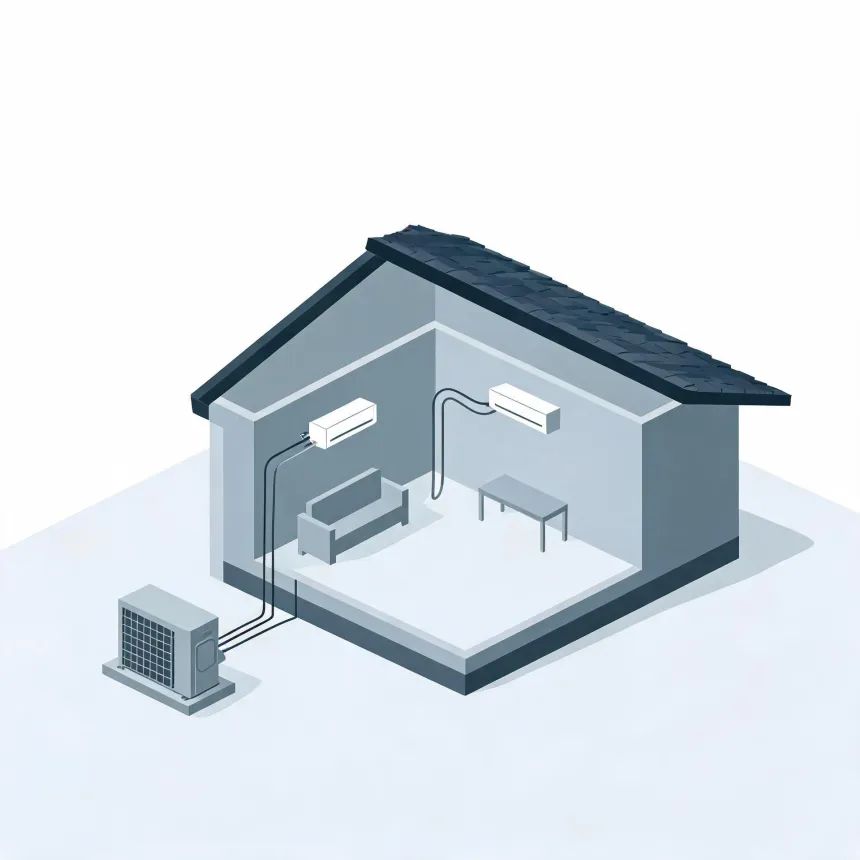
- A single outdoor unit can run one indoor head or several, depending on the system. A single zone system heats and cools one room or open area. A multi-zone system ties one outdoor unit to several indoor heads, each with its own thermostat, so you can cover several rooms at different temperatures. How many heads one outdoor unit can run depends on its capacity, and a contractor sizes that against the square footage and layout of the rooms you want covered.
- Can a mini split heat a whole house?
- It can, if it's sized and placed for that. A multi-zone mini split with enough indoor heads reaching every room can carry the full heating load of a house, and homes here need heat from September through June, so the system has to hold up down to winter lows near 1°F. That takes a cold climate model rated for low temperatures, not a standard one, and a contractor should size it room by room rather than guess at one number for the whole house.