Mini Split Installation in Mankato, MN
A new system here will heat from October through May and cool from June through August every year. Tell us about the house, and a licensed contractor who covers Blue Earth County will get in touch.
Tell us about the job
It takes about a minute.
Mankato asks a mini-split to run most of the year
Winter nights here average 10°F from December through February, and homes need heat from October through May, eight months a year. A mini-split installed here has to hold its heat output at 10°F, not just perform on a mild fall evening. Summer only asks for three months of cooling, with afternoons averaging 80°F, so the unit spends most of its working life heating, not cooling.
Any mini-split installed new has to meet the federal minimum for a split-system heat pump. That means 14.3 SEER2 for cooling and 7.5 HSPF2 for heating. The heating number matters more here, given how the season splits.
- 8 months
- October through May, your system heats
- 3 months
- June through August, it cools
- 10°F
- the average winter night it heats against
- 80°F
- the average summer afternoon it cools against
NOAA nClimDiv, 1991–2020 normals
Minnesota has no state license for HVAC contractors.
Minnesota does not license or register HVAC contractors for home work. There is no state exam behind the person doing this installation and no state record to check on them. Whatever protection exists here comes from somewhere other than the state.
For a mini-split, that protection is local. Most cities and counties in Minnesota require a permit for this kind of installation and an inspection once the work is done, which puts someone outside the contractor in the room to look at what was actually installed.
Source: Minnesota Office of the Revisor of Statutes
- Is a mini split worth it?
- For the right space, yes. A mini split heats and cools without ductwork, so it works well for a room addition, a garage, or a house that relies on window units and space heaters now. Down to 10 below zero on a January night, a cold climate model can still hold its heat output, which matters here since homes need heat from October through May. Whether it makes sense for your house depends on how it's laid out, so a contractor should walk through it with you.
- How many rooms can a mini split cover?
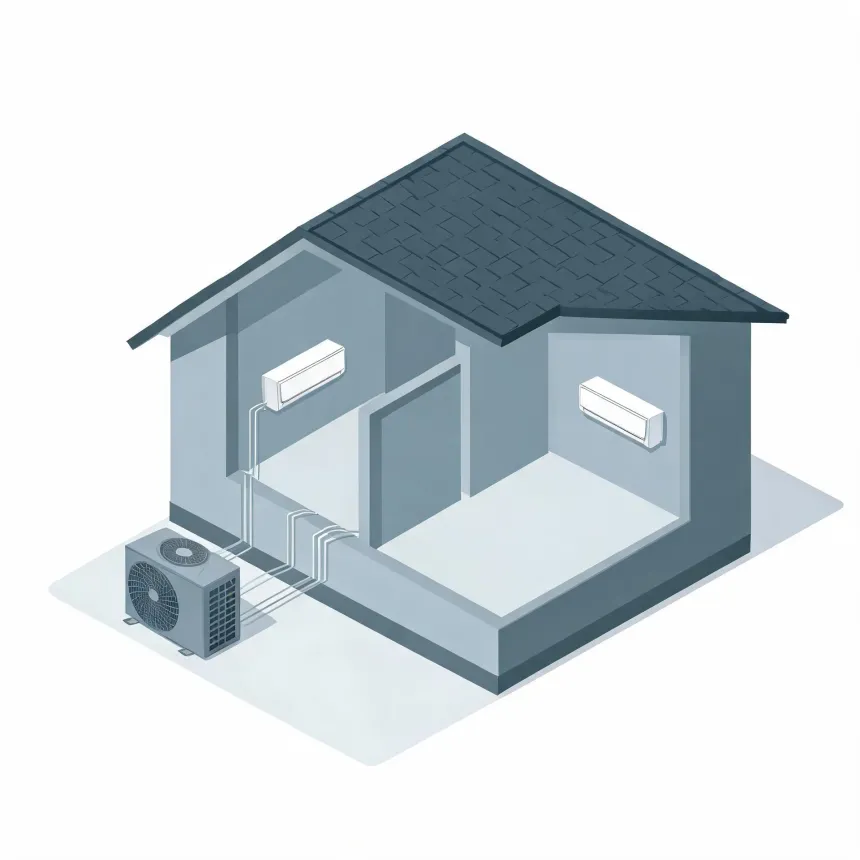
- One outdoor unit can run up to eight indoor heads, depending on the system. Each indoor head serves one room or open area, and the outdoor unit has to be sized for the total load of all of them combined. A contractor will size the system to your rooms rather than fit your rooms to a standard size.
- Can a mini split heat a whole house?
- It can, if the system is sized and placed for that. A multi-zone setup with one head per room, or per a few open rooms, can cover a whole house the same way a furnace does, just without ducts. Given winter nights here average 10°F, the units chosen need a cold climate rating so they keep producing heat instead of falling back on backup resistance heat. A contractor can tell you what a whole house setup looks like for your floor plan.