Mini Split Installation in Minneapolis, MN
A new system here will heat from October through May and cool from June through August every year. Tell us about the house, and a licensed contractor who covers Hennepin County will get in touch.
Tell us about the job
It takes about a minute.
What a Hennepin County winter asks of a mini-split
Your mini-split needs to work here from October through May. That's 8 months of the year, and winter nights average 10°F from December through February. A heat pump has to work harder to pull warmth out of air that cold, so the compressor and the outdoor coil are doing real work most of the year, not just a few weeks.
Summer only averages 80°F in the afternoons, so cooling load here is light compared to what the system handles all winter. Any mini-split installed new has to meet 14.3 SEER2 for cooling and 7.5 HSPF2 for heating, since that's the federal minimum for split-system heat pumps built since January 2023. With Minnesota winters bringing an average of 33 winter storms and 142 damaging wind events over the past ten years, and 13% of the state's households losing power for at least a day in 2024, it's worth asking how the system you choose behaves when the power drops and comes back.
- 8 months
- October through May, your system heats
- 3 months
- June through August, it cools
- 10°F
- the average winter night it heats against
- 80°F
- the average summer afternoon it cools against
NOAA nClimDiv, 1991–2020 normals
Minnesota has no state license for HVAC contractors.
There is no state board behind this job and nothing filed with Minnesota to check. HVAC work here is not licensed and not registered, so the state keeps no record of who did the job or whether they tested competent to do it. That is true for a mini-split install the same as any other home HVAC job.
What stands in for that here is local. Installing a mini-split changes the electrical and refrigerant work in your home, and in most cities and counties that means a permit from the local building office and an inspection once the unit is in. The inspector is checking the installation itself, not a license, because Minnesota does not issue one to check.
Source: Minnesota Office of the Revisor of Statutes
- Is a mini split worth it?
- It depends on what you're heating or cooling and what's there now. A mini split works well for an addition, a garage, or a room that a forced air system doesn't reach well. It also holds up in cold weather, which matters here since winter nights average 10°F from December through February. If you're weighing it against a full furnace or central air replacement for the whole house, a contractor can walk through your specific layout and tell you what fits.
- How many rooms can a mini split cover?
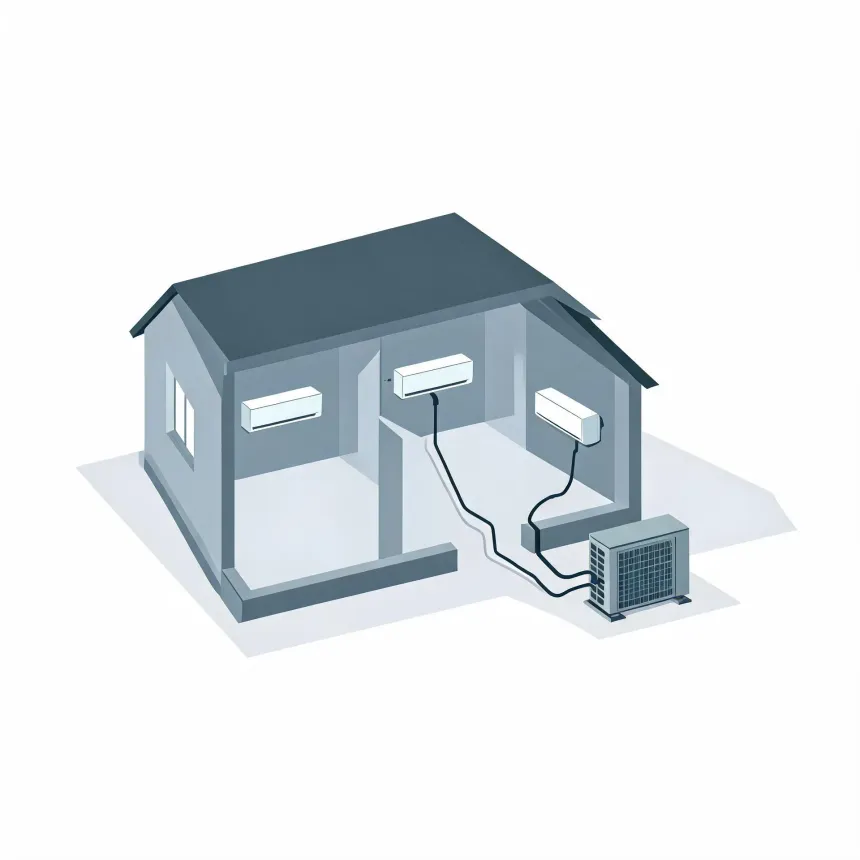
- A single outdoor unit can run more than one indoor head, so it can cover several rooms, not just one. Multi-zone systems commonly support somewhere between two and eight indoor units off a single outdoor condenser, each one controlled on its own. How many rooms actually work depends on the size of each space and how the system gets sized for them. A contractor can lay out how many zones your house needs and where each head should go.
- Can a mini split heat a whole house?
- It can, if the system is sized and placed for that. A ductless setup uses one or more indoor heads instead of ducts, so whole-house heating means putting a head in enough rooms to cover the layout. That matters more here than in milder places, since homes in Minneapolis need heat from October through May and winter nights average 10°F. Cold-climate heat pump models are built to keep working at those temperatures, but a contractor still needs to size the system to your house before it can promise to carry the whole heating load.