Mini Split Installation in Willmar, MN
A new system here will heat from September through May and cool from June through August every year. Tell us about the house, and a licensed contractor who covers Kandiyohi County will get in touch.
Tell us about the job
It takes about a minute.
What a mini-split in Kandiyohi County has to handle
Winter nights here average 7°F from December through February, and a mini-split has to keep pulling heat out of that cold air night after night. It runs on the heating side from September through May, nine months of the year, then switches over for three months of summer afternoons that average 80°F. There is no real off season. The unit is working some part of nearly every month.
Any mini-split installed new has to meet the federal minimum for a split-system heat pump, 14.3 SEER2 for cooling and 7.5 HSPF2 for heating. That floor is the same everywhere, but a system carrying nine months of heating in a county that sees 7°F nights is leaning harder on that heating rating than one would in a milder place. Worth knowing too, Minnesota had 13% of households lose power for 24 hours or more in 2024, and this county has logged 30 winter storms and 40 damaging wind events over the past ten years. Whatever heats the house when the power is out is worth thinking through at install.
- 9 months
- September through May, your system heats
- 3 months
- June through August, it cools
- 7°F
- the average winter night it heats against
- 80°F
- the average summer afternoon it cools against
NOAA nClimDiv, 1991–2020 normals
Minnesota has no state license for HVAC contractors.
There is no state licensing board behind this job and no state registration either. Minnesota leaves HVAC contracting off its books, so there is no state test taken, no state number issued, and no state record to check. That is different from a state that licenses and different from one that at least requires a business to register. Here, neither exists.
What stands in for that is the anyone doing refrigerant work on a mini-split has to hold, in every state, no matter what the state itself requires. It comes from testing on handling refrigerant safely, not from any review of installation quality. The other protection is local. In most Minnesota cities and counties, installing a mini-split needs a permit from the building office and an inspection once the work is done, and that inspection is what checks the electrical connection and the way the unit is mounted and sealed against the code. Whether that happens here depends on the local office, not the state.
Source: Minnesota Office of the Revisor of Statutes
- Is a mini split worth it?
- For most homes here, yes, especially if you're heating with something expensive to run or trying to cool a room your central system never reaches. A mini split puts heating and cooling right where you need it, and each zone keeps working even if another part of your system has an issue. Winters here get down to 7°F on average, so the unit installed needs to be rated to perform in that kind of cold. Not every mini split handles deep cold well, and a contractor can tell you which ones do.
- How many rooms can a mini split cover?
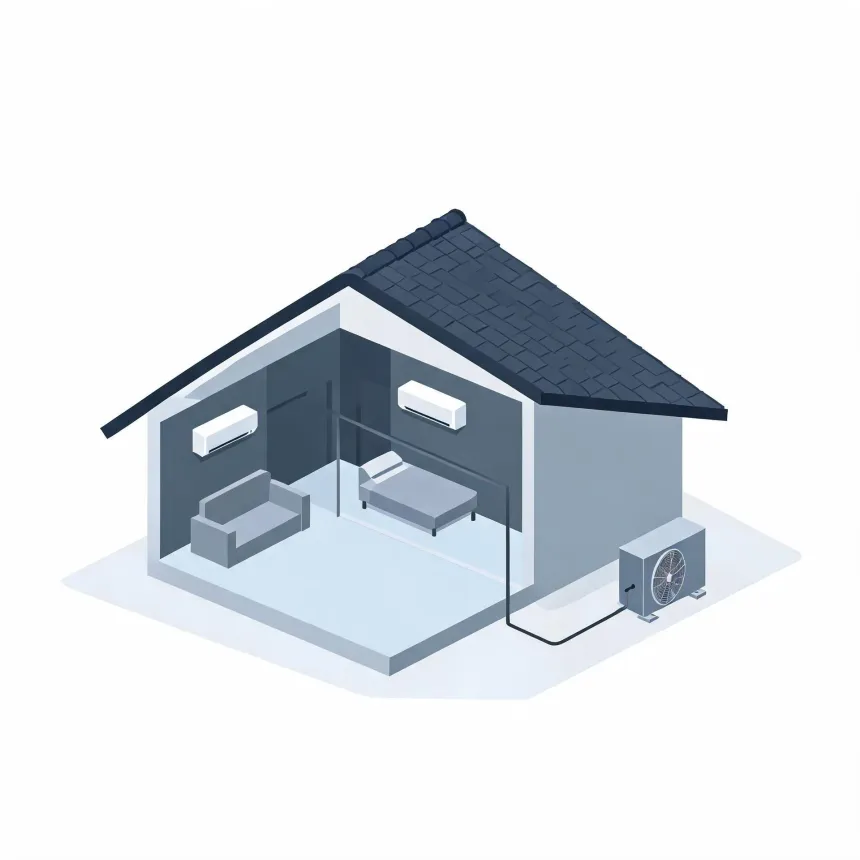
- A single outdoor unit can run one indoor head or several, depending on the system you choose. A single-zone system covers one room. A multi-zone system runs several indoor heads off one outdoor unit, each with its own thermostat, so different rooms can sit at different temperatures at the same time. How many zones makes sense for your house depends on the layout and how the rooms are used, and a contractor can walk through that with you.
- Can a mini split heat a whole house?
- It can, if it's sized and placed for the whole house rather than just a room or two. Homes here need heat from September through May, so the system has to handle real cold, not just take the edge off. A multi-zone mini split with enough indoor heads, placed to reach every part of the house, can serve as the only heat source. Getting that right takes a proper look at the house, room by room, so a contractor can size it for your place.