Mini Split Installation in St. Cloud, MN
A new system here will heat from September through May and cool from June through August every year. Tell us about the house, and a licensed contractor who covers Stearns County will get in touch.
Tell us about the job
It takes about a minute.
St. Cloud asks a mini-split to run nearly all year
Nine months of heat, three of cooling. That is most of the calendar, and a mini-split installed here has to hold up through all of it. Winter nights averaging 6°F push a heat pump hard. Look for a cold-climate model and make sure whoever installs it sizes it for that low temperature, not just for the mild days.
Any mini-split installed new has to meet the federal minimum for split-system heat pumps, 14.3 SEER2 for cooling and 7.5 HSPF2 for heating. That is the floor, not a feature to ask for. Stearns County also sees its share of winter storms and wind, so ask how the outdoor unit is mounted and protected before it goes in.
- 9 months
- September through May, your system heats
- 3 months
- June through August, it cools
- 6°F
- the average winter night it heats against
- 79°F
- the average summer afternoon it cools against
NOAA nClimDiv, 1991–2020 normals
Minnesota has no state license for HVAC contractors.
Minnesota does not test HVAC contractors or keep a state record of them, so there is no license number to check and no state board behind this job. Nobody at the state level has looked at this contractor's work before they show up in Stearns County.
What stands in for that here is the permit process. Installing a mini-split counts as the kind of work that, in most cities and counties, needs a permit from the local building office and an inspection once it's done. That inspection is what catches a bad refrigerant line or a unit mounted wrong, since Minnesota itself isn't the one checking.
Source: Minnesota Office of the Revisor of Statutes
- Is a mini split worth it?
- For most homes it comes down to what you're heating or cooling and how well the current system does it. A mini split puts heat or cool air right where you need it, without ductwork, and units built since 2023 have to meet minimums of 14.3 SEER2 and 7.5 HSPF2. Around St. Cloud, homes need heat or cooling all year, so a mini split can carry a room or an addition that your main system struggles to reach, especially with winter lows near 6°F. Whether it's worth it for your house depends on layout and what you're trying to fix, so it's worth having a contractor look at the specific rooms before deciding.
- How many rooms can a mini split cover?
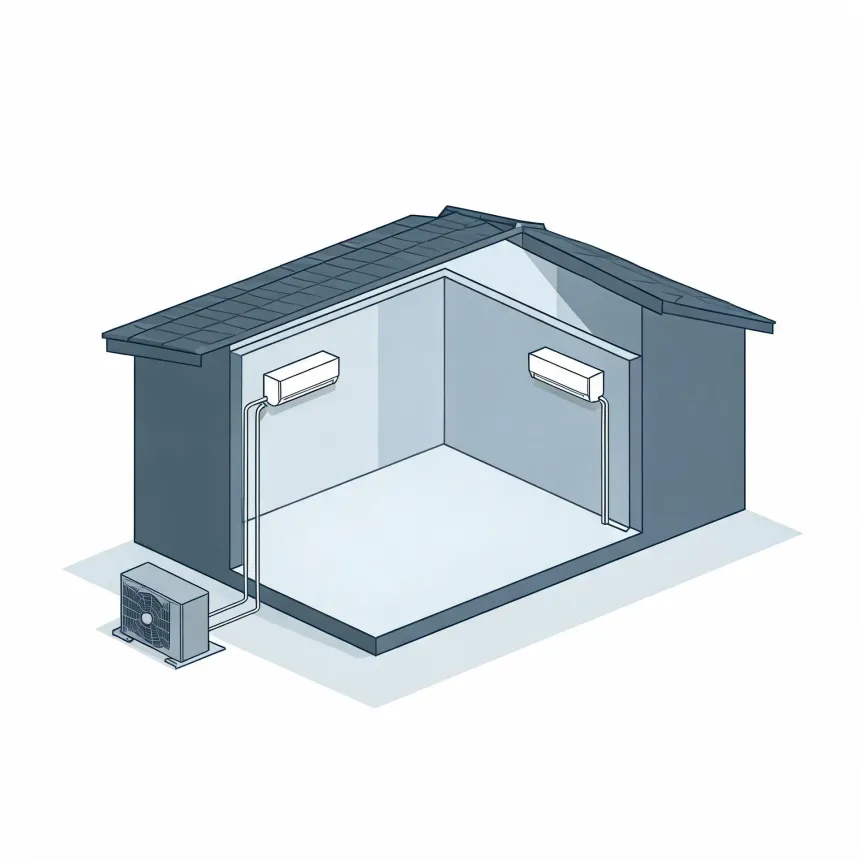
- That depends on how many indoor heads the outdoor unit runs. Each indoor head handles one room or one open area on its own, so a multi-zone setup lets you cool or heat several rooms separately, each with its own thermostat control. How many heads make sense for your house depends on square footage, room layout and how much heat or cold those rooms lose, so a contractor sizing the job will look at each room before recommending a number of zones.
- Can a mini split heat a whole house?
- It can, but it depends on how many zones you install and how the house is laid out. A mini split with enough indoor heads placed through the house can replace a central furnace, and cold-climate models are built to keep working at low outdoor temperatures. With winter nights here averaging 6°F, the unit you choose matters more than in a milder climate, since not every mini split is rated to perform at that temperature. A contractor can size a whole-house system to your home and confirm the equipment is rated for St. Cloud winters.