Mini Split Installation in Winona, MN
A new system here will heat from October through May and cool from June through August every year. Tell us about the house, and a licensed contractor who covers Winona County will get in touch.
Tell us about the job
It takes about a minute.
Winona County asks a lot of a mini-split
Winter nights here average 11°F from December through February, and homes need heat from October through May. That is 8 months a year on the heating side, then June through August, 3 more months, for cooling. Out of the year, only one month is left where a mini-split isn't carrying one load or the other.
A new mini-split still has to clear the federal floor at that. Units built from 2023 on must hit at least 14.3 SEER2 for cooling and 7.5 HSPF2 for heating, ductless included. At 11°F, a heat pump is leaning on that heating rating most nights of winter. Power matters too. Minnesota saw 13% of households lose power for a day or more in 2024, and this county has logged 30 winter storms and 63 damaging wind events over the last ten years.
- 8 months
- October through May, your system heats
- 3 months
- June through August, it cools
- 11°F
- the average winter night it heats against
- 80°F
- the average summer afternoon it cools against
NOAA nClimDiv, 1991–2020 normals
Minnesota has no state license for HVAC contractors.
Minnesota has no state board behind an HVAC contractor, so nothing is tested or filed before someone works on your mini-split. The state leaves this to cities and counties, which means whatever protection exists here comes from your local building office, not from a license.
For an installation like this, that protection is a permit from your local building office and an inspection once the work is done, in most cities and counties. That inspection is what checks the work here, not a license.
Source: Minnesota Office of the Revisor of Statutes
- Is a mini split worth it?
- For most homes, yes, especially for a room or addition that isn't on your main ductwork. Winona needs heat eight months of the year and cooling for three, so the unit works hard most of the year and has real ground to make up for. Winter nights here average 11°F, and a heat pump puts out less heat as the air gets colder, so ask the installer what the unit can deliver at that temperature, not just its rated capacity. If it can't carry the coldest nights on its own, that's worth knowing before installation, not after.
- How many rooms can a mini split cover?
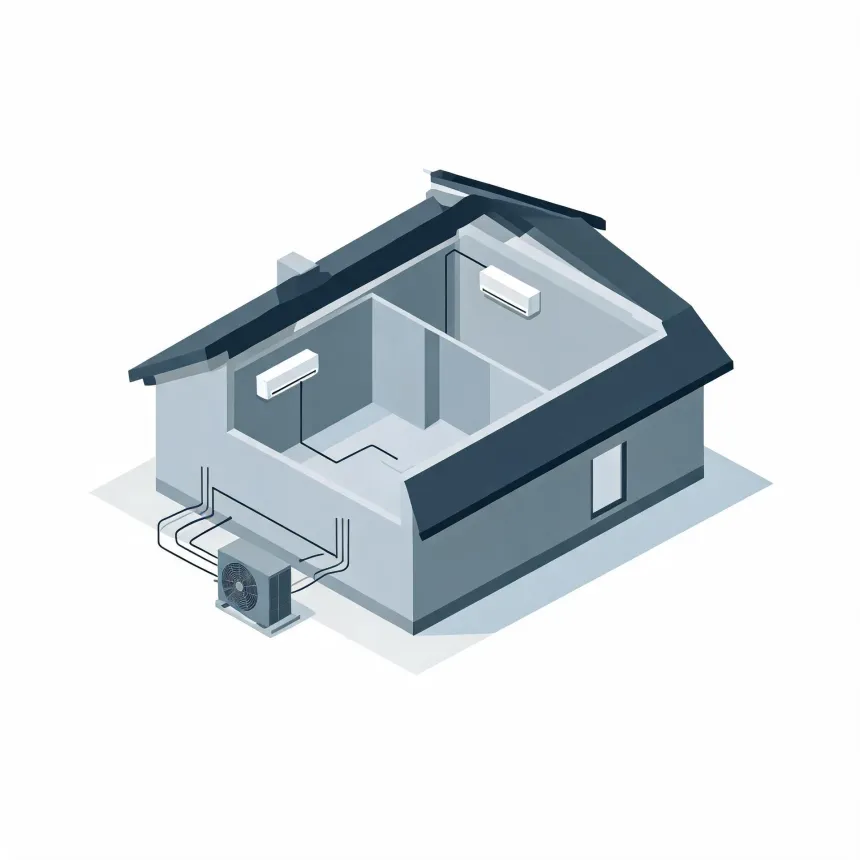
- One outdoor unit can run a single indoor head or several, up to eight on some multi-zone systems. Each head heats and cools the room it's mounted in, so the real question is how many rooms you want on independent control, not just how many the equipment allows. Splitting one outdoor unit across more zones leaves less capacity for each one, so a contractor sizes the equipment to the rooms you actually want covered.
- Can a mini split heat a whole house?
- It can, but only if there are enough indoor heads placed to reach every room and the system is sized for how cold it gets here. Winona winter nights average 11°F, and a heat pump's output falls as the temperature drops, so a unit sized for a milder climate will come up short on the coldest nights. A contractor can size the system against that 11°F figure so it's rated for what winter here actually asks of it.