
HVAC Installation in Blaine, MN
A new system here will heat from September through May and cool from June through August every year. Tell us about the house, and a licensed contractor who covers Anoka County will get in touch.
Tell us about the job
It takes about a minute.

Blaine asks a lot of a heating and cooling system
Winter nights here average 9°F, December through February, and the furnace has to hold that line for nine months, September through May. Summer only asks for three months of cooling, afternoons near 80°F, but the system still needs to be sized and installed to handle both jobs well. Most homes in the area heat with gas, and whatever replaces that furnace has to meet the federal minimum efficiency for gas equipment.
Minnesota sees its share of weather that knocks out power. Blaine's ten-year record includes 28 winter storms and 40 damaging wind events, and statewide, 13% of households lost power for at least a day in 2024. A new install is worth planning with that in mind, since a furnace with electronic ignition won't run without power even if the gas line is fine.
- 9 months
- September through May, your system heats
- 3 months
- June through August, it cools
- 9°F
- the average winter night it heats against
- 80°F
- the average summer afternoon it cools against
NOAA nClimDiv, 1991–2020 normals
Minnesota has no state license for HVAC contractors.
There is no state license or registration behind an HVAC contractor here, so there is no state exam and no state record to check. The state leaves this trade alone, for installs as much as for anything else.
In most cities and counties, a furnace or air conditioner replacement needs a permit from the local building office before the work starts and an inspection once it is done, and that inspection is what catches a bad gas connection or a system put in wrong. Outside of that permit and that inspection, nothing else stands between this homeowner and the person doing the work.
Source: Minnesota Office of the Revisor of Statutes
- When should I replace my HVAC system?
- Replace it when repairs stop making sense or when the equipment is old enough that a breakdown could leave you without heat on a night that hits 9 below. A furnace or air conditioner nearing the end of its life tends to need more frequent repairs, and each one adds up. If yours is old and just failed in the middle of winter, waiting on parts is a real risk here since homes need heat from September through May. A contractor can look at the age and condition of what you have and tell you whether repair still makes sense.
- Should I replace my furnace and air conditioner at the same time?
- If both are old, replacing them together is usually worth asking your contractor about, since matching a new furnace to a much older air conditioner can mean the two aren't sized or matched to work well as a pair. It also means one visit instead of two down the road. That said, if only one has actually failed, there's no rule that says you must replace the other early. A contractor can check the age and condition of each and tell you what makes sense for your house.
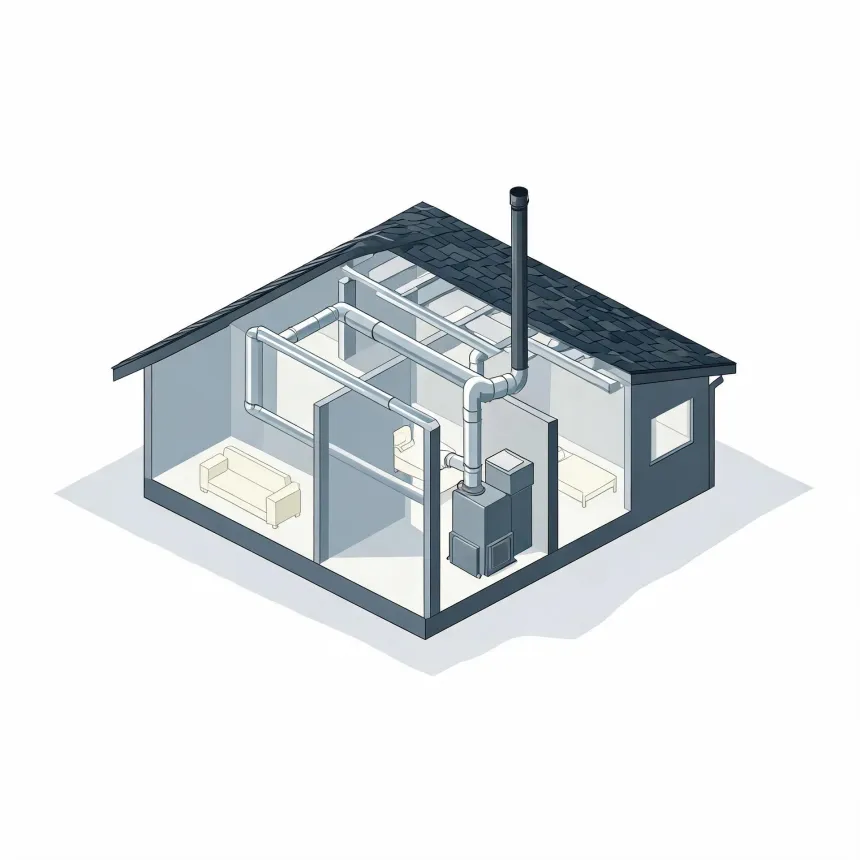
- What happens during an HVAC installation?
- A contractor removes the old furnace, air conditioner, or both, and sets the new equipment in place, then connects it to your ducts, gas line or electrical circuit, and the vent or flue. They check the refrigerant lines and electrical connections, and start the system up to confirm it runs correctly and holds the temperature it's set to. In most cities and counties around Blaine, this work needs a permit from the local building office, and an inspector checks the job once it's done. That inspection is there for your safety, since a furnace involves gas or electrical work and needs to vent correctly.