
Is a clogged dryer vent a fire risk in St. Paul, MN
Get matched with a Ramsey County pro who cleans dryer vents.
Match me with a proYes. A clogged dryer vent is a real fire risk, and it works the same way in St. Paul as anywhere else. Lint is what burns. Every load of laundry sheds some, and if it can't travel all the way out through the vent hood, it builds up inside the duct. The dryer's heating element sits right next to that buildup, running hot every time you turn the machine on. Add a restricted vent that traps heat inside the duct instead of letting it escape outside, and you have fuel and an ignition source in the same place. Winters here mean the dryer runs more, since heavy coats, towels and bedding all need drying indoors for months at a time. More loads means more lint moving through the vent, and a vent already partly blocked has less room to clear it. If your dryer takes longer than it used to, or the outside vent flap barely moves when it's running, that's the vent telling you it's restricted.
What does your household mean for your dryer vent risk?
2.38 people per household on average
With 2.38 people in the average Ramsey County home, that's laundry piling up most days of the week, and every load pushes more lint into the vent.
Half the homes here were built by 1965
Half the homes in Ramsey County were built in 1965 or earlier. A duct run that old has had decades to collect lint in joints and bends nobody can see.
Power here costs 17.00 cents per kilowatt-hour
Electricity here runs 17.00 cents per kilowatt-hour. A dryer fighting a clogged vent pulls more power to do the same job, load after load.
ACS 2020-2024 · EIA-861 2025
How the Clog Starts a Fire
- A dryer's heating element can reach several hundred degrees, and lint ignites at a much lower temperature than that.
- Lint builds up fastest at the bends in the duct and at the vent hood flap outside, not evenly along the whole run.
- A clogged vent traps heat inside the dryer cabinet, which is what pushes the thermal fuse or limit switch to fail over time.
- Rigid metal duct resists heat better than the foil or plastic accordion duct some older installs still use.
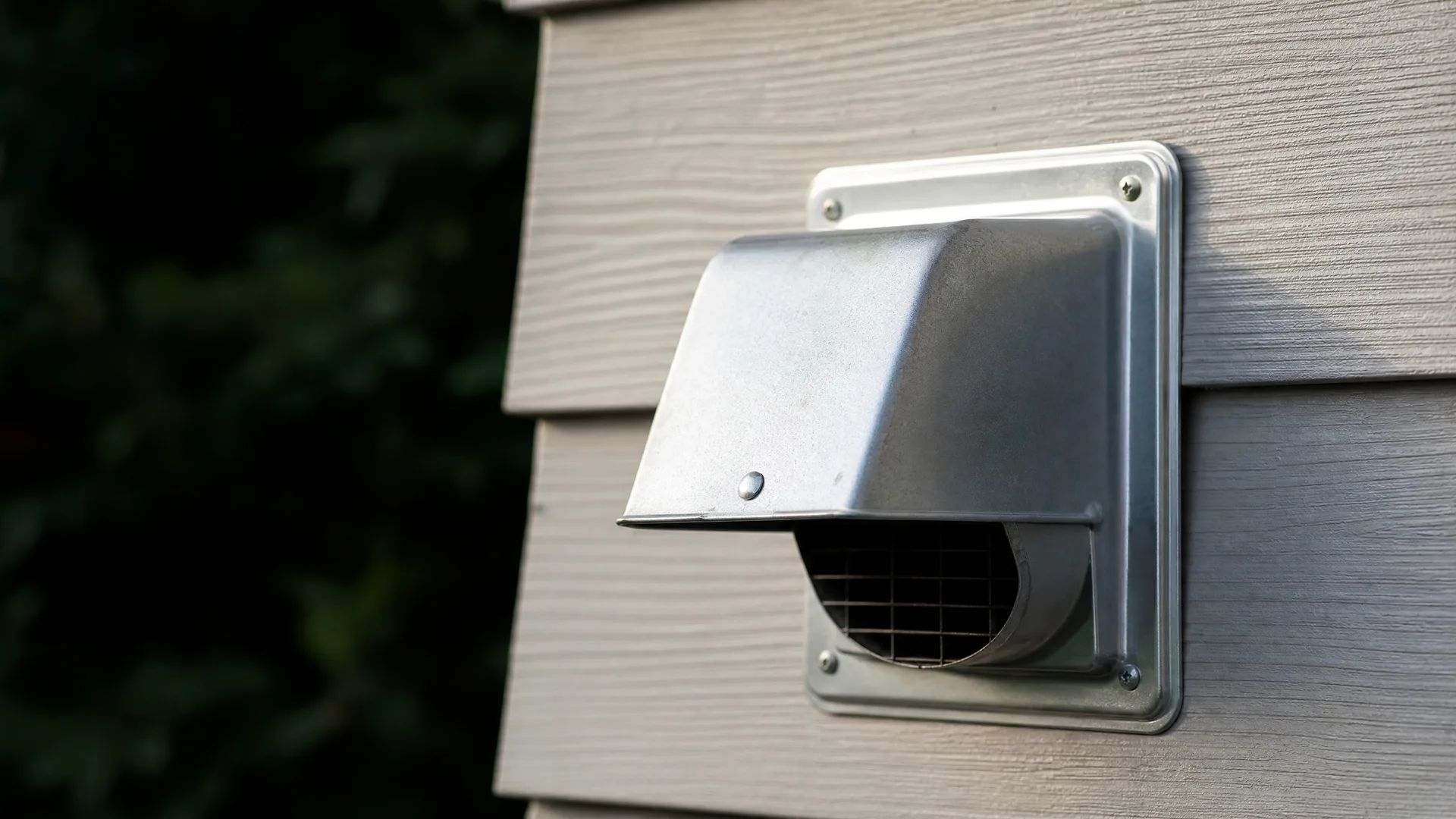
- A vent hood flap that won't open and close freely on its own is a sign air isn't moving through the duct like it should.
- Lint that collects around the drum bearing or under the dryer, not just inside the duct, adds to what can catch.
A dryer's heating element runs hot enough to ignite lint well before it reaches its own top temperature, which is why a clog matters as much as it does. Lint never fills a duct evenly. It catches at the bends first, wherever the duct turns to clear a stud or drop down to the vent hood, and it catches at the hood itself if the flap outside isn't swinging free. Once airflow is restricted there, heat that should be leaving the house stays inside the dryer cabinet instead. The thermal fuse and the limit switch exist to catch that, cutting power when the cabinet runs hotter than it should, but a switch that keeps tripping or finally fails is a sign the airflow problem behind it was never fixed. The duct material plays a part too. Rigid metal duct holds up to that heat; the foil or plastic accordion duct in some older installs doesn't resist it the same way, and it's worth checking which one is behind your dryer now. Not all the lint worth worrying about is in the duct. It collects around the drum bearing and underneath the dryer itself, and that lint can catch independent of anything happening further down the vent run. Checking the hood flap from outside, while the dryer runs a load, is one of the simpler ways to see whether air is actually making it all the way out.






A dryer vent pro near you

Skip searching for someone who cleans dryer vents in Ramsey County.
You only hire the pro if you want to.
A dryer vent that takes two cycles to dry one load is already restricted enough to matter, and that's often the only warning you get before lint stops moving at all.
By the time the back of the dryer feels hot to the touch or the room smells warm and a little burnt, the lint has built up past the point where the vent is doing its job.


A dryer that can't sense a dry load just keeps tumbling and heating, cycle after cycle, pulling more power each time and giving trapped lint more time to sit against a hot drum. That heat doesn't leave the moment the cycle ends either. It can stay in the duct and against the housing well after you've opened the door and walked away. Where the vent exits matters too. If it comes out near a fence line, a deck, or tight against the siding, there's something close by for a stray spark to reach. Plenty of St. Paul houses put the laundry room in the basement, which means any smoke or heat has to climb through the house before anyone upstairs would catch it. The duct run itself plays a part as well. Every bend between the dryer and the outside wall is a place lint collects, so a vent with several turns carries more risk than a short, straight one. And a dryer running while the house is empty, which happens once laundry backs up, takes away the chance to smell trouble before it spreads.
What This Risk Looks Like at Home
- A dryer that keeps running past its cycle because the moisture sensor can't tell the load is dry pulls more power every time you wash.
- Lint packed into the duct can hold heat against the drum housing long after the cycle ends, even once the door is open.
- A vent that exits near a deck, a fence line, or close to siding gives any sparked lint somewhere to catch beyond the duct itself.
- Rooms where the dryer sits below living space, a basement laundry room in many St. Paul houses, mean smoke or heat has to travel up through the house before anyone notices.
- A vent run with several turns to reach an exterior wall traps lint at each bend, so a longer or bent duct carries more risk than a short straight one.
- Running the dryer while you're out, common once laundry piles up for a household of any size, removes the chance to catch a burning smell early.


What a clogged vent does over time
A dryer vent doesn't go from clear to blocked in one load. Lint collects a little at a time, and for a while the dryer still runs fine. Clothes take a bit longer to dry, the exhaust air feels warmer than it should, and the vent hood flap outside starts to sit a little less open. None of that looks like an emergency, so it's easy to let it go another month, then another. By the time the dryer is running two full cycles to finish one load, the duct is carrying a lot less air than it was built to carry, and the lint that's packed into it has had months to settle into the bends and seams where it's hardest to clear.
Why the risk doesn't wait for winter
The fire risk isn't tied to the season here the way the heating bill is. A dryer's heating element runs hot every time it's used, whether that's a January load of towels or a July load of t-shirts, and lint ignites well below the temperatures the element reaches. What changes the risk is how often the dryer runs and how packed the vent already is, not the weather outside. A vent that's been building up lint since spring is just as much of a hazard in August as it is in December. Waiting for a slow month to deal with it only gives the clog more time to get worse.
2.38 people per household on average
At 2.38 people, your house is probably doing a load most days. Each one adds a little more lint to the duct, and the only way it comes back out is a cleaning that reaches the full run, hood included.
ACS 2020-2024

A clogged dryer vent is a fire risk, and now you know what to check
A dryer vent packed with lint burns for the same reason anywhere in Ramsey County: the heat has nowhere to go and the lint is sitting right there waiting for it. You've seen what that looks like, from the vent hood outside to how long a load takes to dry. None of that changes because you live in St. Paul instead of somewhere else. The vent either moves air all the way out or it doesn't.
Finding out whether yours is clear usually means getting underneath the dryer, tracing the duct to the wall, and knowing what a bend full of lint looks like versus one that's clean. Most homeowners don't have a reason to know that, and calling around to find someone who'll actually check the full run, hood included, takes time most people don't have free. A contractor who handles this work can look at your vent and tell you where you stand, without you having to sort through who's worth calling first.

Get matched with a dryer vent pro in Ramsey County