Mini Split Installation in Elk River, MN
A new system here will heat from September through May and cool from June through August every year. Tell us about the house, and a licensed contractor who covers Sherburne County will get in touch.
Tell us about the job
It takes about a minute.
Elk River asks a mini-split to run nearly all year
Nine months of heat, three of cooling. Add them up and a mini-split here is working almost every month, so the unit you install has to handle both jobs well, not just one. Winter nights averaging 8°F mean the heat pump side has to keep working when it's genuinely cold outside, not just chilly. Summer afternoons around 79°F are a lighter lift for the cooling side by comparison.
Any mini-split installed new has to meet the federal minimum for split-system heat pumps, 14.3 SEER2 for cooling and 7.5 HSPF2 for heating. That's the floor, not a special ductless rating. Worth asking about power too. Minnesota saw 13% of households lose power for at least a day in 2024, and Sherburne County has logged 23 winter storms and 27 damaging wind events over the past ten years. A mini-split with backup heat or a plan for outages is worth thinking through before it's the coldest week of January.
- 9 months
- September through May, your system heats
- 3 months
- June through August, it cools
- 8°F
- the average winter night it heats against
- 79°F
- the average summer afternoon it cools against
NOAA nClimDiv, 1991–2020 normals
Minnesota has no state license for HVAC contractors.
Minnesota does not put HVAC contractors through a state licensing process, so there is no state exam behind the name and no state record to check. Nothing is registered with the state either. Whatever accountability exists for this job comes from somewhere other than a license.
For a mini-split install, that somewhere is the local building office. In most cities and counties, putting in a mini-split needs a permit before the work starts and an inspection once it's done, so someone outside the contractor looks at the install either way. That permit and inspection are what stand between a homeowner in Sherburne County and a bad install, not a license.
Source: Minnesota Office of the Revisor of Statutes
- Is a mini split worth it?
- For the right setup, yes. A mini split heats and cools without ducts, so it works well for an addition, a garage, or a house that relies on baseboard or space heaters in a few rooms. Winter nights here average 8°F, and a cold-climate mini split is built to keep putting out heat at that temperature, but a contractor needs to size and choose that kind of unit rather than a standard model. Whether it makes sense for your house depends on what's heating it now and which rooms need help, so that's worth working through with a contractor before you decide.
- How many rooms can a mini split cover?
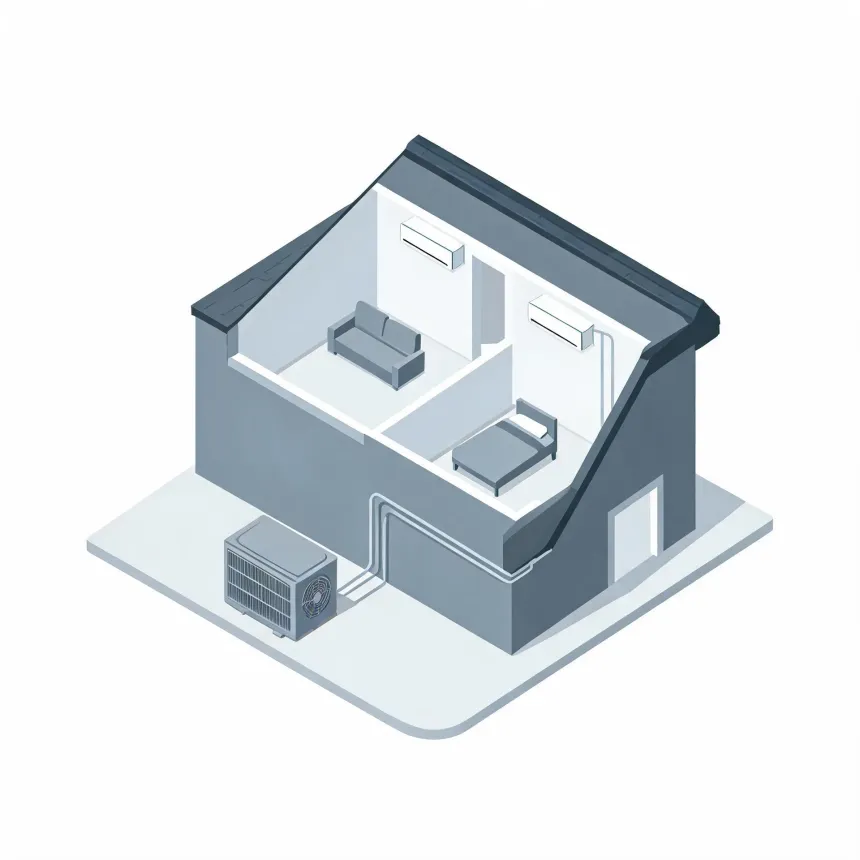
- A single outdoor unit can run one indoor head or several, up to eight on some multi-zone systems. Each indoor head handles one room or one open area, so the count depends on how your house is laid out, not just its size. A contractor will look at your rooms, your walls, and where heat is being lost before saying how many heads your house needs.
- Can a mini split heat a whole house?
- It can, if it's sized and placed for that from the start. A whole-house system needs an indoor head in enough rooms to cover the floor plan, and an outdoor unit rated to keep up through winter nights that average 8°F here. Homes in this area need heat from September through May, so the system has to hold up over that whole stretch, not just a mild fall or spring. Get a contractor to walk the house and lay out where the heads go before counting on a mini split for the whole thing.