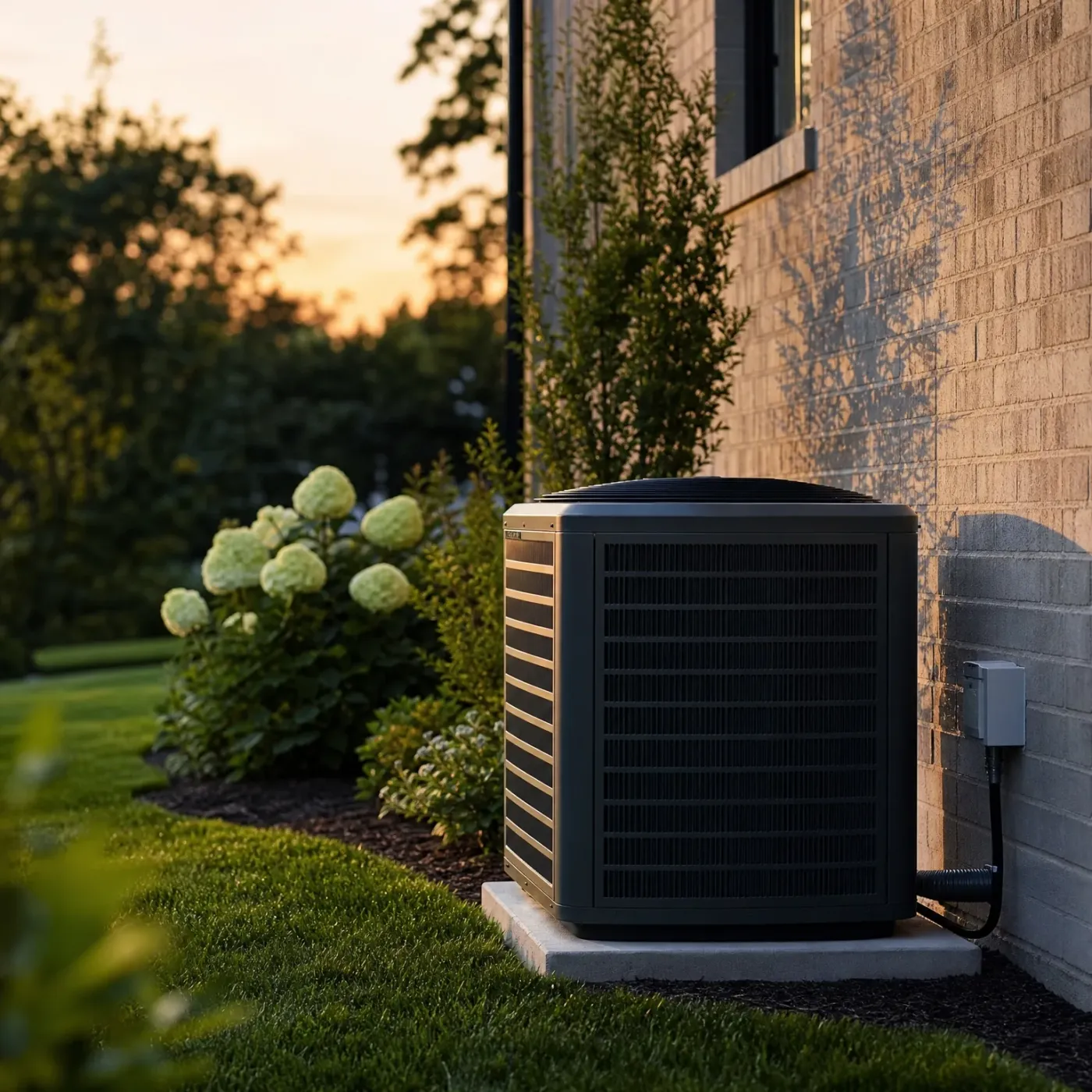
Ducts sealed and sound
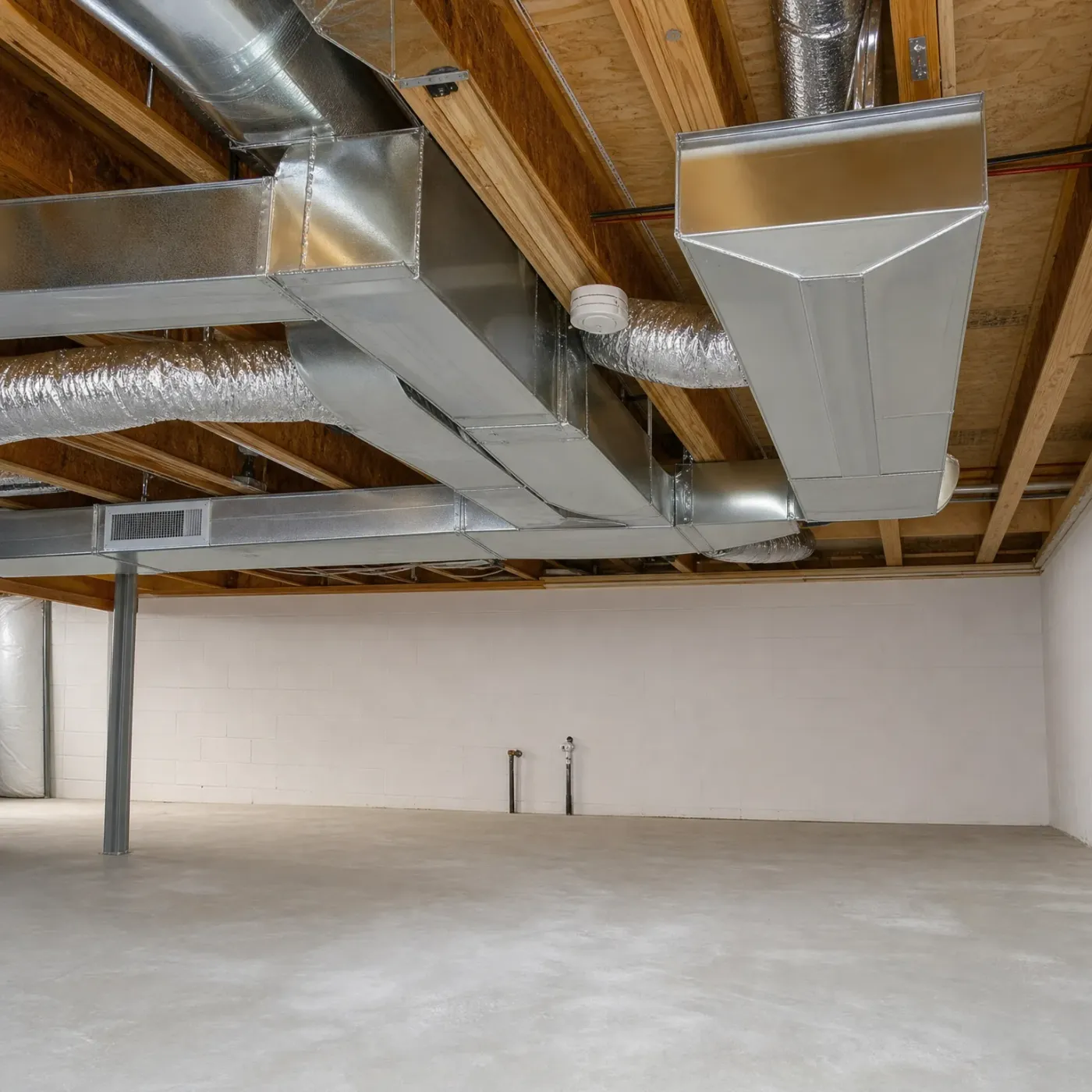
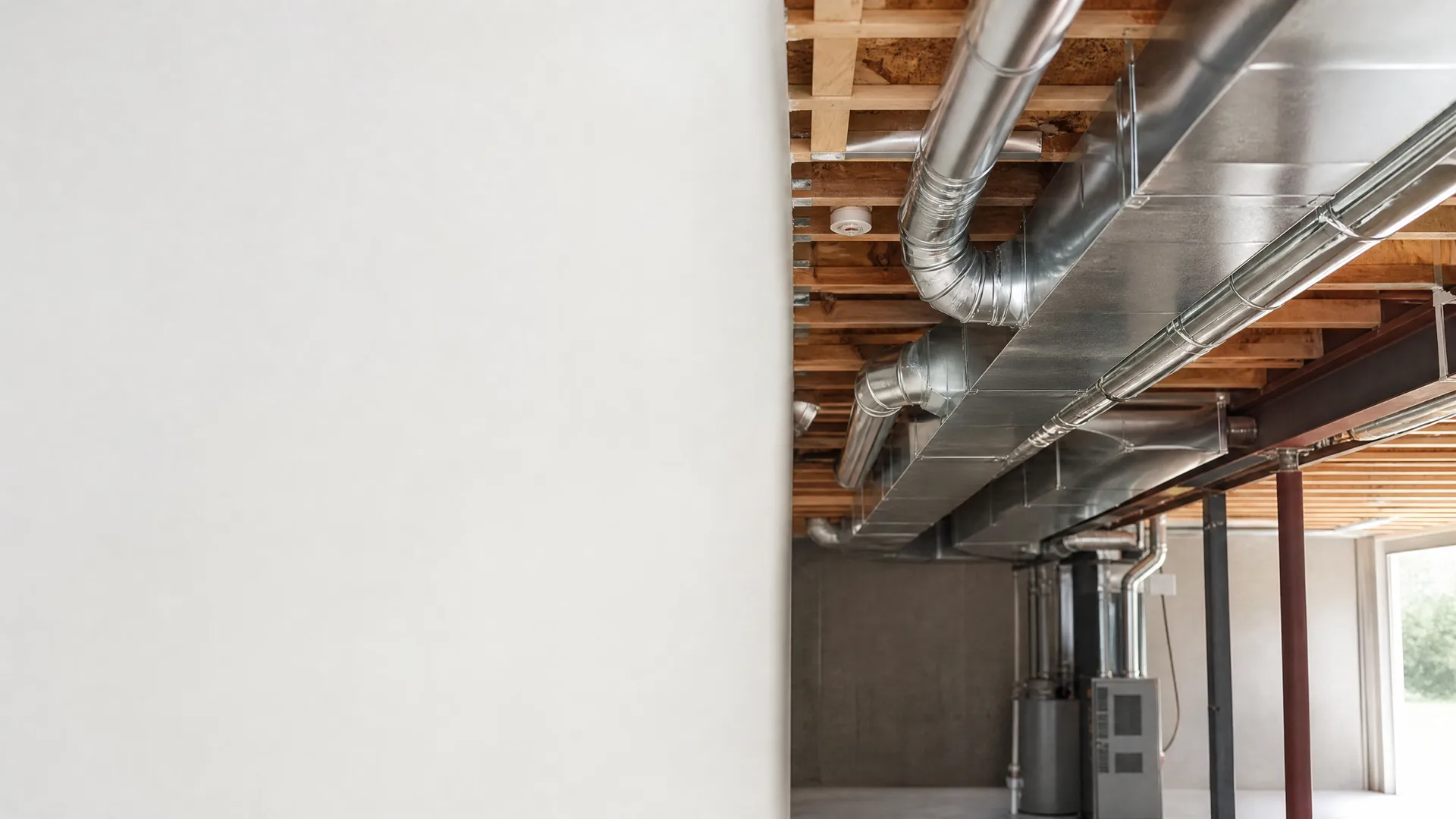
Sheet-metal trunk lines and flex runs sit tight against the joists, joints closed, nothing torn loose. Air moving through this system goes where the furnace sent it, to the vents, not into the space around the floor joists.
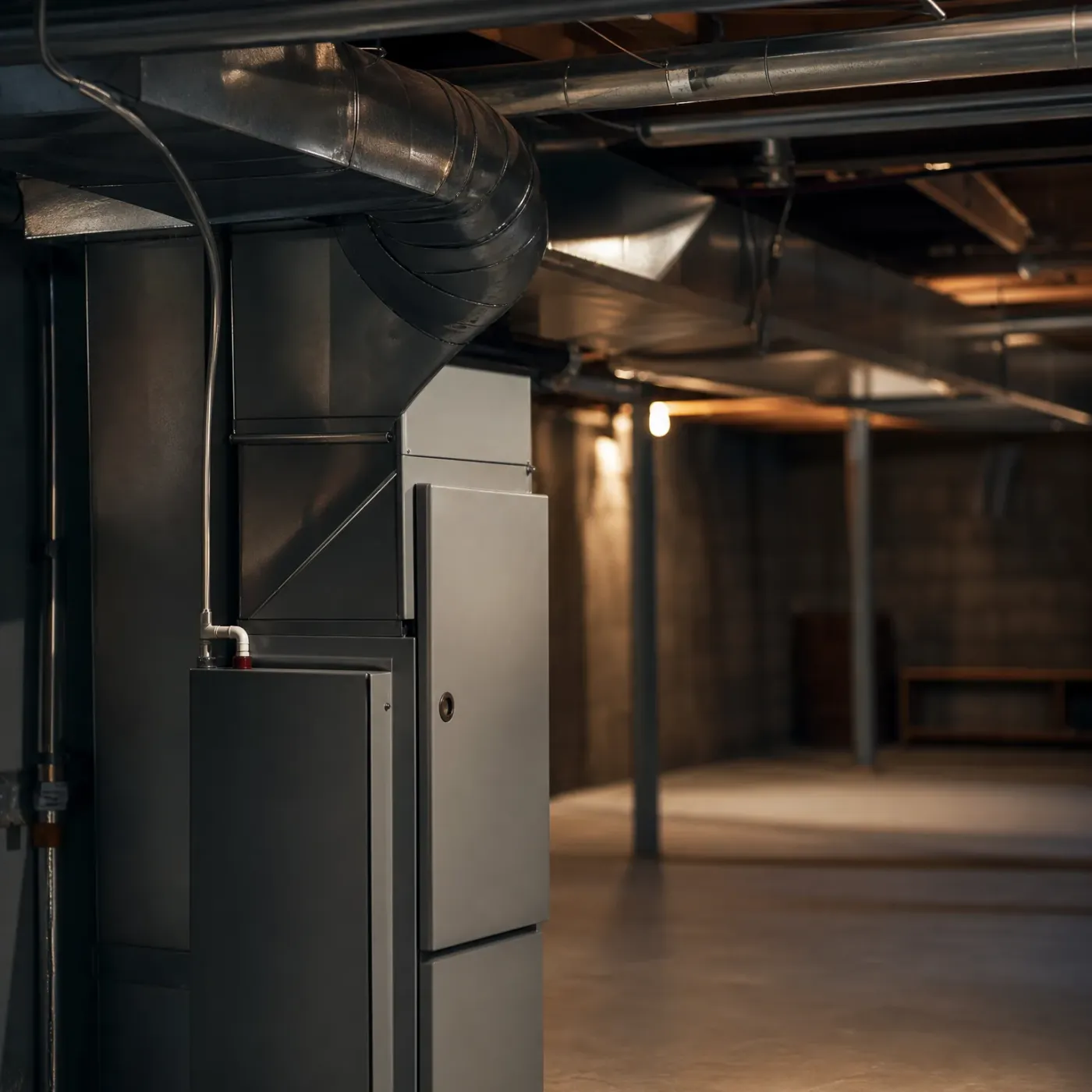
Get matched with a duct system pro in Washington County
Leaky ducts show up in a few ways: rooms that never feel as warm or cool as the rest of the house, a furnace or AC that runs longer than it should, and higher bills through a Minnesota winter or a Woodbury summer. This page walks through what to look for in your own ductwork, and what to do once you've found it. Answering it well usually means getting someone out to look, so you can be matched with a contractor who takes it from there.
Get matchedA room that stays colder than the rest of the house in January, or warmer than the rest in July, usually means the duct feeding it is leaking air somewhere between the furnace and the vent. That air is going into the attic or the crawlspace instead of the room. You might also notice dust around the vent covers, or hear the furnace running longer than it used to without the house feeling any different. Some ducts leak at the seams where sections join together, and those joints work loose over years of heating and cooling cycles. In Woodbury, where winters push a furnace hard for months, a leak like that means the furnace runs more than it needs to, and gas and electric bills climb to cover air that never reaches a living room. A sealed duct system delivers the air it was designed to deliver, nothing more complicated than that.
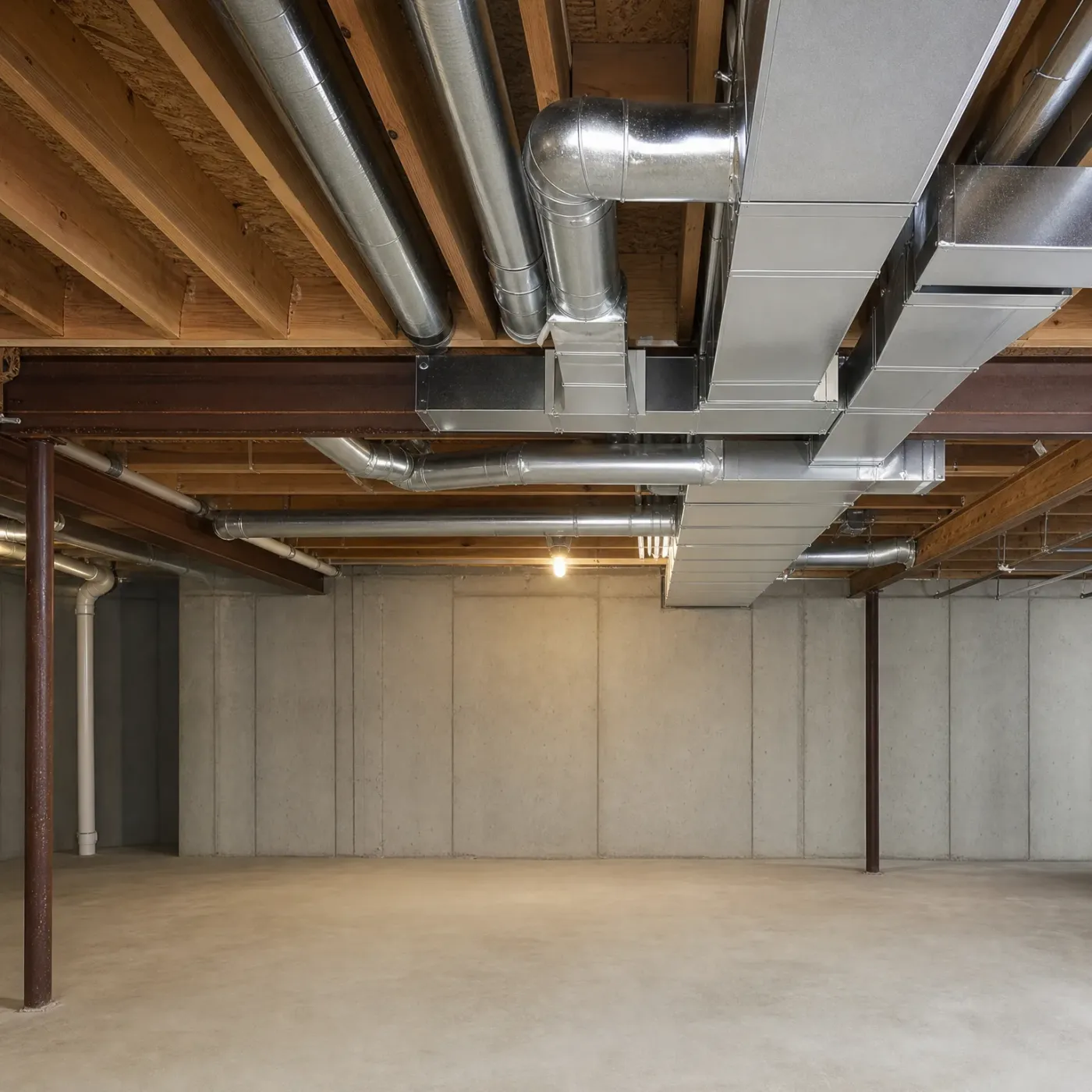
Sheet-metal trunk lines and flex runs sit tight against the joists, joints closed, nothing torn loose. Air moving through this system goes where the furnace sent it, to the vents, not into the space around the floor joists.
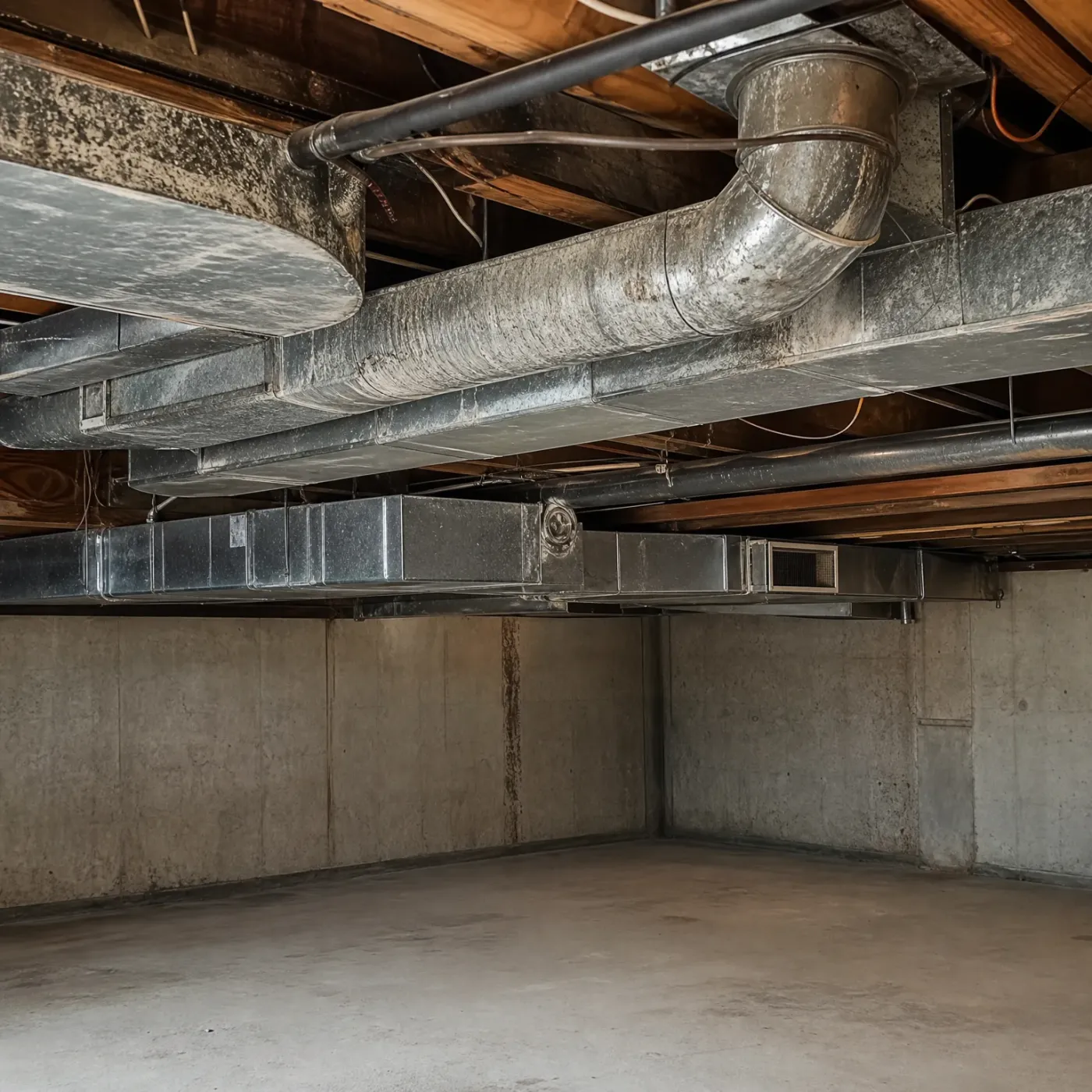
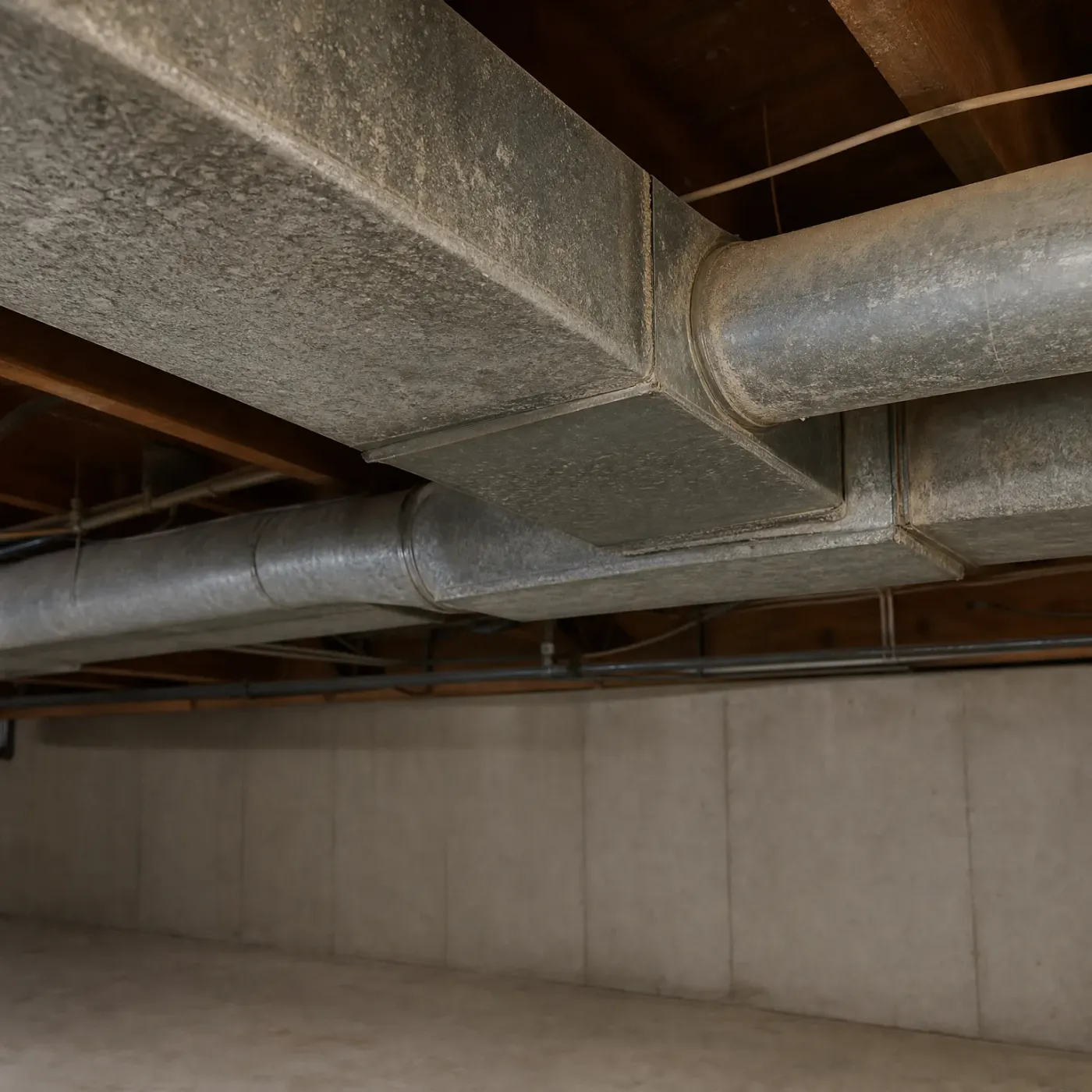
Dark staining on the joists and on the duct surfaces itself is conditioned air leaking out and settling as moisture where it shouldn't. A duct run in this shape is feeding the gap between floors instead of the room it was built to reach.
Half the homes here were built by 1992
Half the homes in Washington County were built in 1992 or earlier, so duct runs that old have had decades of joints to work loose and start leaking.
Heat runs October through May
Furnaces here run from October through May, about eight months of the year, so air lost through a leaky joint is wasted for most of the calendar.
Cooling runs June through August
Air conditioners here run June through August, and the same leaks that waste furnace heat in winter waste cooled air in summer, just over fewer months.
ACS 2020-2024 · NOAA nClimDiv 1991-2020
Most duct leaks trace back to a joint, not a hole in the middle of a run. Sheet-metal trunk lines connect in sections, and each connection depends on screws and a sealant, mastic or foil tape, to hold air inside. That seal can pull loose over the years, or in some houses it was never applied well in the first place. The places most likely to leak are where a branch duct splits off the trunk line and where two straight runs meet end to end. Flex duct, the insulated tubing often used for the last stretch to a vent, fails in its own way. Its inner liner can separate from the outer wrap, or the clamp holding it to the metal collar can loosen, letting air escape right at that connection instead of carrying it to the room. Where the leak sits matters as much as the leak itself. A joint that opens up in the basement or inside conditioned space still loses some air, but a joint leaking into an attic or crawlspace loses it for good, before it ever reaches a vent. Return ducts leak too, and when they do, they pull outside air from the attic or crawlspace into the furnace itself. A duct system that's undersized or has a crimped section builds up pressure, and that pressure pushes harder against every joint already working loose, so a small leak tends to grow rather than stay put.
At 16.82 cents per kilowatt-hour, a leaking duct costs more here than somewhere with cheaper power. Every cubic foot of heated or cooled air that escapes into the attic or crawlspace is air that furnace or AC already paid to condition. Sealing those joints keeps that cost working for your house instead of your attic.
EIA-861 2025
A duct leaking into the attic or crawlspace means the furnace runs longer to reach the same temperature, and the AC does the same in July. That extra runtime shows up on the meter, and at 16.82 cents per kilowatt-hour it adds up fast over a Minnesota winter. You pay to heat or cool air that never reaches a vent. The thermostat might read 70, but the register in the back bedroom is pushing out air that lost most of its heat on the way there.
Leaking ducts pull basement or attic air into the supply side, and that air carries dust and sometimes moisture into rooms through the vents. A room that stays cold in January or warm in July is one sign. Over years, a crawlspace duct leaking warm air can add moisture to a space that should stay dry, and a leak near the furnace itself can pull combustion byproducts into the return air instead of venting them outside.




After this form, you can stop searching for a duct system pro.
Get matched with a Washington County pro who cleans ducts.
Sending the form costs nothing.
Walk your house room to room. One bedroom upstairs never quite gets cold in July, or a room at the end of the hall stays chilly all winter no matter what the thermostat says. Stand near a duct run in the basement or crawlspace and you might feel a draft where there shouldn't be one, or hear a faint hiss at a joint. Dust builds up faster around certain vents. The furnace or AC cycles on and runs longer than it used to, and the bill reflects it. Left alone, a leak doesn't fix itself. The joint keeps working loose and the room it feeds stays the one you avoid.
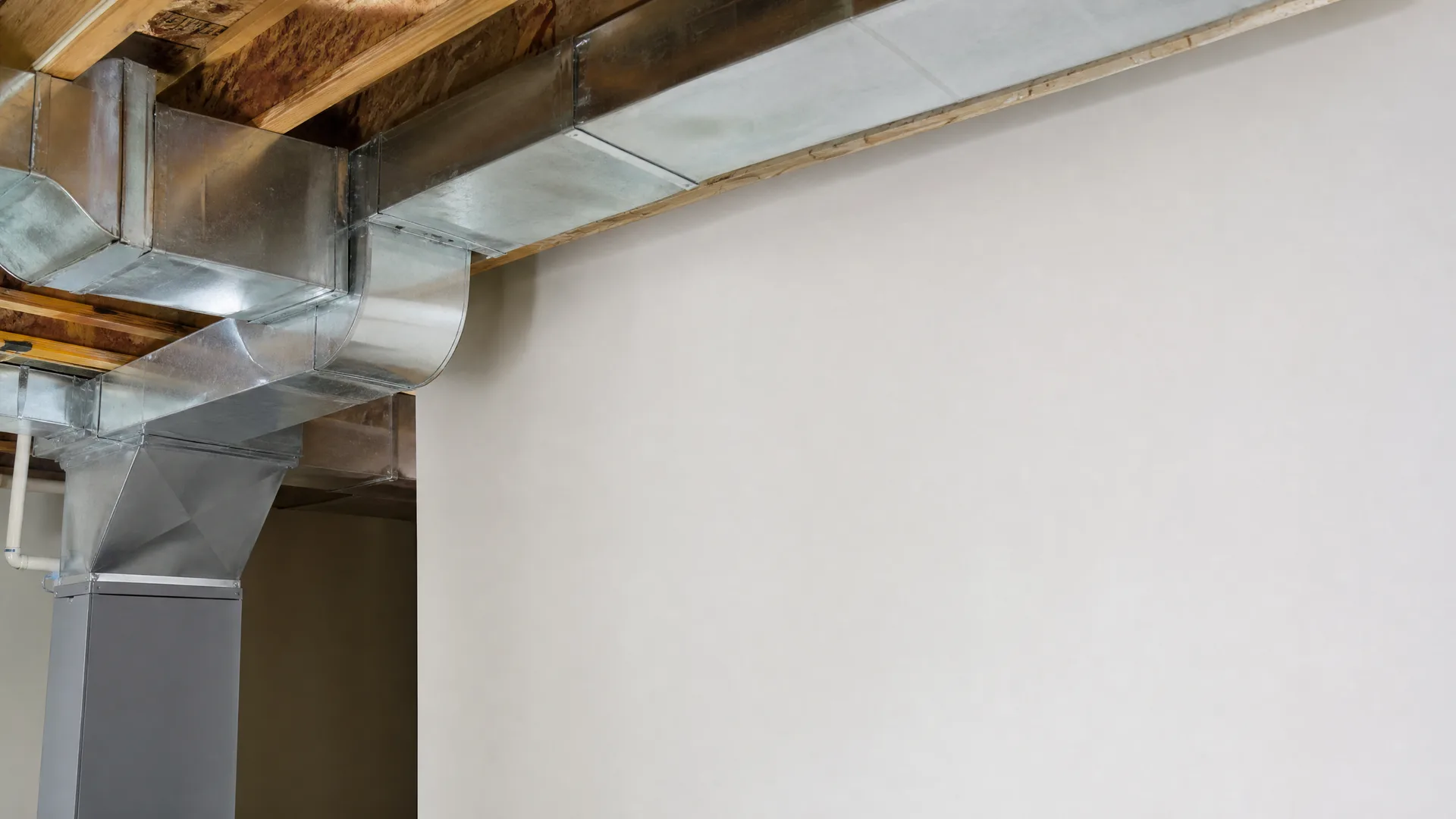
Most of the duct in a Woodbury house runs exposed overhead in the basement before it ever reaches a wall or floor vent upstairs. That makes it the easiest place to look. Walk the length of a trunk line with your hand near the seams. A puff of air against your palm at a joint, or a line of dust built up along a seam, means air is escaping there instead of reaching the register. Furnace running, this is a five-minute check.
The branch lines that run up into the walls and the attic are harder to get at, and that's usually where the worse leaks are, since nobody checks them for years at a time. A vent that barely moves air even with the furnace blasting, or an attic hatch that feels warm in January, points to a leak somewhere in that run. Without opening a wall or climbing into the attic, you're going on what the room tells you, not on what you can touch.
Can I test for a duct leak myself before calling someone?
Turn the furnace or AC on and go to the basement where the ducts run exposed. Move your hand slowly along the seams and joints of the trunk line and the branches feeding each room. A leak feels like a thin stream of air moving across your skin where there shouldn't be any, right at a joint rather than coming through a vent. A lit incense stick or a thin strip of tissue paper held near the same spots will show the same thing, the smoke or paper moving where the duct is sealed tight everywhere else. This tells you a joint is open. It won't tell you how much air is getting out, or whether the loss is enough to explain a cold room or a high bill, which takes a pressure test to measure.
Air leaves the furnace or AC under pressure through the trunk line.
That pressure pushes air out through any open joint before it reaches a vent.
Lost air collects in the attic or crawlspace instead of the room.
The system keeps running to make up for what it lost.



A room that won't hold temperature, a furnace that runs long, a bill that climbs past what the weather explains. Any one of those points to the same thing: air leaving the duct before it reaches the vent. You've seen now where that happens and why a house in Washington County is more likely to have it than not.
Confirming it by hand in the basement is one thing. Getting the joints actually sealed is another. A local contractor can pressure test the duct run, find every leak instead of just the ones near enough to feel, and seal what's open. Once you request that, the search is done. A contractor who handles this work reaches out to you, matched to what your house needs, and from there it's theirs to sort out.


Matched to your ductwork job