Musty smell from vents in Woodbury, MN

A galvanized steel round duct with a 90-degree elbow and a white louvered vent cover on one end, shown against a plain gray background.
Let a pro reach out

Why does musty smell come from my vents in Woodbury?

You walk by a vent and catch it, that damp basement smell, or something sourer. It's not constant, but it's there enough that you've noticed it more than once, maybe when the AC first kicks on or when the furnace starts up after sitting idle. You're not smelling smoke or anything that worries you outright, just something off, and you want to know what's sitting in your ductwork causing it.

Moisture sitting in your ducts or on your evaporator coil is growing mold

That smell is almost always mold or mildew growing somewhere air passes through, most often the evaporator coil or the drain pan under it. Summers here are warm without the heavy air of a true humid climate, but your AC still pulls moisture out of the house as it runs, and that water has to drain away. If the drain line is slow or the coil stays damp between cycles, mold gets a place to grow, and every time air moves past it, the smell comes through the vents. A duct system with any moisture sitting in it, even a small amount, will hold that smell and spread it to every room the ducts reach. Cleaning removes what has built up, but if the coil or drain pan is the source, that part needs attention too or the smell comes back.

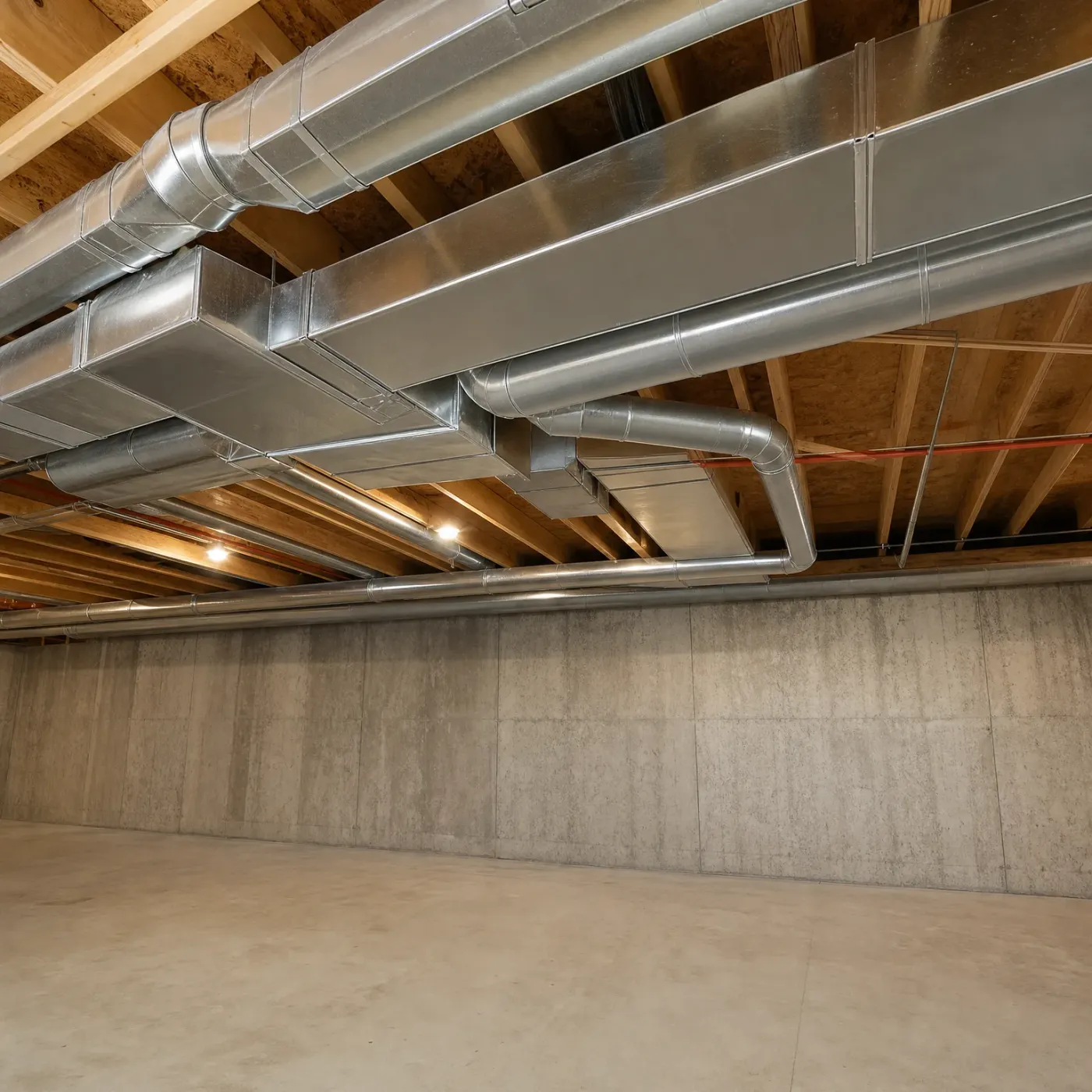
Unfinished basement with bare concrete floor and walls, showing galvanized sheet-metal HVAC ducts, pipes and recessed lights beneath a wood-joist ceiling.

Clean, dry ductwork

This is what ducts look like when moisture never gets a foothold. Metal stays bright under the dust, no dark streaking around the seams, no smell when the blower starts. Air moving through here picks up nothing on the way to your rooms.

An empty basement room with bare concrete walls and floor, with galvanized sheet-metal HVAC ductwork and a vent grille running along the wooden joist ceiling.

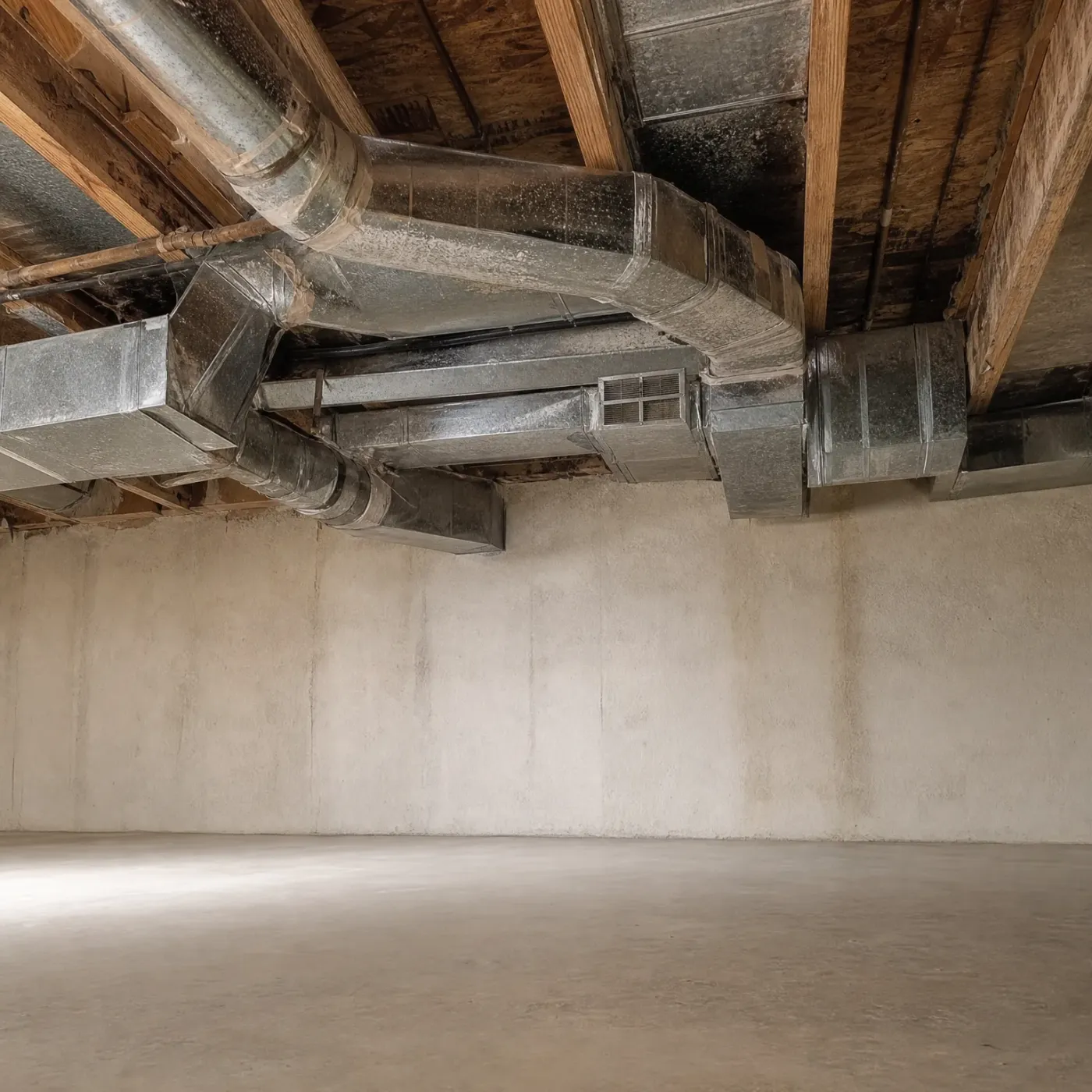
Ducts holding moisture

The discoloration around these joints is what trapped moisture leaves behind over time. Dust alone doesn't turn ductwork dark. That staining means something inside stayed wet long enough to grow, and every time the system runs, it pushes that smell out through your vents.

Why does a Woodbury home get musty duct smell year after year?

  • Half the homes here were built by 1992

    Half the homes in Washington County were built in 1992 or earlier, so a lot of duct systems here have had decades to collect dust and moisture nobody's looked at.

  • Heat runs October through May

    Heat runs October through May here, eight months of warm air moving through ducts that often sit closed up and damp the rest of the year.

  • Cooling runs June through August

    Cooling only runs June through August, but that's when the ductwork sweats the most and any smell already in there gets pushed straight into your rooms.

ACS 2020-2024 · NOAA nClimDiv 1991-2020

Unfinished basement with concrete floor and walls, exposed wood joists, galvanized sheet-metal ductwork, a furnace unit, a steel support column, and a small window.

Ductwork that's keeping up

Metal trunk lines like these move air without holding onto moisture. The joists stay open above, the furnace vents straight out through the wall, and nothing sits damp long enough to grow anything. A blower kicking on here just moves air, nothing else.

Empty unfinished basement with bare concrete walls and floor, showing exposed wooden joists, galvanized sheet-metal ductwork, pipes, and a white vent grille overhead.

Ductwork that's lost the fight

Flex duct sagging between joists holds condensation longer than straight metal does, and that one supply grille is doing a lot of work for a space this size. Low spots in duct runs like this collect moisture that never fully dries between cycles.

Is that smell coming from your own vents?

Stand near a vent and breathe in. If it smells like a basement after rain, or something sharper, that's not your imagination. You might notice it most right when the furnace or AC first kicks on, then it fades as air keeps moving. Check a supply vent cover and a return grille too. Dust that looks damp or slightly matted, instead of dry and loose, is a sign moisture's been sitting in there. Left alone, that moisture doesn't just sit still. It feeds mold growth inside the ducts, and every time the blower runs, your house is breathing that air. Anyone in your home with allergies or asthma usually notices it first.

A dim living room corner with a ceiling air vent, a curtained window showing blossoming trees, a table lamp and dark ceramic vessels on a wooden dresser, a potted plant, and a sofa in the foreground.

Late April, early afternoon, and the sun's coming in low across the living room carpet. You're on the couch with a book when you notice it on the end table, a thin gray film you wiped off three days ago. You look up and see the ceiling vent, its grille edged in the same dust, thicker in the slats than anywhere else in the room. The AC hasn't run yet this year, not really, just a test cycle last week when it got warm early. You get up and run a finger along the grille. It comes away dark. You think about wiping it down again, then you don't, because you know by tomorrow it'll look the same.

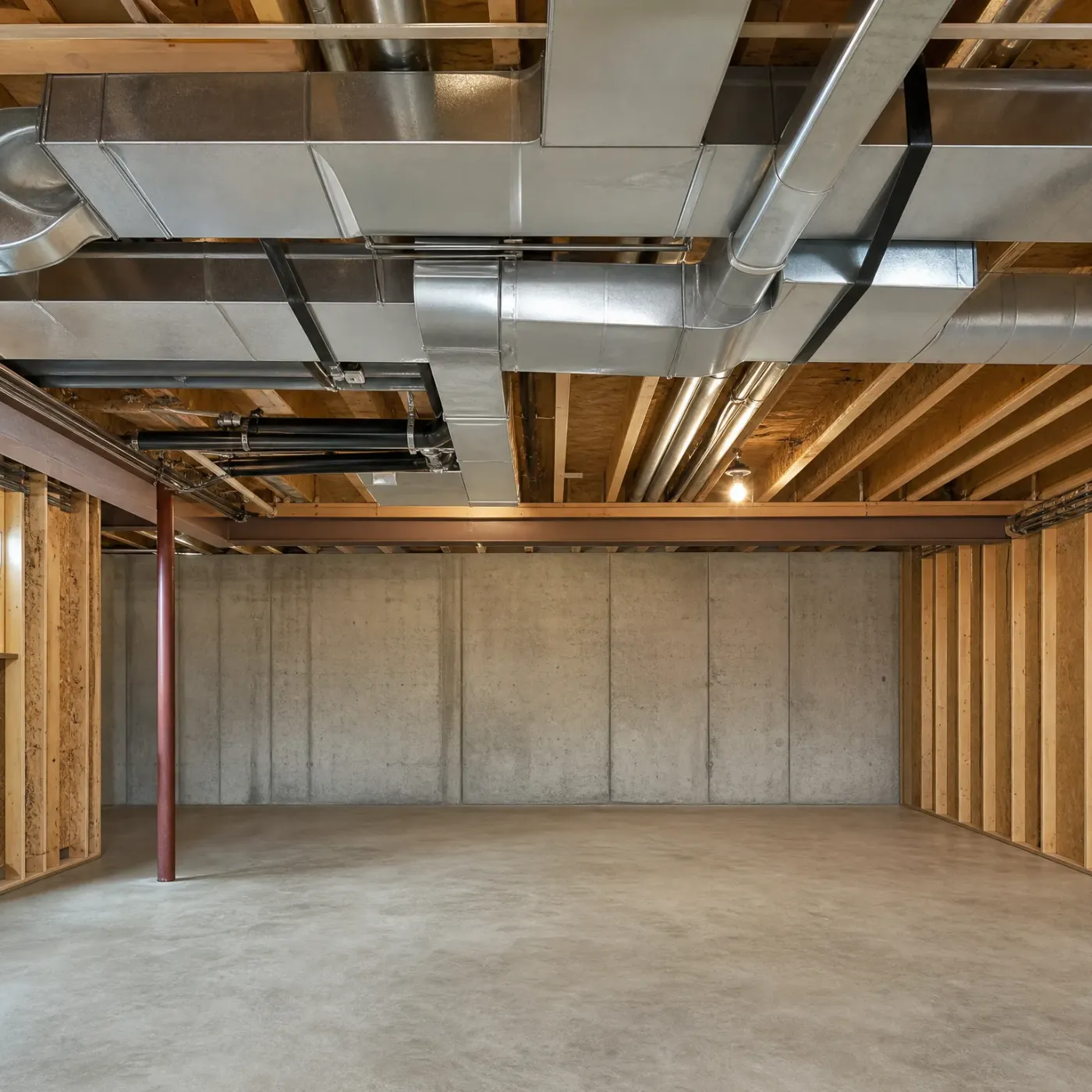
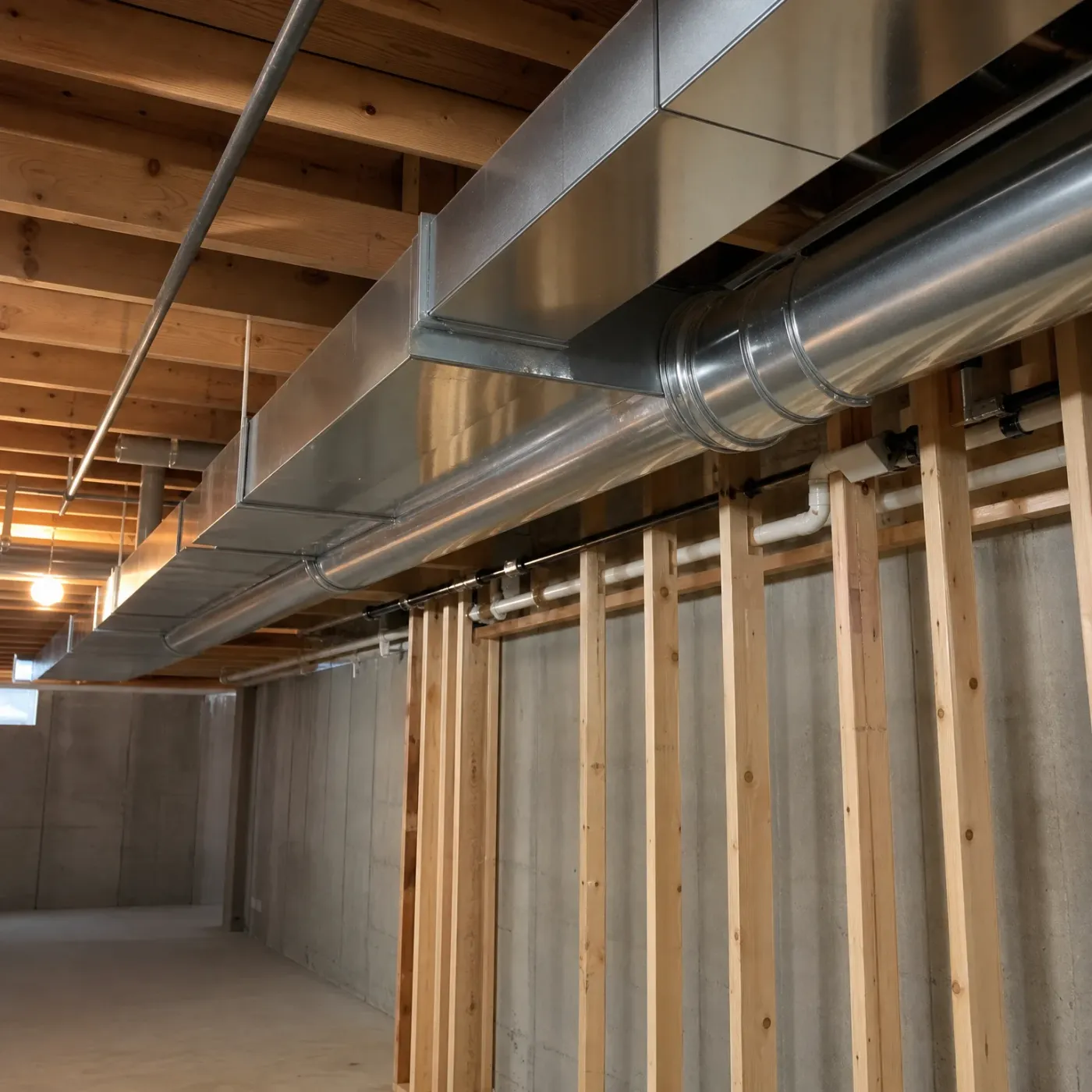
Empty unfinished basement with bare concrete floor and wall, wood-framed stud walls, exposed joists, galvanized HVAC ducts and pipes overhead, a steel beam and red support column, and a single bare bulb light.
Air moves through here without picking up anything on the way, no damp pockets along the trunk line for mold to settle into.
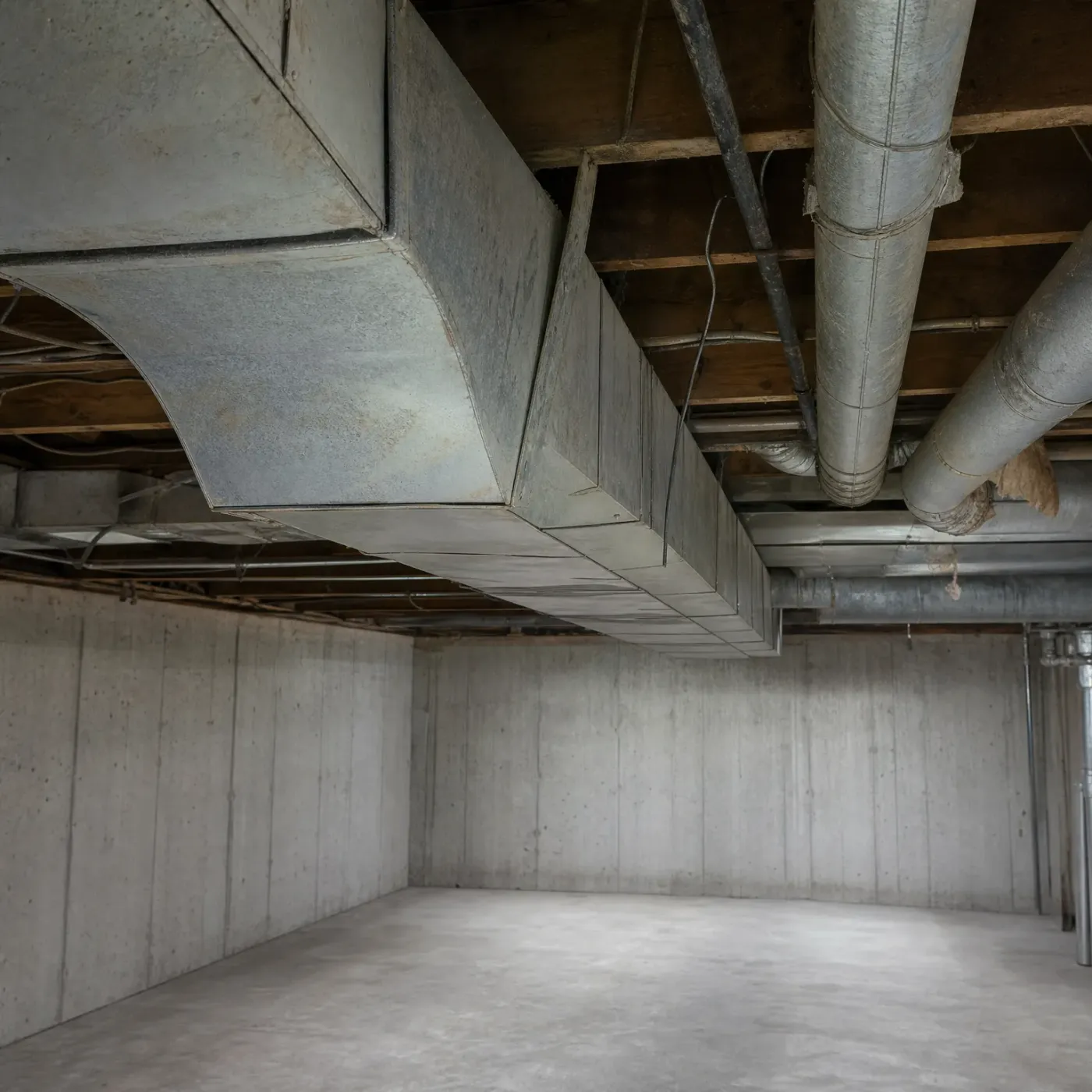
Empty concrete-walled basement with bare floor, showing large galvanized sheet-metal HVAC ducts, insulated pipes, wiring and wooden floor joists overhead.
A sheet metal duct holding moisture against the joists above it is how a basement smell ends up at your vents.
  1. Dust and skin cells settle inside the ducts over months

  2. Moisture from the AC's evaporator coil gets drawn into the trunk line

  3. Damp dust along the duct walls turns into mold and mildew

  4. The blower kicks on and pushes that air straight to your rooms

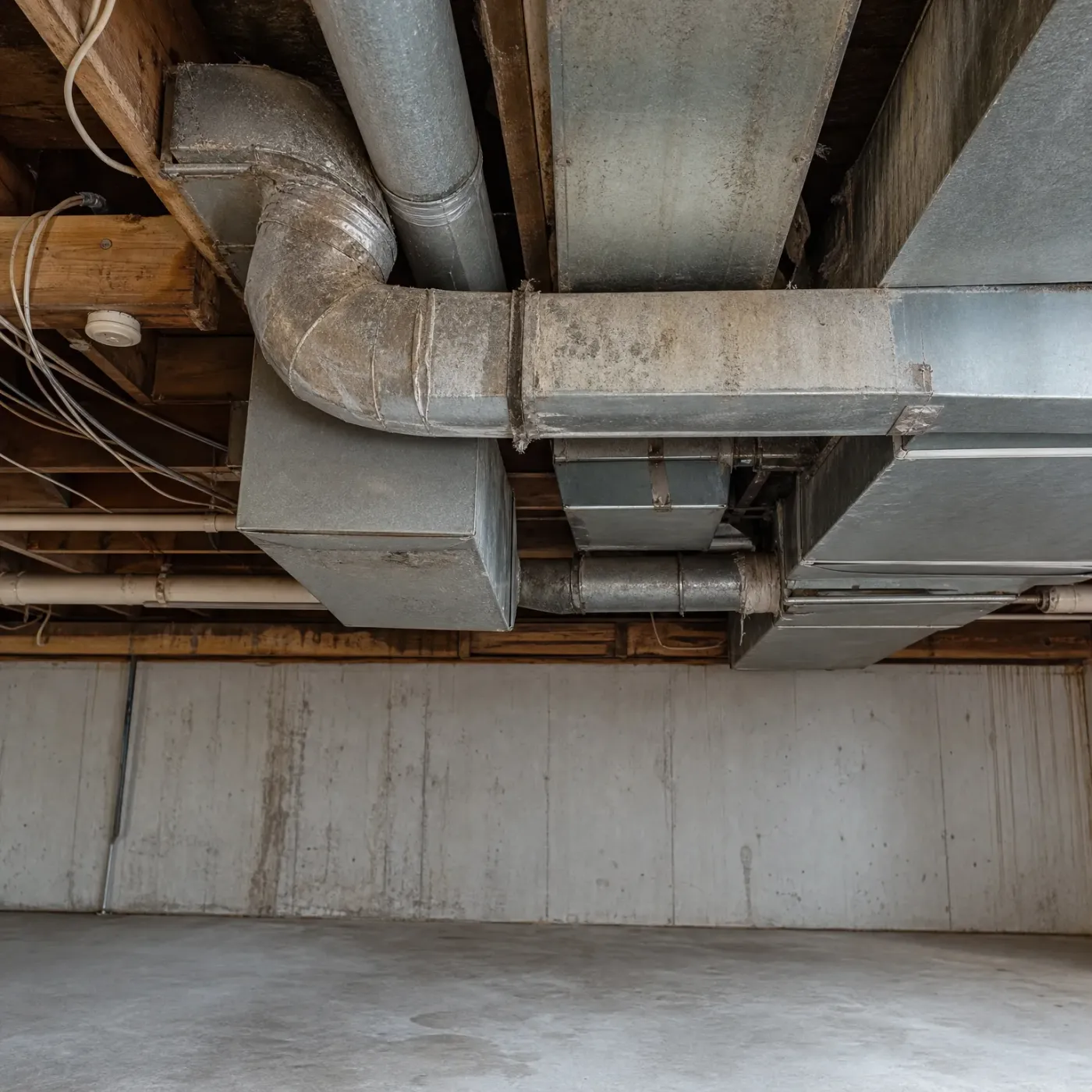
Galvanized sheet-metal ductwork and round pipes run beneath wooden floor joists in a basement with concrete walls and floor.
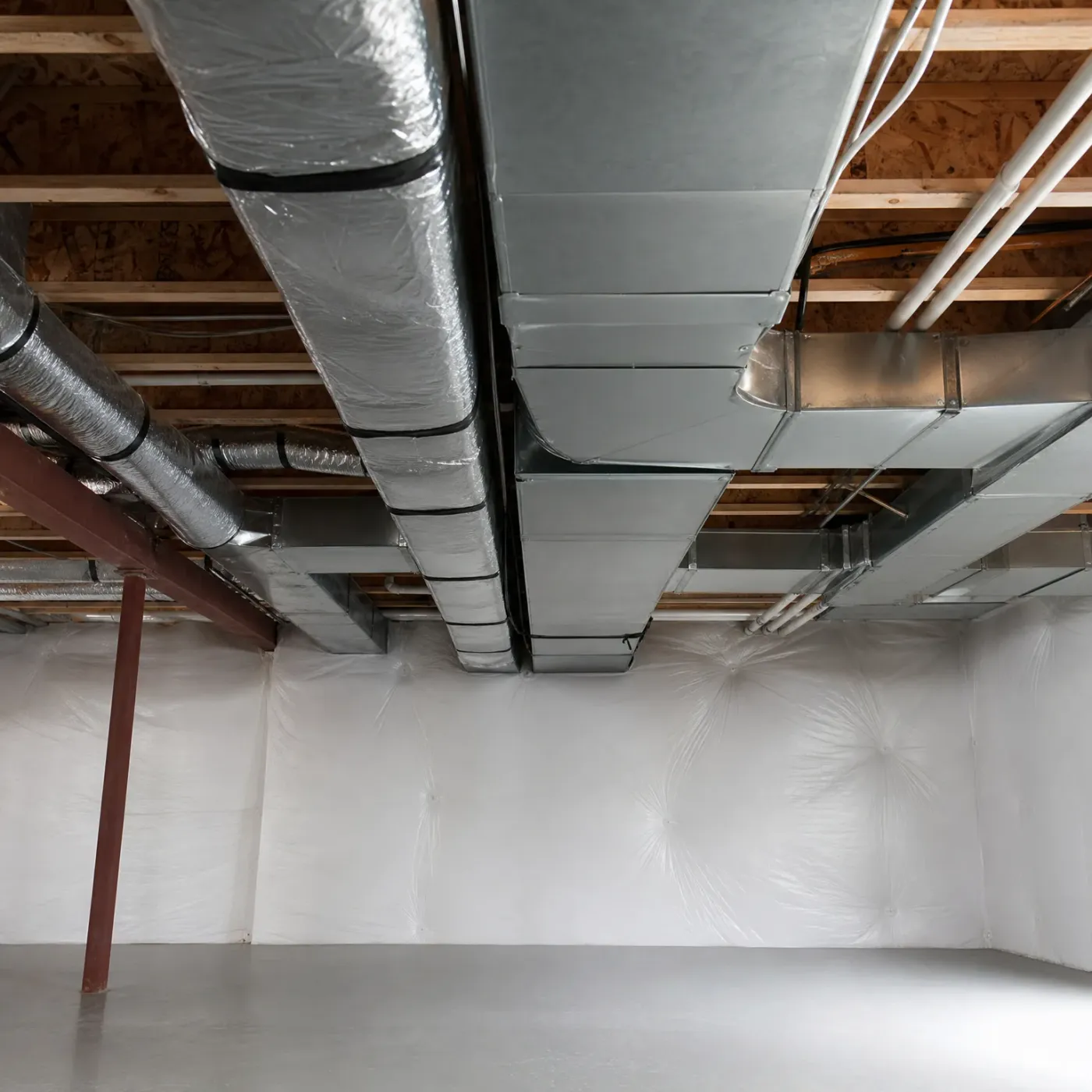
Before you get your ductwork cleaning
Unfinished basement with exposed wood joists, sheet metal and insulated flexible ductwork, white pipes, a steel support post, plastic-covered walls, and a bare concrete floor.
After you get your ductwork cleaning
Unfinished basement with exposed wood joists, galvanized rectangular and round ductwork, piping, stud framing against concrete walls, and a bare hanging light bulb.

Finding a pro stops being your job

The pro who gets in touch is licensed in Minnesota and works in Washington County.

One request and the search for a pro is handled.

Get a licensed local pro

Asking costs nothing, and the choice to hire stays yours.

Clean It Now Or Live With It

Clean it now

  • A duct cleaning gets the dust and mold out before the smell works its way into your furniture and clothes.
  • You stop breathing it in every time the blower kicks on, not just when you notice it standing near a vent.
  • Once the moisture source gets handled too, the smell doesn't just come back in a few months.
  • It's a smaller job than most homeowners expect, since it's the ductwork getting cleaned, not torn out and replaced.
  • A local contractor who works on Woodbury homes all season knows which parts of a system usually hold onto moisture.

Wait it out

  • The smell doesn't fix itself, since the dust and moisture causing it stay put until someone cleans the ducts.
  • Every month it sits, more dust and skin cells settle in the trunk line for mold to feed on.
  • You keep breathing whatever's growing in there each time the furnace or AC runs.
  • If the moisture behind it isn't dealt with, mold can spread further along the ductwork the longer it's ignored.
  • What starts as a faint smell near one vent can turn into something you notice throughout the house.
A bearded man in a dark blue T-shirt sits on a gray couch, smiling and looking down to his left, with a bookshelf and a bright window behind him.
A bearded man in a plaid flannel shirt stands indoors beside a wood-framed, frost-covered window, looking outside, with a steaming brown mug on the sill and a wooden cabinet behind him.

1992 or earlier

Half the duct systems around Woodbury date back this far or further, long enough for dust and moisture to build up without anyone checking.

I'm done searching

One pass through the trunk line

A cleaning clears dust and mold from the metal itself, so the blower isn't pushing that smell into your rooms anymore.

I'm done searching

Power here costs 16.82 cents per kilowatt-hour

At 16.82 cents a kilowatt-hour, running a dehumidifier or an extra blower cycle to chase down musty air adds up fast. Clearing the dust and mold from the ducts themselves means the furnace and AC aren't working against that smell all season, so you're not paying to mask a problem that's still sitting in the metal.

EIA-861 2025

What the smell tells you

  • That damp basement smell at your vents comes from moisture and dust built up inside the duct metal, not from anything in the room itself.
  • A duct cleaning clears the trunk line so the blower stops pushing that smell into every room it reaches.
  • Washington County winters and warm summers both push moisture through the system, so the buildup doesn't stop on its own.
  • A lot of Woodbury homes have ductwork dating to 1992 or earlier, giving mold decades to settle in unnoticed.
  • Once the ducts are clean, the furnace and AC aren't fighting the smell every time they cycle on.
  • A local contractor who works on this equipment every season knows where that buildup usually settles first.

The smell at your vents starts inside the duct metal, where dust and moisture have been sitting long enough to turn musty. It's not your furniture, it's not the room, it's what's moving through the trunk line every time the blower kicks on. Woodbury swings through hard winters and warm, humid summers every year, and that swing is what keeps feeding moisture into the system in the first place. A lot of the ductwork around here goes back to 1992 or earlier, which means some of it has had thirty years or more to collect dust nobody's ever checked. Mold doesn't need much time once it has dust to settle into and moisture to work with, and a duct system left alone will keep handing it both. Cleaning the trunk line doesn't just mask what you're smelling, it removes the dust and mold that's actually causing it. Once that's done, the furnace and AC stop pushing that smell into your rooms every time they cycle, because there's nothing left in the metal to pick up. Someone who works on duct systems in this area every season has seen where that buildup tends to settle first, usually near the coil or along seams where moisture lingers longest. That's the kind of thing you learn from doing the work here winter after winter, not from a general checklist. The smell has a cause, and the cause is sitting in the ducts themselves.

A smiling man in a dark green sweater sits at a wooden table with a light gray mug in a kitchen with white tile backsplash, pendant lights, and an adjoining living room visible.
A smiling man in a dark gray sweater stands indoors looking to the side, with a kitchen counter holding a ceramic mug and open wooden shelves behind him and a living area in the background.
A smiling man in a dark blue button-up shirt stands at a white kitchen island, with open shelving, a gas range, a potted plant and a window in the background.
A smiling man with dark wavy hair and a beard, wearing a dark green knit sweater, sits in an open-plan living room and kitchen with a brown sofa, large windows, and a counter holding a mug and a wooden bowl.

Ductwork Cleaning

One request and it's handed off

Your request stays with one local pro.

A black-framed smartphone standing upright against a plain light gray background, its screen filled with solid green.
Duct and vent cleaningDucts or ventsWashington County, MN
Step 1 of 2

What ZIP code is the job in?