






Mold in air ducts in Lakeville, MN

After you send the request, you're done searching.

Hand it off

Mold in air ducts usually means moisture got in somewhere, not dirt. A musty smell when the furnace or AC kicks on, dark specks around the vent covers, or a damp smell in certain rooms all point to it. Around Lakeville, the most common cause is a central air system that keeps the ducts cold while humid air leaks in around poorly sealed joints, so condensation builds up inside where you can't see it. Winters bring the opposite problem: a humidifier set too high, or a duct running through an unheated space, can leave enough moisture behind for mold to take hold even in January. Mold inside ductwork doesn't stay put. Every time the system runs, it moves spores through the house, into the air you and your family breathe. Cleaning the ducts removes it, but if the moisture source isn't found, it comes back.

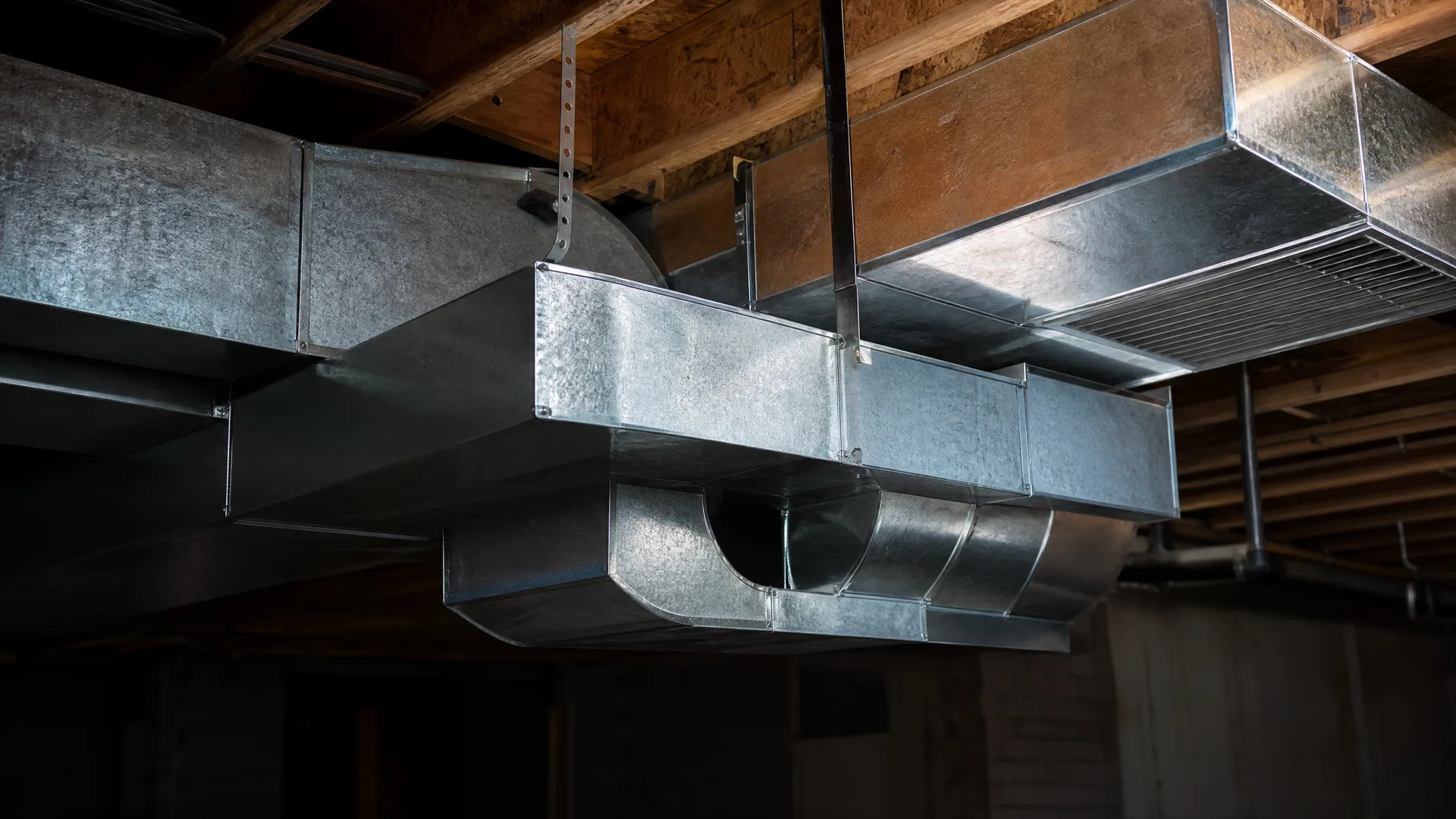
Galvanized sheet metal HVAC ductwork and round pipes running along an exposed wood-joist basement ceiling beside a plain white wall.

Why moisture collects in the ducts

An AC coil pulls moisture out of the air as it cools, and that water is supposed to drain away outside the system. If the drain line clogs or the coil stays wet longer than it should, that moisture ends up sitting in the duct nearest the air handler. Metal ducts near a cooling coil stay damp longer than ducts farther from it, which is why mold tends to start close to the unit and spread from there.

Galvanized sheet metal HVAC ducts and round pipes installed among wooden joists on a ceiling, beside a large blank white wall.

What a mold check actually covers

A contractor checking for mold in ducts looks at the coil, the drain pan, and the first few feet of duct near the air handler, since that is where moisture settles first. They also check the insulation around those ducts, because wet insulation holds mold even after the duct itself dries out. Flex duct with a damp inner liner often needs a section replaced rather than just cleaned, since the mold can grow into the material itself.

Why does my house smell musty when the air kicks on?

You might only notice it at certain times, when the AC first starts or the furnace kicks on after sitting idle. A closed-up room smells worse than the rest of the house. Someone in the house is stuffy or coughing more than usual, and it doesn't track with a cold. You check a vent cover and see dark specks around the edges, or the return grille looks dusty in a way that feels greasy rather than dry. None of this means the whole duct run is ruined. But mold in a duct system doesn't stay put. It rides the air into every room the system feeds, and a household with allergies or asthma will usually feel it before anyone sees it.

A man in a gray knit sweater stands smiling and looking off to the side beside a white marble kitchen island, with a dining table, pendant light, and open shelving in the background.
A smiling man with short dark hair and stubble in a gray sweater sits at a stone-topped counter with a white ceramic mug, in a room with a framed picture, a plant, and shelves holding bowls.
A smiling man in a dark navy sweater sits at a wooden kitchen counter with a light ceramic mug, with white tile backsplash, open shelving and a window with potted plants behind him.
A smiling man with dark hair and a beard, wearing a dark green knit sweater, stands at a kitchen counter with a ceramic mug, with an open living room, sofa, armchair and large windows behind him.

Clean the ducts, or fix the moisture

Duct cleaning

  • Clears mold growth and the dust and debris it feeds on from the inside of the ductwork itself.
  • Addresses the musty smell at its source if the mold is confined to the duct interior rather than the coil or drain pan.
  • Gives a contractor the chance to find where moisture is getting in, since cleaning means opening up and inspecting the run.
  • Does not fix a clogged condensate line or a coil that stays wet, so the mold can return if that's where the moisture starts.
  • Works best as part of a fix that also deals with whatever is letting water sit in the system.

Coil and drain service

  • Targets the AC coil and condensate line, which is where standing moisture usually starts in the first place.
  • Clears a clogged drain line so water goes outside the system instead of sitting in the ductwork.
  • Doesn't remove mold that has already spread into the duct interior or settled around the vent covers.
  • Stops the moisture problem going forward, but any existing growth in the ducts still needs to be cleaned out separately.
  • Often the step that keeps a duct cleaning from being undone within a season.
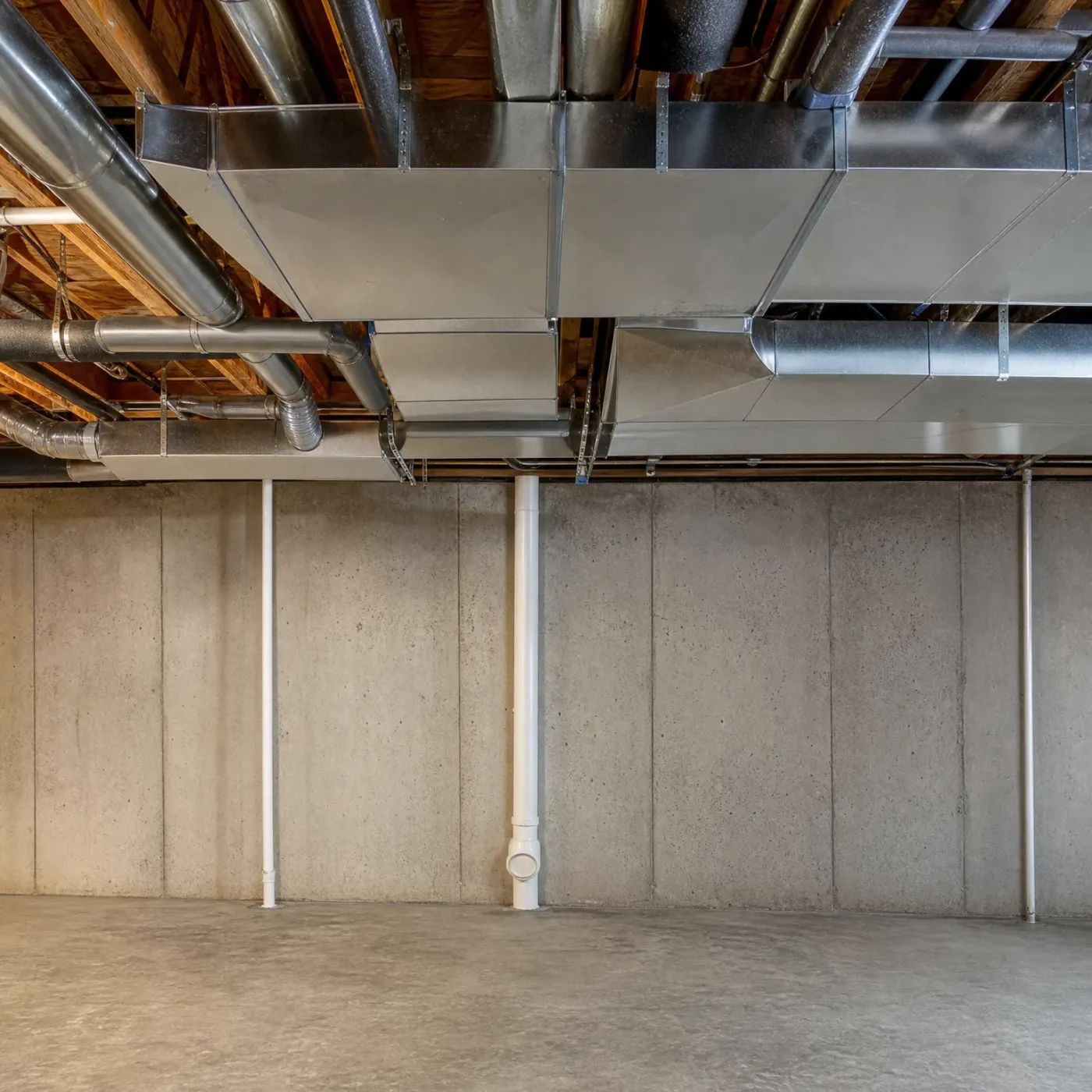
Unfinished basement with poured concrete walls, a bare concrete floor, white PVC pipes running down the wall, and exposed sheet-metal HVAC ductwork beneath wood floor joists.

Ducts running clean

This is what you want behind your basement ceiling. Sealed metal ducts carrying air to every room, no staining around the seams, no damp smell when you stand underneath them. The concrete floor and walls stay dry, and the PVC drain lines nearby are doing their job.
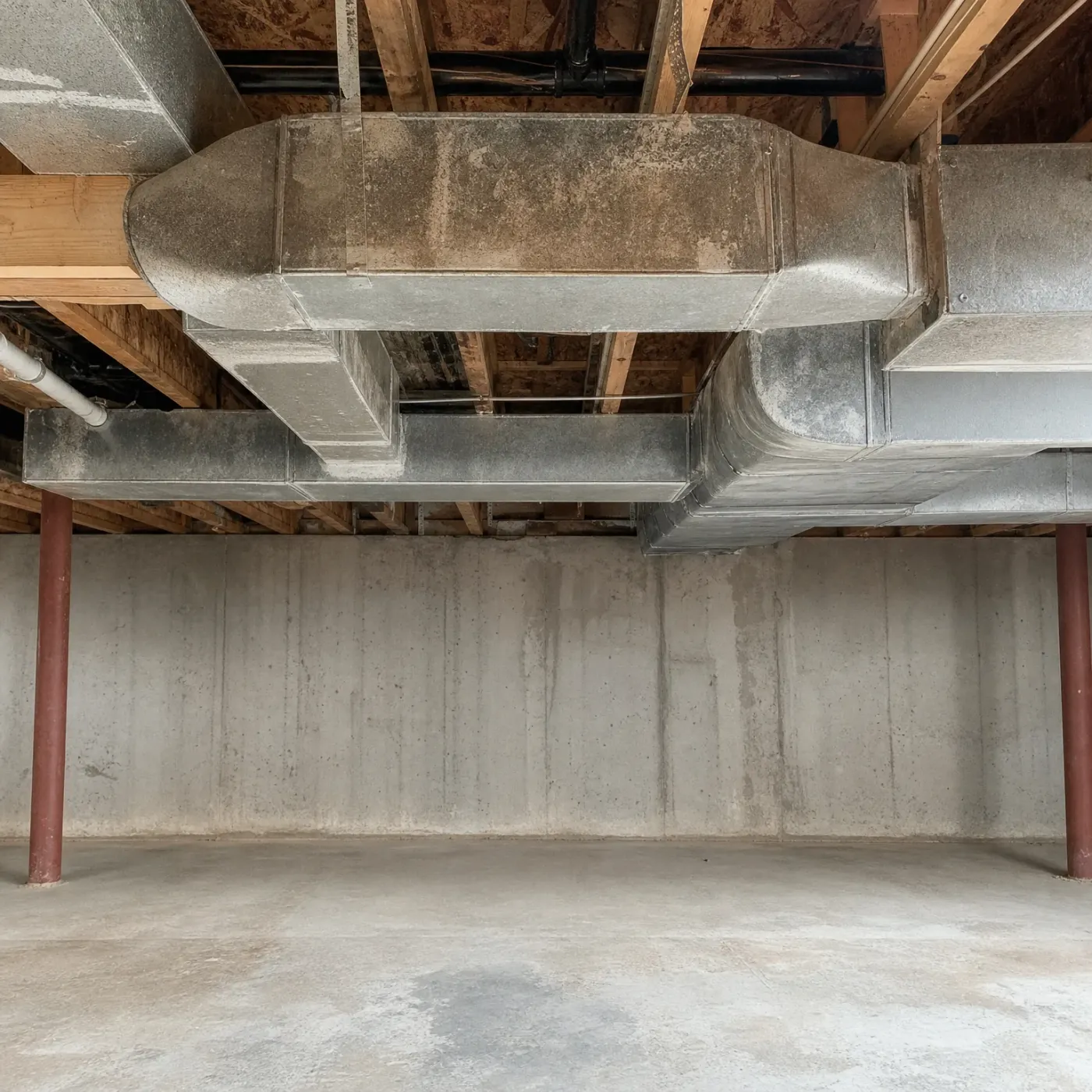
Unfinished basement with bare concrete walls and floor, galvanized sheet-metal HVAC ducts running beneath wooden floor joists, and two red steel support columns.

Ducts under stress

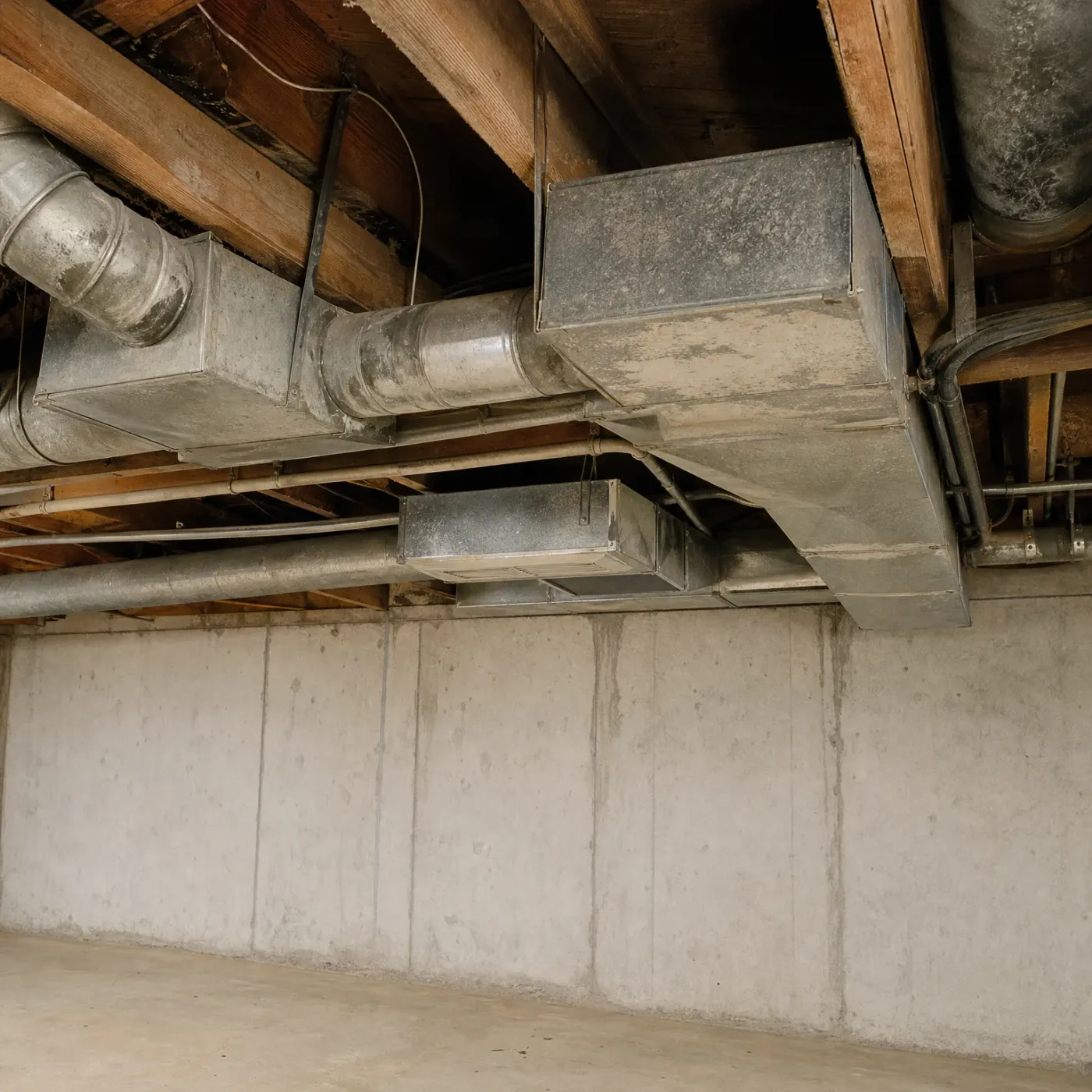
Here the ductwork runs the same path through the joists, but something upstream is feeding moisture into the system. Look for dark spots on the seams or at takeoffs near the furnace and coil. Left alone, that moisture keeps the mold fed long after a cleaning if the source is never found.

Basement ceiling with galvanized sheet metal ductwork, round pipes and rectangular plenums running between wooden joists above a bare concrete foundation wall and floor.
Before you get your ductwork cleaning
Empty basement room with bare concrete walls and floor, and an exposed wood-joist ceiling carrying sheet-metal ductwork, insulated pipes, and recessed lights.
After you get your ductwork cleaning

Done looking for a duct system pro

Skip searching for someone who cleans ducts in Dakota County.

Asking costs nothing, and the choice to hire stays yours.

If the mold is just in the ducts

A duct cleaning gets to it if the mold is actually confined to the ductwork and the sheet metal has no rust or soft spots. A contractor runs brushes and a vacuum through the supply and return runs, pulls out what's growing on the inside, and the musty smell with it. This works because moving air through clean metal doesn't leave anything behind for mold to feed on once the moisture source is handled too. It's a reasonable fix for a basement system where the ducts picked up dampness from a slow leak or a stretch of high humidity but the coil and drain pan tested clean. Skipping the moisture fix and just cleaning the ducts means the smell comes back, usually within a season.

If the mold keeps coming back

Mold that returns after a cleaning is usually growing somewhere the brushes didn't reach. A wet coil, a clogged condensate drain, or a crawlspace with standing water will keep seeding the ducts no matter how many times they get cleaned out. In that case the duct cleaning still has a place, but only after whatever's keeping things wet gets fixed first. A contractor can check the drain line for a clog, look at the coil for standing water, and pull a duct section apart if there's any doubt about rust or damage underneath the growth. That's worth knowing before you book anything, since cleaning ducts that keep getting wet is money spent on the same problem twice.

How old is the ductwork behind my walls likely to be?

  • Half the homes here were built by 1988

    Half the homes in Dakota County were built in 1988 or earlier. If yours is one of them, the ductwork has had decades to develop seams or joints where moisture can work its way in.

  • Heat runs October through May

    Heat runs October through May here, about eight months out of the year. That's eight months of air moving through the ducts and condensation at the furnace having a chance to settle in low spots.

  • Cooling runs June through August

    Cooling runs June through August. That's when the AC coil is pulling moisture out of the air, and any drainage problem shows up fastest in the ducts right below it.

ACS 2020-2024 · NOAA nClimDiv 1991-2020

A dimly lit living room corner with a gray wall, framed picture, a table lamp on a wooden side table, a beige sofa with pillows, a ceiling vent, and windows showing flowering trees outside.

It's a Saturday afternoon in April and the windows are still shut from winter. The furnace kicks off after a short run and the house goes quiet. Light from the window catches the ceiling vent grille, and you see it then: a gray fringe of dust caked along the slats, thicker than you remembered, and a faint haze of it settled on the bookshelf underneath. You wipe the shelf down and it looks clean for about a day. You stand under the vent and catch it again, that closed-up, damp smell you've been noticing since you turned the AC on for the first time this year. Nobody else in the house seems to smell it. You start to wonder what else is sitting up there that you can't see.

A wooden table with a closed laptop, a ceramic mug of dark coffee, and a glass vase of eucalyptus stems beside a window, with a dark green kitchen cabinet, wooden counter, potted herb, cutting boards and bowl blurred in the background.

What actually happens during a duct cleaning

A contractor opens access points along the supply and return runs and fits a vacuum to the system, usually through a hole cut near the furnace or at the main trunk line. Then a brush or whip spins through each branch line ahead of the vacuum, knocking loose what's stuck to the sheet metal so the negative pressure can pull it out instead of pushing it further into the house. Registers come off and get cleaned separately. The furnace blower and coil get looked at too, since the air moving through the system all passes through there.

If you tried to find someone for this on your own, you'd be calling around to ask who actually does negative-pressure cleaning versus whoever just shows up with a shop vac, since not every outfit that advertises duct cleaning runs the job this way. You'd be comparing quotes without knowing what's included, explaining the musty smell and when you notice it to three different people, and trying to tell from a phone call who'll actually check the coil and drain line instead of just running a brush through the main trunk and calling it done.

A light gray sofa with gray and beige textured throw pillows and a cream knit blanket beside a white-framed window, with a small round side table holding a ceramic vase and potted greenery.

Power here costs 16.38 cents per kilowatt-hour

At 16.38 cents per kilowatt-hour, running a shop vac or an air scrubber for hours to deal with mold yourself adds up fast. A contractor's equipment does the job in one visit instead of you running fans and dehumidifiers for days trying to dry things out.

EIA-861 2025

A bearded man in a dark t-shirt sits on a light sofa, smiling and looking down toward a laptop screen visible at the bottom edge of the frame, with a blurred living space behind him.
A bearded man in a plaid flannel shirt looks out a window at snow-covered conifer trees, with a steaming ceramic mug on the sill and wooden shelves holding dishes and a plant behind him.

What you know now

  • A musty smell plus a clogged drain line or a coil that stays wet points to mold growing inside the ducts, not just dust sitting in them.
  • A contractor can tell during the cleaning whether the mold stops at the sheet metal or has reached the coil and drain pan.
  • If rust or soft spots show up in the ductwork, cleaning alone will not solve it and the duct sections need repair or replacement.
  • Finding a contractor who does this work, checking they are licensed, and getting someone out to look is the part that takes the real time.
  • Once a contractor is out to inspect, you know within that visit whether you are looking at a cleaning or something more.

A musty smell when the air kicks on almost always means moisture, not just dust that built up over the years. In Dakota County that moisture usually traces back to a clogged AC drain line or a coil that stays wet longer than it should, sitting right there in the duct system every time the furnace or AC runs. Whether that turns into a quick cleaning or something bigger depends on how far it has gone. If the mold is confined to the sheet metal, a contractor can clear it out along with the dust it is feeding on. If the ductwork has rust or soft spots, or the mold has reached the coil and drain pan, cleaning will not fix what is actually wrong, and that part of the system needs repair or replacement first.

You will not know which situation you are in until someone looks. That is normal, and it is also the part that eats the time: finding a contractor who actually does duct cleaning, checking they hold a Minnesota license, calling around to see who can come out, and explaining the same musty smell and the same symptoms again to every one of them. None of that tells you anything about your ducts. It just delays the point where someone opens an access panel and looks.

Once a contractor is standing in your basement with a camera or a brush in the line, you get an answer in that same visit. Either the ducts get cleaned and the smell goes with them, or you learn now, while it is still a smaller job, that something behind the wall needs more than a cleaning.

Galvanized sheet metal HVAC ductwork with rectangular trunks and round takeoffs suspended from wooden floor joists in an unfinished basement ceiling.

It's off your list after this

Duct and vent cleaningDucts or ventsDakota County, MN
Step 1 of 2

What ZIP code is the job in?