Why your house is so dusty in Blaine, MN

Get matched with a pro who works on ducts in Anoka County.

Get a local pro

Why is my house so dusty in Blaine, MN?

You dust the shelves and a few days later there's another film on them. Maybe you've checked the furnace filter and it looks fine, or you've noticed it worse once the furnace starts running for the season. It's a fair thing to want an answer to before you assume it's just an old house or bad luck.

Your ducts or filter are letting dust circulate instead of catching it

Most of the time this comes down to the filter or the ductwork. A filter that's clogged or too low grade for the system lets fine dust pass straight through and get blown into every room. Leaky ducts do something similar: they pull in dust from the attic, basement or wall cavities and push it out the vents with the heated or cooled air. Once your furnace starts running regularly through the Minnesota winter, that air moves through the house constantly, so any gap in filtration shows up fast as dust on furniture and floors. If the ducts haven't been cleaned in years, dust and debris built up inside them gets stirred loose every time the blower kicks on.

A dimly lit living room corner with a dark wood side table holding a pale ceramic vase of leafy branches, a beige sofa with a dark gray cushion, and a sheer-curtained window showing trees and a roofline outside.

The furnace kicked on this morning for the first time in weeks, that stretch in spring when Anoka County can't decide on a season yet. You're in the living room with the afternoon sun coming in low, and it catches the ceiling vent grille just right. Gray fuzz along every slat, thicker than you remembered. You run a finger along the bookshelf below it and it comes away coated. You wiped that shelf down on Sunday. It's Wednesday. The coffee table has the same film, faint but there if you look at an angle in the light. You didn't walk anything in. Nobody's been near that vent. It just came from above.


What's pushing dust through your ducts in Blaine

  • Half the homes here were built by 1986

    Half the homes in Anoka County were built in 1986 or earlier. Ductwork that age has more joints and seams worked loose over the years, and that's where dust gets pulled in.

  • Heat runs September through May

    Heat runs September through May here, nine months of the year. That's nine months of air moving through the same ducts, picking up dust and pushing it into every room.

  • Cooling runs June through August

    Cooling only covers June through August. The other nine months, it's the furnace doing the work, so whatever is sitting in those ducts gets circulated far more often than it gets a break.

ACS 2020-2024 · NOAA nClimDiv 1991-2020

Dusty air that clears on its own

Some dust is just the house settling after the furnace sits idle. A few days of it running again and a cleaner filter usually catches most of what gets stirred up. If the film on your shelves has eased off since the furnace came back on for the season, the ducts are probably fine. Fabric, pet hair, and skin cells are always in a home's air, and a forced air system moves that around no matter how clean the ducts are. If you change your filter on schedule and the dust is manageable, that's normal for a house with ductwork, not a sign anything needs attention.

Dust that keeps coming back

Dust that doesn't let up no matter how often you run a clean filter points to something inside the ducts themselves. Loose insulation, debris in the ductwork, or gaps at the joints can keep feeding dust into the air every time the blower runs, and a new filter won't change that. If you're wiping the same shelf every couple of days through a full month of heating, or the vents themselves have visible buildup around the grille, that's not settling dust working its way out. A contractor who services ductwork in Anoka County regularly can look at what's actually inside yours and tell you whether cleaning will fix it or something else is letting dust in.

An older man with gray hair and a beard, wearing a dark coat flecked with snow, stands smiling in a dimly lit home hallway with lamps, a framed picture, and a wooden door.
A gray-haired, bearded man in a dark coat dusted with snow stands just inside an open door of a warmly lit home, looking off to the side.
An older bearded man in a dark snow-dusted coat and gray scarf stands just inside a dimly lit home entry, with a framed picture, lit table lamp, and an adjoining room with a fireplace behind him, and snow visible through the open door.
A gray-haired bearded man in a dark coat and scarf dusted with snow stands smiling in a dimly lit entryway with a white front door, a side table with a lit lamp, an oval mirror, and a patterned rug.

How Dust Actually Gets In

  • Return air ducts run under negative pressure, so any gap in a seam or boot pulls in whatever is nearby, attic dust, insulation fibers, or crawlspace grit.
  • Supply ducts then push that same dust out through every room register in the house, which is why it turns up on shelves far from where it got pulled in.
  • A furnace blower cycles on and off many times a day, and each cycle moves that air again even when the system looks like it's doing nothing.
  • Flex duct connections and older sheet metal boots are usually sealed with tape or mastic that dries out and separates from the metal over time.
  • A whole-house duct cleaning clears the dust already built up inside the runs, but it doesn't seal the gaps pulling new dust in.
  • Sealing the duct joints, especially at the plenum and the boots, stops the leak that's doing the pulling in the first place.

The ductwork in your house runs two ways, and each direction has a different job in building up that film on your shelves. The return side is under negative pressure, pulling air back toward the furnace. If a seam at a joint or a boot has come loose, that's a straight path for whatever is sitting in the attic or a crawlspace to get drawn in. From there it doesn't stay put. The supply side pushes that same air back out, through every register in the house, which is how dust ends up on a shelf in a bedroom that's nowhere near where it got pulled in to begin with. None of this needs the furnace running hard. The blower cycles on and off a number of times over the course of a day, and each time it does, that air moves again, so the dust keeps circulating even on days the system seems quiet. The usual point of failure is the tape or mastic sealing flex duct connections and older sheet metal boots. That sealant dries out over the years and separates from the metal, leaving a gap that's too small to see but plenty big enough to pull in dust with every return cycle. A duct cleaning takes out what's already built up inside the runs. It's worth knowing going in that cleaning alone doesn't close the gap that let the dust in, so sealing the joints, particularly at the plenum and the boots, is what actually stops it from coming back.

A woman wrapped in a thick fleece blanket sits on a sofa holding an open book, beside a lit table lamp and a frost-covered dark window.
A woman in a cream knit sweater sits in an armchair indoors, eyes closed and smiling, beside a window showing yellow and orange autumn foliage, with a mug on a wooden side table and shelves holding vases behind her.

Get matched with a duct system pro in Anoka County

A furnace that's been pulling dust through loose seams for years isn't going to stop on its own, and a filter change only does so much when the ducts themselves are feeding dust back into every room. Duct cleaning clears out what's built up inside the supply and return runs, the kind of buildup a vacuum and a new filter never reach. In a house with ductwork from the 1980s or earlier, that buildup has had decades to collect at the joints and bends. A contractor who services homes around Blaine and the rest of Anoka County sees this same setup often, older duct systems with the same worn seams, and knows where dust tends to collect and what it takes to get it out. Getting matched with one means a single local contractor looking at your system, not a handful of companies working off a form. If the gray film keeps coming back no matter how often you dust, that's worth having looked at before another winter of the furnace running pushes more of it through your vents.

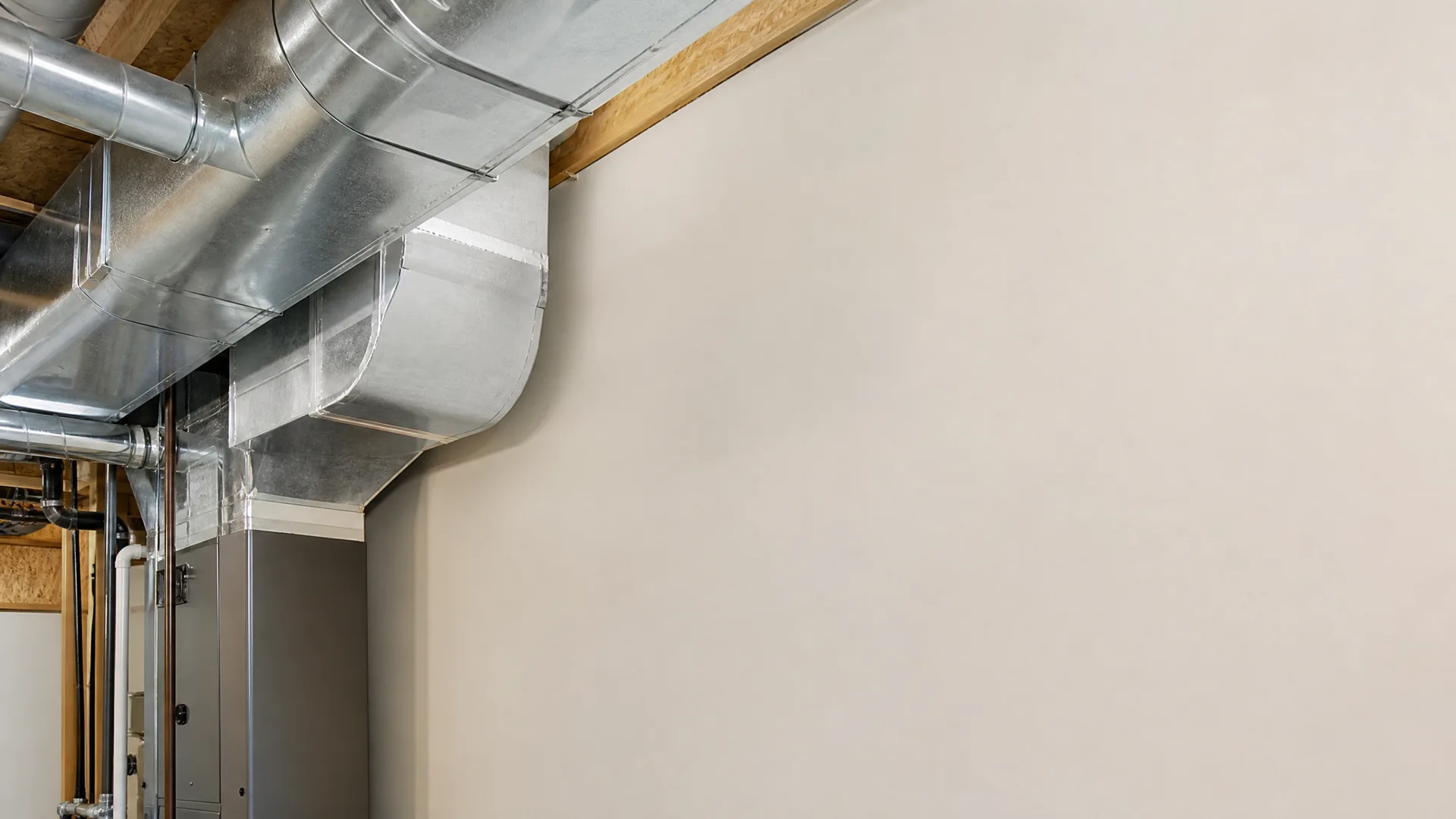
Galvanized sheet-metal ductwork and pipes running along an unfinished basement ceiling beside a plain beige wall, with a gray equipment cabinet below.

What a cleaning actually removes

A duct system that's never been cleaned holds more than loose dust. Pet hair, insulation fibers, and construction debris from when the house was built settle in the bends and low points of the trunk line. None of it moves until the blower pushes enough air to stir it loose, a little at a time, into the rooms you live in. Cleaning pulls that material out at the source instead of waiting for your furnace to distribute it room by room.

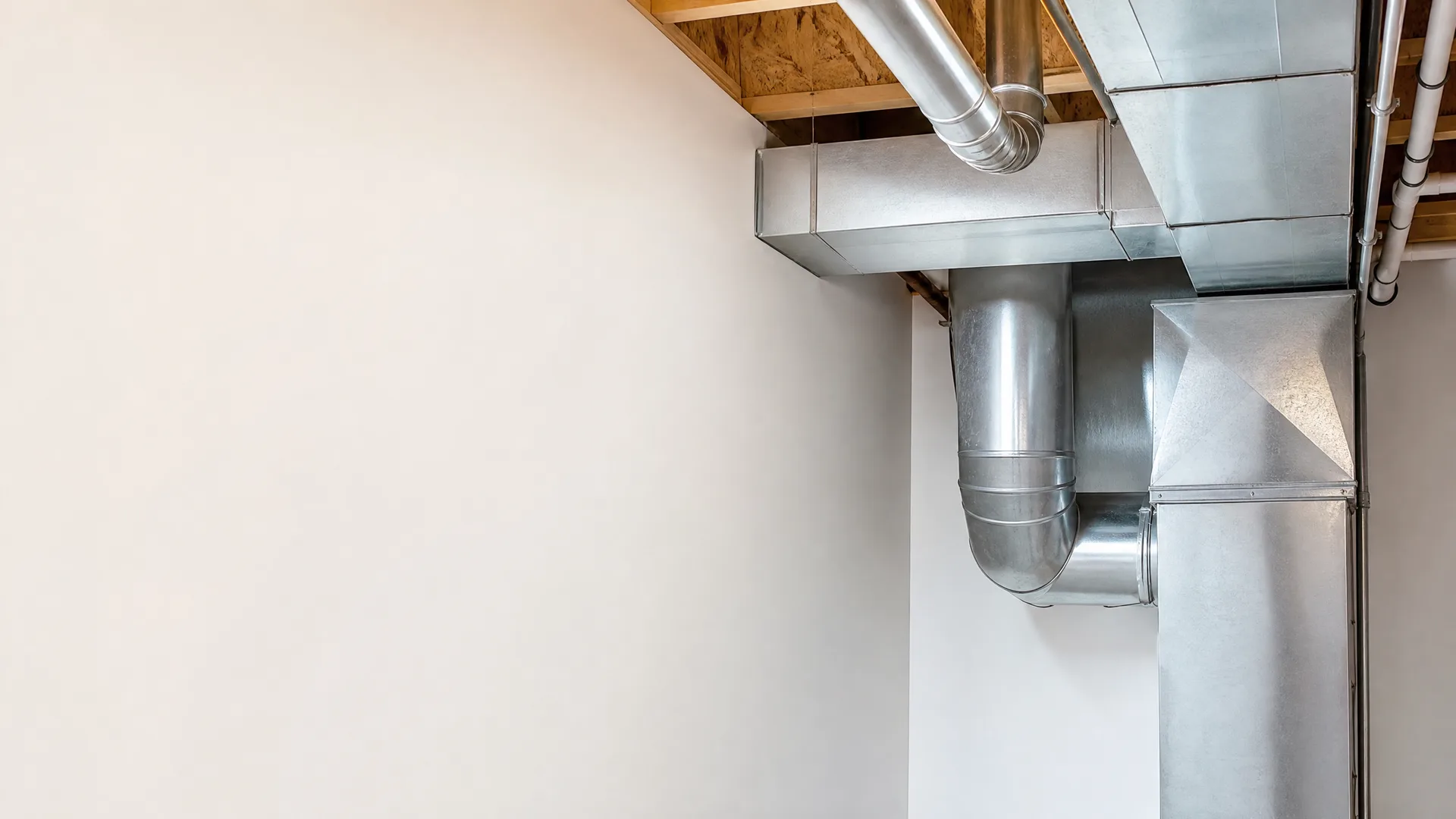
Galvanized sheet metal rectangular and round HVAC ducts running along a ceiling and down a white interior wall, with exposed wood joists and subfloor above.

Why sealing the seams matters too

Cleaning the ducts without addressing a leaky seam just means the same gap keeps pulling in attic or crawlspace dust after the service is done. A contractor who cleans ducts in Anoka County homes regularly checks the boots and joints while they're in there, since that's where the suction is strongest and the wear shows up first. Sealing what they find is often done in the same visit, so the dust that was getting pulled in has nowhere left to enter.

Power here costs 15.48 cents per kilowatt-hour

At 15.48 cents a kilowatt-hour, running the blower longer than it needs to adds up fast. A duct system clogged with dust makes the furnace fan work harder to push air through every register, and that's time on the meter you don't get back. Clearing the ducts lets the blower do its job without the extra strain.

EIA-861 2025

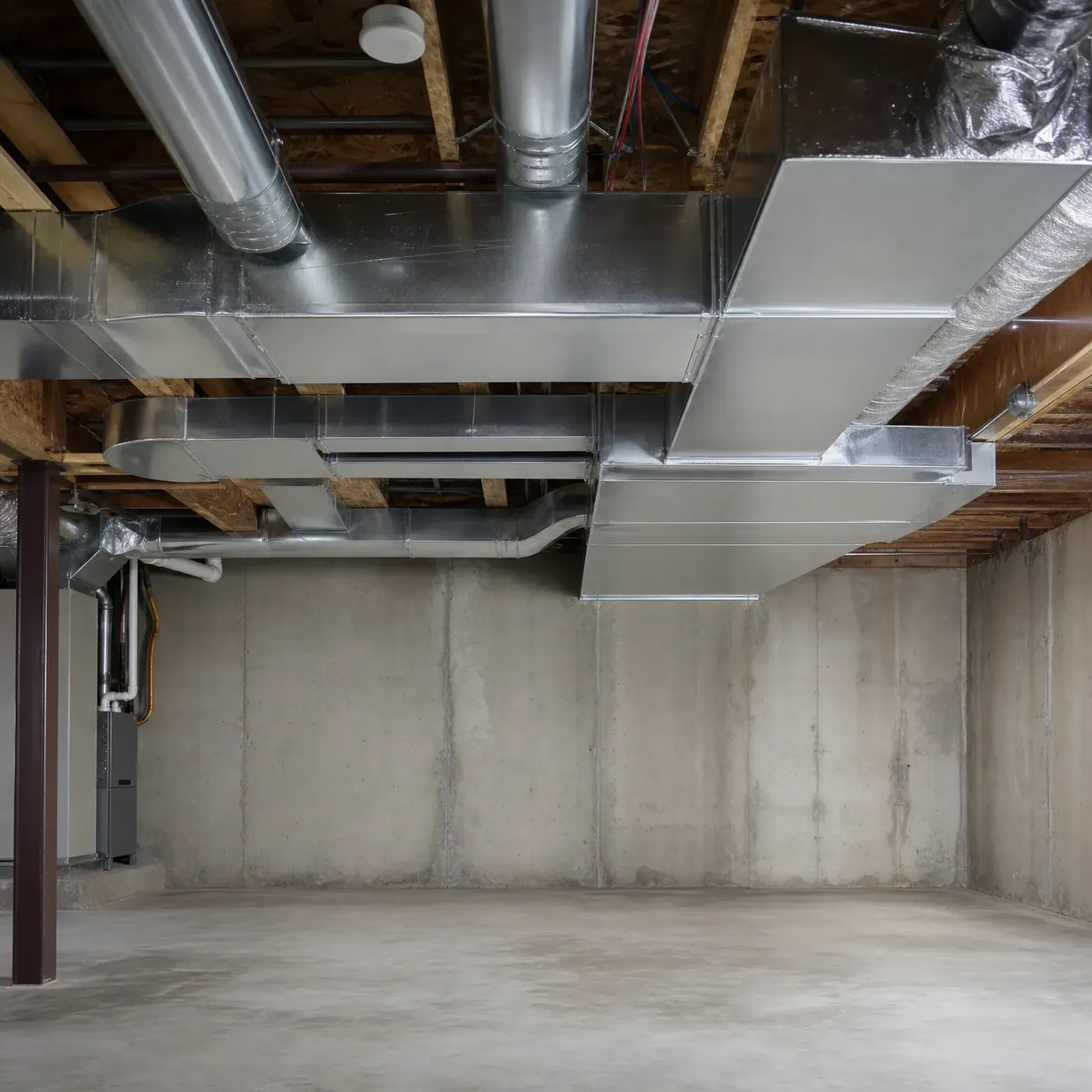
Unfinished basement with bare concrete walls and floor, exposed wood joists, and large sheet-metal HVAC ducts and pipes running along the ceiling.

Ducts doing their job

This is what a clean system looks like, sealed metal trunk lines running tight across the joists with no gaps at the seams. Air moves through without picking up anything from the basement along the way. The furnace and its connections sit clear and easy to check.

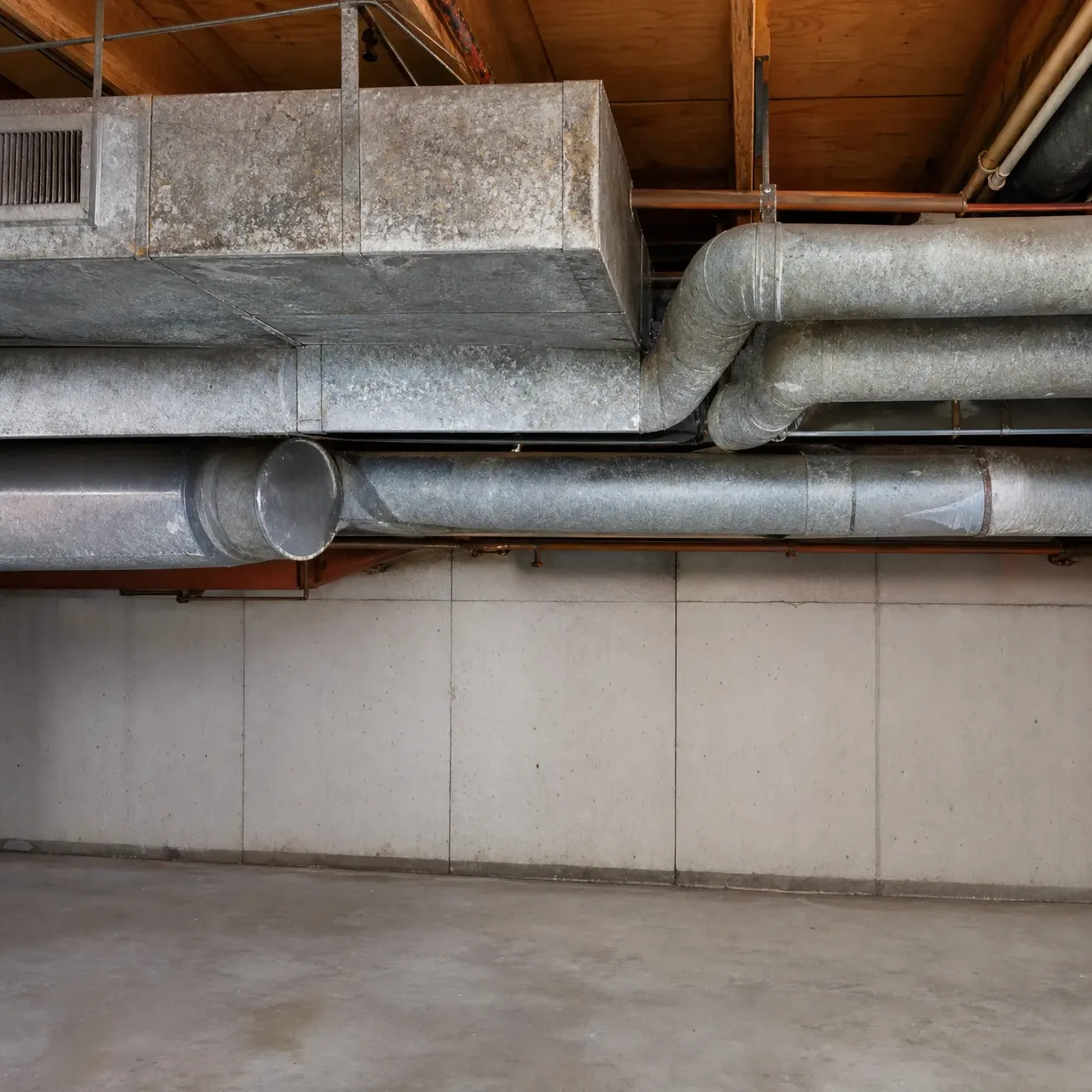
Basement interior with galvanized rectangular and round sheet-metal ductwork and copper piping running below a wood-joist ceiling, above a concrete wall and bare concrete floor.

Ducts feeding the problem

Here the joints between sections are the weak point. Any seam that's pulled loose or wasn't sealed well to start lets the return side draw in whatever sits near it, concrete dust, fiberglass, whatever's settled on the floor below. That's what ends up back in your rooms.

A woman in a long cream cardigan and jeans stands at an open wooden front door of a gray shingled house with stone-based porch columns, with a second person visible inside, and potted flowers and shrubs beside the entry.

What this looks like in your house

You've probably settled into a routine with it. Dust the end tables on Saturday, wipe the TV screen, and by Wednesday there's enough on the windowsill to write your name in it. Maybe you've started keeping a cloth in the kitchen drawer just for quick swipes between the real cleaning days. The air filter in your furnace gets changed on schedule and still the house doesn't stay ahead of it, because the filter was never the part doing the work here. The ducts are.

A clogged return isn't just a chore multiplier. It means the furnace fan is working against buildup every time it kicks on, and anyone in the house with allergies or asthma is breathing whatever that return is pulling in from the attic or the crawlspace. A contractor who services ducts in Anoka County homes regularly can tell you from the registers alone, sometimes from the blower sound, whether what you're dealing with is loose seams, a dirty trunk line, or both. Getting matched with one local company means you explain your situation once, not to three different sales calls.

A shallow dark wooden bowl and a stack of books rest on a wooden table in front of a beige sofa with linen and green cushions, with a tall ceramic vase of thin branches beside a window in the background.
  1. A contractor seals the supply and return lines at every register.

  2. A vacuum unit attaches to the trunk line to pull a negative pressure.

  3. A rotating brush or air whip knocks debris loose inside each run.

  4. The vacuum draws loosened dust and debris out through the trunk line.

The dust on your shelves is coming from somewhere specific: loose seams in your ductwork pulling in debris and pushing it out through every register in the house. That's not something a new filter or a few passes with a vacuum fixes, because the source is inside the duct system itself. A contractor who cleans ducts for a living in Anoka County has likely seen this exact house, the gaps in trunk lines of the same vintage as yours, the same low points where debris settles. Getting matched means one local contractor who works on this equipment looks at your ducts specifically, not a handful of companies competing for the job. You'll know where the dust is coming from, and you'll know what it takes to clear it out.

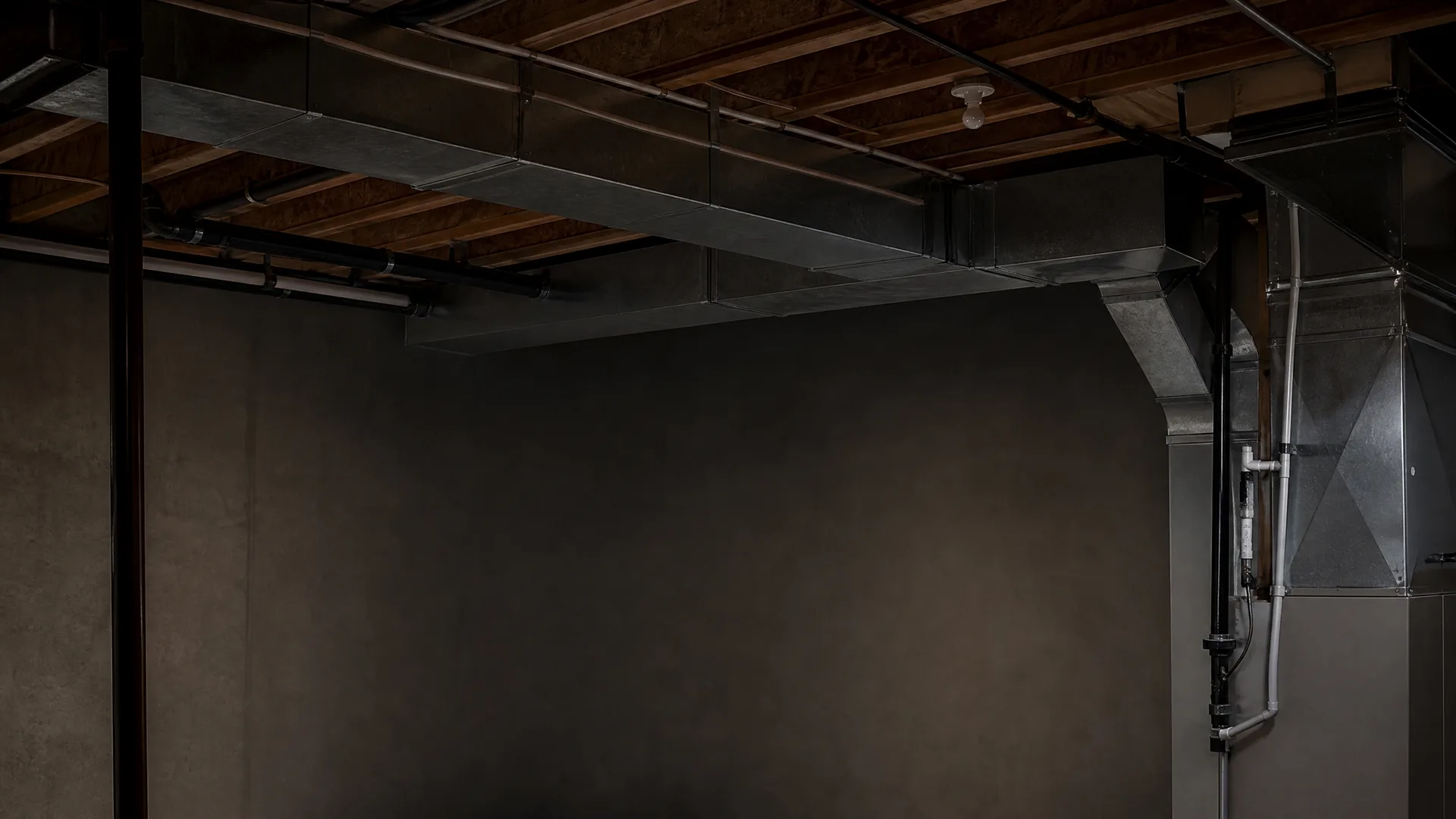
Dim interior with a dark gray wall, exposed wood joist ceiling, sheet-metal ductwork, conduit, pipes and a sprinkler head.

Find a duct system cleaning pro in Anoka County

A licensed pro who works in Anoka County gets your request.

Duct and vent cleaningDucts or ventsAnoka County, MN
Step 1 of 2

What ZIP code is the job in?