
Why your house is so dusty in Minnesota
Your house is dusty because your furnace is moving air through the house for most of the year, and every pass pulls household dust back into the ducts and blows some of it right back out. Minnesota homes run the furnace from October into April, so that duct system gets months of steady use without much of a break. Dust, pet hair and fine debris settle inside the ducts themselves, and the blower keeps stirring that layer loose and sending it into the rooms you're trying to keep clean. A dirty filter makes it worse, since it stops catching the fine stuff and lets more of it through. If you've changed the filter and you're still wiping dust off the shelves every few days, the dust has likely built up inside the ductwork, and changing a filter more often won't reach it. That's a job for cleaning the duct system itself, not just the air filter.




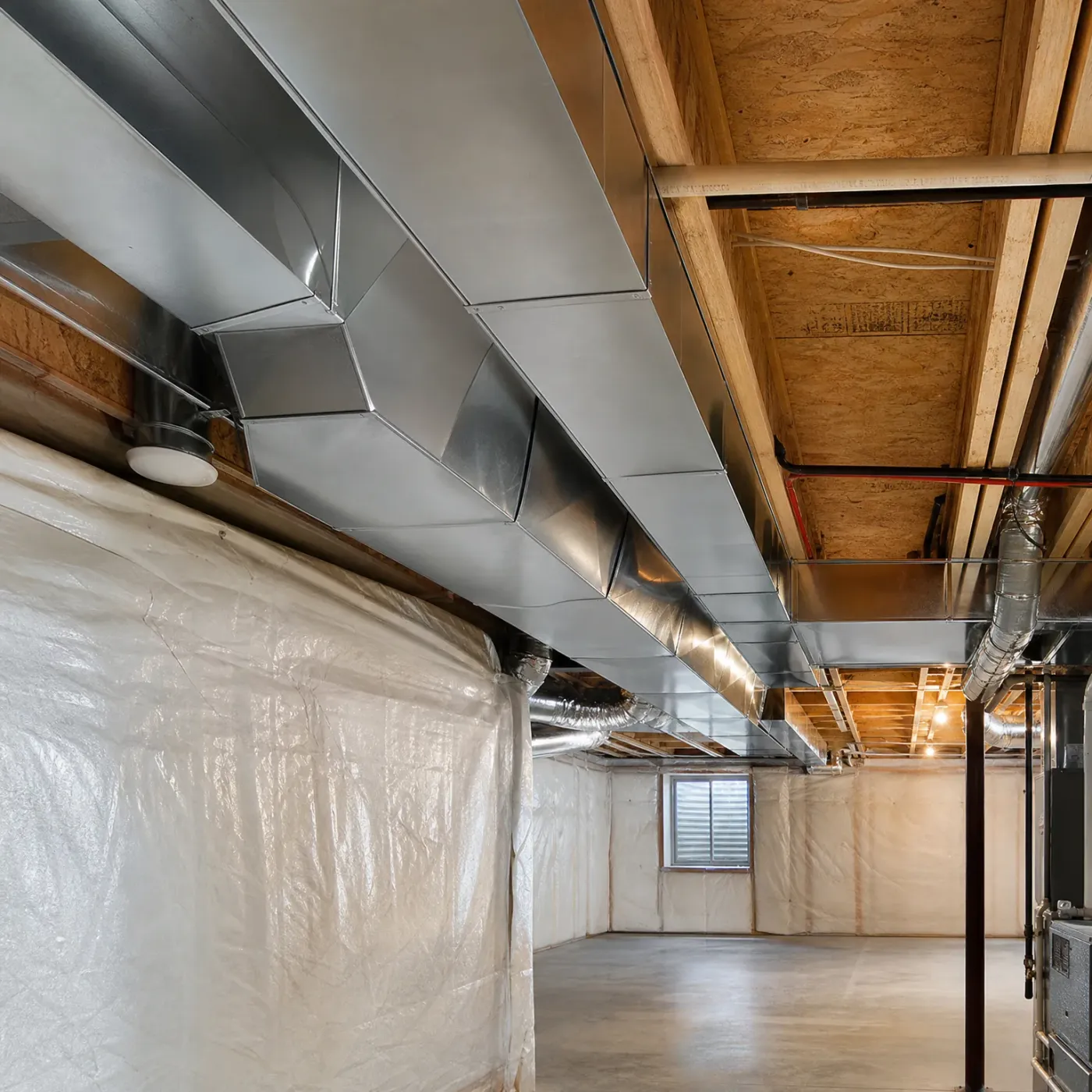
Your blower is not a gentle fan. It moves the full volume of air in your house every few minutes, every time it runs, and in a Minnesota winter that is most of the day. Dust that settles along the duct walls while the furnace is idle does not stay there. The next cycle picks it back up and carries it into your rooms. Your filter only stops what travels straight through it, so anything riding along the duct wall near the return slips past without ever meeting it. If a supply run has a loose joint or a torn section of flex duct, it can pull in air from the attic or basement and push that straight into your living space. A return with a similar leak does the same thing in reverse, drawing in air from wherever the gap is instead of the room it was built to serve. Add in that gas furnaces push out warm, dry air, and the dust those leaks bring in stays suspended longer before it settles on a shelf or a floor.
Where the dust actually comes from
- A furnace blower cycles the full volume of air in your house every few minutes whenever it runs.
- Dust that settles on duct walls during the off cycle gets picked back up the moment the blower kicks on.
- A furnace filter only catches what passes straight through it, so dust riding the duct walls past the return never meets it.
- Supply runs with loose joints or torn flex duct pull in dust from the attic or basement and push it straight into your rooms.
- A leaky return can pull air from a dusty crawlspace or attic instead of the room it's supposed to draw from.
- Gas furnaces push warm, dry air through the house, and dry air lets dust stay airborne longer before it settles.


Dirty Ducts vs. Clean Ducts
Dirty ducts
- Dust sitting on the duct walls gets stirred loose every time the blower starts, so the house never gets ahead of it.
- A furnace that runs from October into April is pushing that same dust through the house hundreds of times a season.
- Vents near the floor or baseboard show the buildup first, with gray streaks around the grille even after you've just cleaned.
- Furniture and shelves need dusting again within days because the air circulating through the house is still carrying it.
- Someone in the house with allergies or asthma notices the difference most, since the dust never stops being redistributed.
Clean ducts
- Air moving through the system picks up nothing extra, so dust in the house comes only from normal daily living.
- Surfaces stay clean longer between dustings because the furnace isn't restocking the air with what's in the ducts.
- The filter has less built-up dust working against it, so it keeps catching what comes through instead of being overwhelmed.
- A furnace that was already running October through April keeps doing the same job, just without feeding the problem.
- Vents and grilles stay free of the gray buildup that shows up when dust is cycling through them constantly.


A duct system pro near you

Send the form and the duct cleaning stops sitting on your list.
It costs nothing to send, and you don't have to hire anyone.
What a long heating season does
Minnesota runs its furnaces from October into April, more months than it doesn't. Every one of those months, the blower is cycling air through the same metal trunks and branches, and dust that isn't caught by the filter settles along the way. By the time spring comes, those duct walls have had six months to collect a layer that a typical cooling season in a milder state wouldn't build up. The furnace doesn't know the difference between clean ducts and dirty ones. It moves whatever air is in the system, and in a Minnesota winter, that's a lot of passes.
Where the dust actually settles
Dust doesn't fall straight down in a duct the way it would on a shelf. It moves with the air, and it collects where the airflow slows down: at the elbows, at the boots behind each vent, along the bottom of horizontal runs. Gas furnaces push a steady stream of warm air, and that steady stream is what keeps redepositing dust in those same spots instead of carrying it all the way out. Over a full winter, those are the places a duct cleaning actually targets, because they're the places holding the dust the blower keeps putting back into the house.



Dust and debris settle inside the trunk and branch lines over time.
A technician cuts access ports into the main trunk line.
A vacuum unit connects to the trunk to pull negative pressure.
An agitation tool knocks dust loose from each duct's walls.
Power costs 15.83 cents per kilowatt-hour statewide
At 15.83 cents a kilowatt-hour, running a vacuum unit or an air cleaner more often to fight dust adds up faster than it would somewhere cheaper. Clean ducts cut down how often the blower has to work against its own buildup, so you're not paying to move dust around.
EIA-861 2025 statewide residential average
Why Clean Ducts Settle It
- Dust in a Minnesota house traces back to a furnace that runs most of the year, not to open windows or bad luck.
- Clean ducts stop feeding dust back into the air the blower is already moving through the house.
- The filter still needs changing, but it was never going to catch what the duct walls were holding onto.
- Once the ducts are cleaned, the dust load drops right away instead of building back up through another winter.
- Finding a contractor to do the cleaning is the only step left, and the form on this page handles that part.
- From here, getting matched with someone local is no longer something you have to track down yourself.
The dust came from somewhere, and now you know where. A furnace that runs from October into April is pulling house air through the same trunk and branch lines hundreds of times a season, and whatever settles on those duct walls gets stirred loose and sent back out every time the blower starts. That's not a filter problem. The filter only catches what passes straight through it, and dust sitting on a duct wall never does. It builds there, season after season, until a technician clears it out.
Once that buildup is gone, the air moving through your house stops carrying it. You'll still change the filter on schedule, because that part of the job never went away. But the ducts themselves stop being the source, and the house stops fighting the same dust all winter. That's the difference between a filter doing its job and a filter trying to do a job that was never its to do alone.
The part that's left isn't yours to carry. Finding a contractor who services Minnesota homes, getting your specific setup in front of someone qualified to look at it, that's what the form on this page is for. Send it, and that search is off your plate. Someone local takes it from here.
A local pro for your ductwork cleaning
Send the request and finding a pro stops being your problem.
No charge to send it. You decide if you hire them.