The vent clear
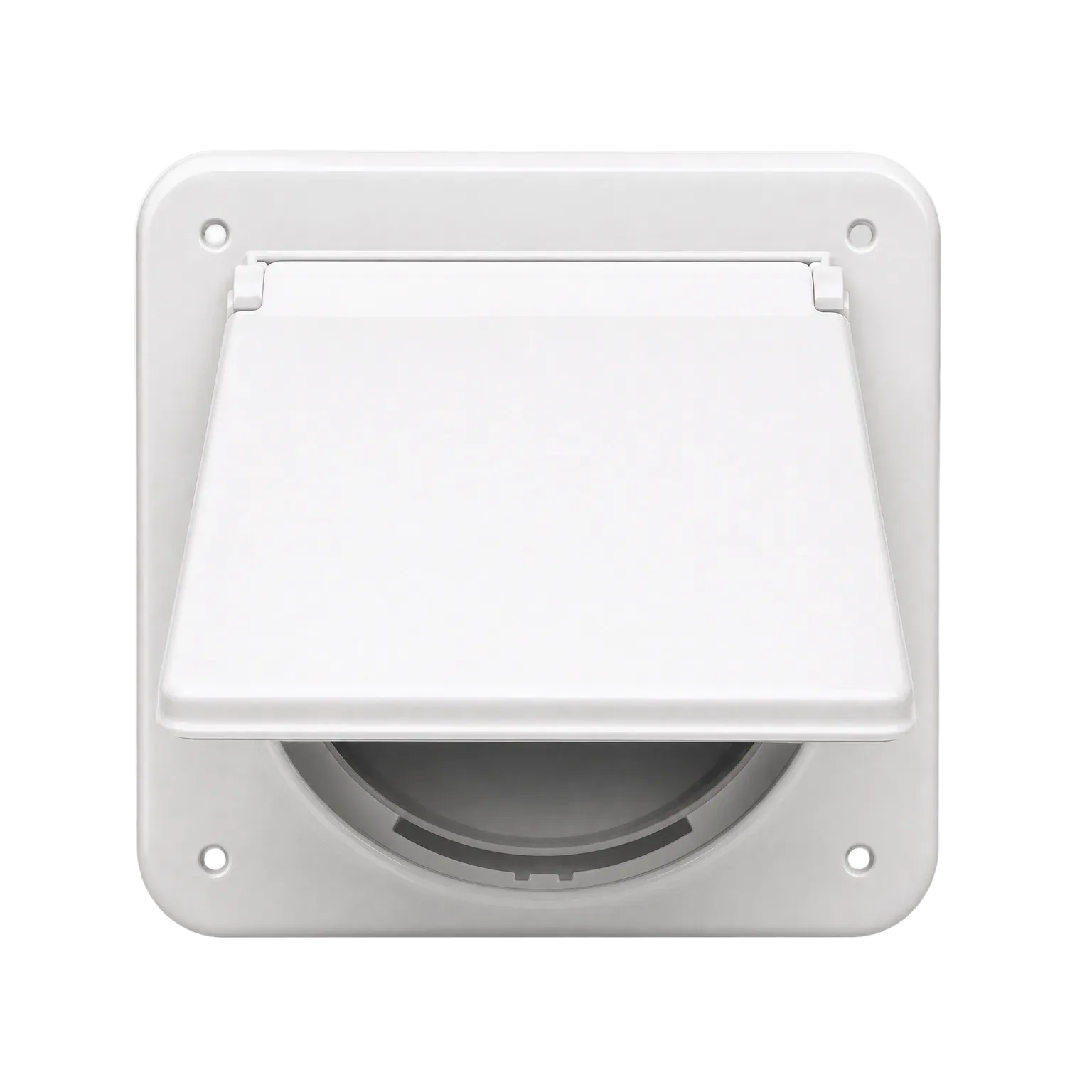
This is what a dryer vent looks like when air can leave the house. The hood sits flush against the siding and the louver hangs open, ready to swing with the airflow behind it. Nothing blocks the opening.
A dryer that runs hot but leaves clothes damp almost always means the air isn't moving, not that it isn't heating. Heat is the easy part. What dries clothes is airflow carrying that heat, and the moisture, out through the vent. When lint has packed the vent line or the hood flap outside is choked with it, hot air just sits in the drum and recirculates instead of exhausting. You'll notice a cycle that used to take under an hour now runs twice through before anything comes out wearable, and the dryer itself may feel hotter to the touch than it used to. In Minnesota, a vent run that goes through an attic or up an exterior wall is more likely to collect lint at the bends, and cold outside air can make a damp vent run work against you too. A full cleaning of the duct and hood clears the path so the heat the dryer makes actually leaves the house.


A dryer makes heat with an electric coil or a gas burner, but heat alone never dried a load of clothes. A blower wheel has to pull air through the drum and push it back out through the vent, carrying the moisture with it. When lint has packed into the vent, that air has nowhere to go. The blower keeps turning, the coil or burner keeps firing, and the thermostat inside the drum keeps reading the air temperature. It has no way to know the clothes are still wet. It only knows the air feels warm enough, so it cuts the heat on and off exactly like it's supposed to, while the moisture sits in the drum with nowhere to escape. A blocked vent also traps heat that would normally vent outside, which is why a dryer in this state often runs hotter than it should, not cooler. That trapped heat circles back around the drum instead of leaving the house. The clog itself is rarely sitting in one spot. It gathers where the vent bends, wherever the run turns a corner, and at the flap on the outside hood where lint collects and mats down over time. A vent that's clear does a simple thing well: step outside while the dryer runs and you should feel a strong, steady stream of warm air pushing out. If that push is weak or missing, the airflow problem is already underway, whatever the dryer's heat is doing.






A Minnesota winter puts a dryer vent to work harder than most people realize, with the storm door shut and laundry piling up because nobody wants to hang wet clothes outside in January. When the vent is packed with lint, every load runs long, the dryer runs hotter than it should, and the room it sits in warms up with it. That's wasted gas or wasted electricity every single time you run a load, and it adds up over a Minnesota winter of indoor laundry. A packed vent is also how dryer fires start, and that risk doesn't wait for a convenient weekend. Clearing the vent is a job for someone who can get a brush and camera the full length of the duct, not just the first few feet from the back of the machine. Send the request and let a local contractor take it from here.
A clogged vent doesn't just slow drying. It keeps the drum hotter than it should run, since the heat that should be leaving with the air stays trapped inside instead.
That trapped heat is why the dryer feels hot to the touch while the clothes come out damp. The coil or burner is doing its job. The vent isn't letting it matter.
At 15.83 cents a kilowatt-hour, every extra cycle a clogged vent forces shows up on your bill. A dryer fighting a blocked vent runs the same load twice, once for the timer and again when you rerun damp clothes, and you pay for both.
EIA-861 2025 statewide residential average

This is what a dryer vent looks like when air can leave the house. The hood sits flush against the siding and the louver hangs open, ready to swing with the airflow behind it. Nothing blocks the opening.

Lint has built up at the opening until it pushes past the louver and out into the open air. If you can see lint from across the yard, the dryer has been pushing against a wall of it for a while.

A dryer running hot with damp clothes at the end is telling you the air has nowhere to go. That's the vent, packed with lint and holding the heat inside the drum instead of letting it carry outside. Everything above points to the same spot: the hood on the outside wall, the duct running to it, and whatever has built up along the way.
Clearing that line is its own job, with its own tools, and it's not one most people want to take on themselves in a Minnesota winter. Once you send the form, you're done hunting for who to call. A contractor who handles this work in your area gets your information and reaches out to you. From there it's off your plate.


A pro who works on dryer vents



