
The hood that's clear
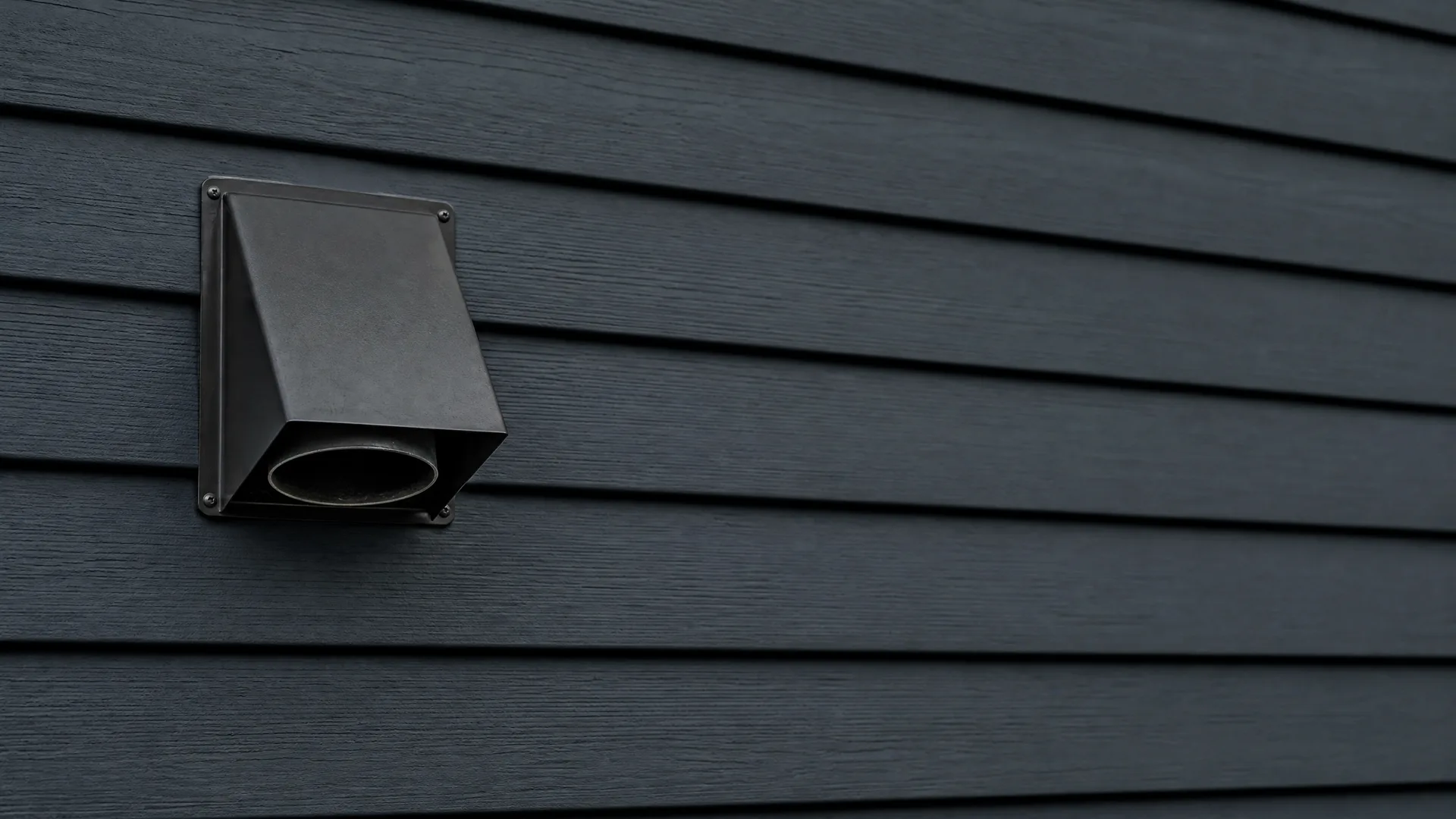
Air pushes the louvers open and they swing shut when the dryer stops. Walk outside while a load is running and you should feel warm air moving against your hand. That's the vent doing its job and the dryer drying in one cycle.
Answer a few questions about the dryer vent cleaning and skip the search.
Describe it onceA load that used to take forty minutes now runs through two cycles and still comes out damp around the seams. You check the lint trap, you clean it, and the next load still drags. Before you call anyone, you want to know what actually causes this so you're not guessing at the fix or replacing a dryer that didn't need it.
A dryer dries by pushing hot, wet air out through the vent and pulling in fresh air to heat again. When lint packs the vent line, that air has nowhere to go. The drum keeps tumbling and the heater keeps running, but the moisture stays in the drum with your clothes. That's why a load that should take forty minutes stretches into two cycles, and why clothes come out hot but still damp. In Blaine, vent runs often have more bends to clear framing and reach an exterior wall, and each bend is a place lint settles. A clogged vent also means the dryer runs hotter and longer than it should every time you use it, not just once.

Air pushes the louvers open and they swing shut when the dryer stops. Walk outside while a load is running and you should feel warm air moving against your hand. That's the vent doing its job and the dryer drying in one cycle.

Lint has packed the opening until the louvers can't move. The dryer is pushing hot, damp air against a wall of its own lint with nowhere to go. That backup is what's stretching your drying time, and it's a fire risk sitting on your siding.

The trap catches most of the lint, but not all of it. What gets past it sticks to the inside of the duct, especially at bends and seams, and it builds up a little more with every load. A duct that was wide open last year can be half blocked now and still look fine from either end, since you're only seeing the first foot or two of it.

A straight duct from the dryer to an outside wall loses less heat and lint than one that turns a corner or runs through a long stretch of basement before it reaches outside. Every bend and every extra foot gives lint more surface to catch on. If your run is long or has more than a turn or two, it needs cleaning more often than a short, straight one would.

Every load that runs two cycles instead of one is pushing hot, wet air somewhere. Most of it should go straight outside through the vent. When the duct is choked with lint, some of that moist air backs up into the laundry room instead, and in a Blaine winter that moisture hits cold walls and windows and has nowhere to go. You'll notice it as a musty smell near the dryer or a damp feel to the room that wasn't there before.
There's also the heat. A gas dryer working to push air through a clogged vent runs its burner longer each cycle, and in a house already working to stay ahead of a Minnesota winter, that's one more appliance straining against itself. Instead of pulling out the dryer yourself, measuring the duct run, and calling around Anoka County to find someone who'll actually show up for a job this small, one call gets you a local contractor who clears vents like this all season and knows which runs in this area tend to clog first.

2.67 people per household on average
A household here runs 2.67 people on average, and that's towels, sheets, and jeans piling up most days of the week, not just a load here and there.
Half the homes here were built by 1986
Half the homes in Anoka County went up in 1986 or earlier, and a vent run that old has had decades to pick up bends, sags, and lint nobody's seen.
Power here costs 15.48 cents per kilowatt-hour
At 15.48 cents per kilowatt-hour, a dryer running two cycles instead of one burns through power at a typical rate, so the extra cycle is the real cost, not the rate itself.
ACS 2020-2024 · EIA-861 2025




The pro who gets in touch is licensed in Minnesota and works in Anoka County.
No charge to send it. You decide if you hire them.
A dryer only dries as fast as its duct lets air move. The blower pushes hot, wet air down the duct and out through a hood on the outside wall, and anything that slows that air down slows the drying. Every bend in the run costs you some airflow, so a duct that climbs straight up or runs straight out performs better than one that doglegs around a joist or down into a crawlspace. The material matters too. Rigid metal duct keeps its shape and gives lint less to grab onto, where flexible foil or vinyl duct sags between the screws holding it up, and lint settles in those low spots first. You can tell a duct is clear from outside the house, because the hood on the wall has a damper that only swings fully open when there's enough air pushing against it. If that damper barely moves while the dryer runs, the air isn't getting through. Longer duct runs lose more pressure along the way, which is why there's a limit to how far a standard setup can carry the air before it needs a wider duct or a booster fan partway down the line. And the lint screen inside the dryer only catches what passes directly over it. Lint riding on damp fabric gets past the screen and finds the rest of the duct instead.


A dryer vent cleaning gets you back to one cycle, same duct, same dryer, nothing replaced or moved.
A new dryer gets you nowhere if the duct is still choked with lint, since the air still has to push through the same clogged run to get outside.


The top of the dryer feels hot to the touch, hotter than it used to. The laundry room picks up a warm, damp smell partway through the cycle, like the air has nowhere to go. You might notice the room itself feels more humid than the rest of the house, or a film on the window if there is one in there. Clothes come out hot but still heavy with moisture. Some households notice the outside vent hood barely moves even with the dryer running. Left alone, a dryer working this hard stays hot longer after each load, and that heat and moisture has to go somewhere if it's not going outside.
Lint leaves the trap and rides the airstream into the duct.
Moist air carries that lint through every bend and seam.
Lint catches first at elbows and at the wall cap.
A thinner layer builds along the straight runs over time.


With 2.67 people in the average house here, laundry doesn't let up. That's towels and jeans going through most days of the week, which means more loads pushing lint through the same duct between cleanings. A duct that's slow to clear falls behind fast in a house running loads like that.
ACS 2020-2024

This is a cap with nothing behind it to stop the air. The louvers hang open on their own and the wall around them stays clean. Warm air from the dryer pushes straight out and the duct behind it never gets the chance to build up a lining of lint.

Lint has packed into the louvers from the inside until they barely move. What you see on the outside is the edge of what's built up through the whole duct behind it. Air that should push straight out is backing up into the wall instead of leaving the house.
A dryer that's drying in one cycle again means the duct is doing its job and the lint has somewhere to go besides your laundry room. That's the whole fix. Getting there just means finding someone who'll run a brush through the full length of that duct, out to the cap on the wall, not just vacuum what's reachable from each end. A contractor who works on vents around Blaine and the rest of Anoka County all winter and all summer has seen what a long run of rigid duct looks like clogged and what it looks like clear, and knows where lint tends to pack in on a house like yours. You'll hear from one contractor, not a handful, so you're not fielding calls from three companies trying to win the job while your dryer still runs two cycles a load. Submit the request once and let someone who does this for a living tell you what your vent needs.
Only one pro gets your request, so you hear from one company.