Get matched with a Dakota County pro who cleans dryer vents.
Once a year is the general rule for a dryer vent, but your laundry habits and how long your vent run is matter more than the calendar. A family running loads daily, or a vent that snakes through a basement or up through two floors, needs attention sooner than a short straight shot to an outside wall.
Lint is the main problem, but Lakeville winters add another one. When the vent hood's flap is caked with lint, it can stick, and cold air finds its way in around it. A clogged vent also means your dryer runs longer to dry the same load, and with what power costs in Dakota County, that adds up over a year of laundry.
You can check some of this yourself. Go outside while the dryer runs and see if air is moving well at the vent hood. If it's weak, or the flap barely opens, that's lint built up somewhere in the line. But a visual check from one end doesn't tell you what's happening in the middle of a long run, especially if the vent bends through the house before it reaches outside.
That's where it helps to have someone look at the whole line, not just the ends. A local contractor who cleans vents in homes around Lakeville every year knows what tends to happen in this area, from vents that ice up in January to ones that get buried under extra lint from a run with a few too many turns in it. Answer a few questions about your home and your dryer setup, and you'll be matched with one contractor suited to your situation, someone who will reach out directly rather than leaving you to field calls from several companies at once.
Once a year works for most homes in Lakeville, but the vent itself decides the real schedule. Every load pushes lint past the trap and into the duct, and that lint narrows the path air has to take to get outside. A short, straight run clears easily and can go a year without trouble. A longer run, or one with a bend or two getting around a basement or up through the house, catches more lint and needs checking sooner, maybe every six to nine months. You'll notice the signs before a schedule tells you anything: clothes that take two cycles to dry, a laundry room that feels warmer or more humid than it should, or a musty smell when the dryer runs. Minnesota winters add to this. Cold outside air meets warm, moist air leaving the vent, and if the duct is already restricted, that moisture has nowhere to go but back into the line, which means more buildup and more time until the job is done right.
Airflow is what moves lint out of your house, and anything that slows that airflow is where lint settles. A bend in the duct does exactly that. The air loses speed going around the turn and drops some of what it's carrying right there, so a vent with two or three turns builds up faster than one running straight out to the wall. Distance matters too. The farther the air has to travel, the more chances lint has to catch along the way, which is why a run through two floors clogs sooner than a short hop through a single wall. The material makes a difference as well. Rigid metal duct gives lint less to grab onto than flexible foil or plastic, so it stays clearer longer. None of this is caught by the lint trap in the dryer itself, which only grabs a portion of what each load sheds. The rest heads into the duct, and the outside hood's flapper is the last stop. It should swing open when the dryer's running and shut tight when it's off.
Where Lint Actually Collects
Lint builds up fastest at every bend in the vent, since airflow slows there and drops what it's carrying.
A vent with two or three turns needs cleaning more often than a straight shot to the outside wall.
The flapper on the outside hood should swing open freely when the dryer runs and snap shut when it stops.
Rigid metal duct carries lint through faster and resists buildup better than the flexible foil or plastic kind.
A longer run gives lint more surface area to catch on, so a vent through two floors clogs sooner than one through a single wall.
The dryer's own lint trap only catches a portion of what each load sheds, and the rest travels into the duct.
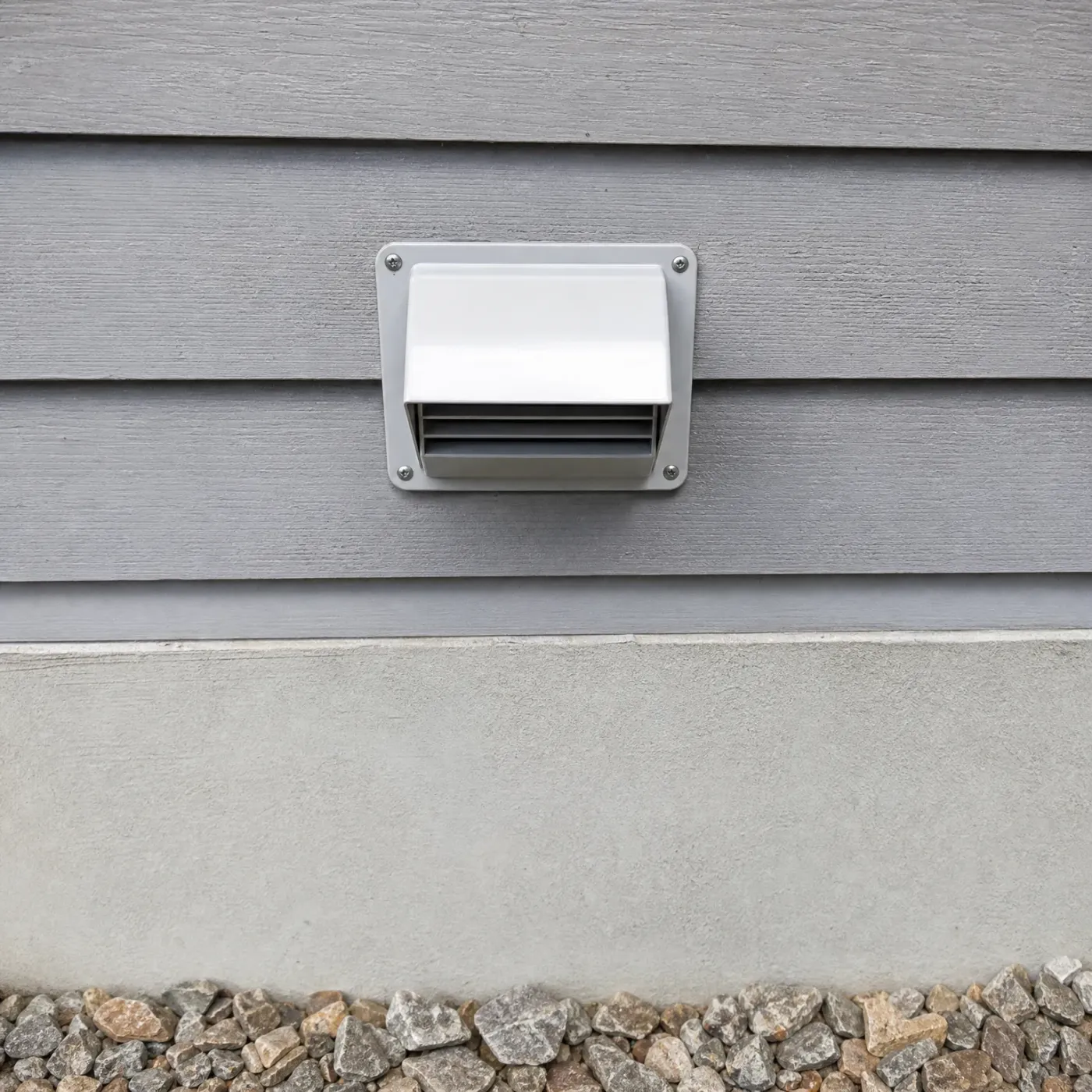
A clean vent sits flush against the siding and the flapper hangs loose, ready to swing open the moment the dryer starts.
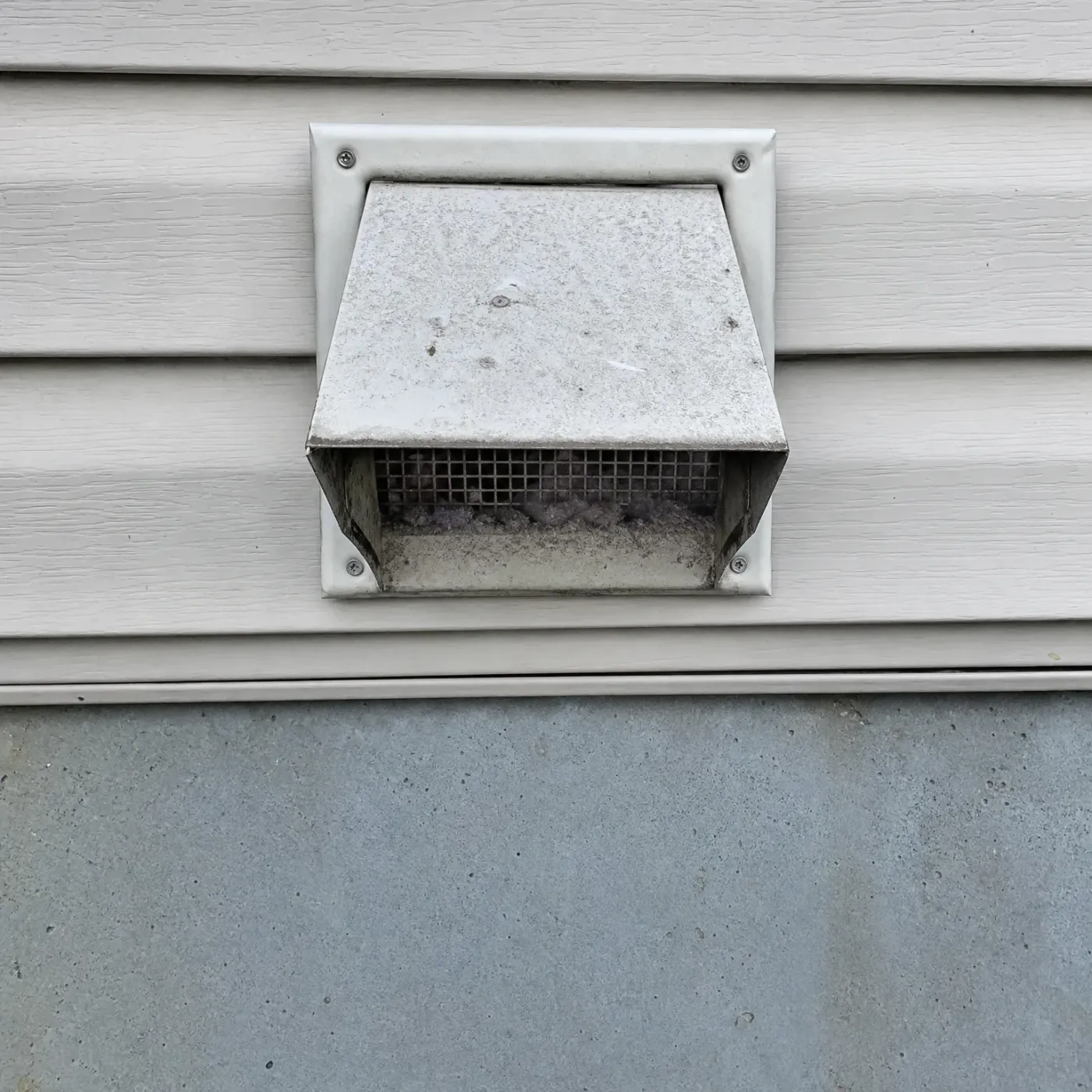
A hood packed with lint like this is already choking the airflow, and the duct behind it is likely worse.
How many loads is your vent actually clearing each week?
2.54 people per household on average
Dakota County households average 2.54 people, which usually means a dryer running most days, not once or twice a week.
Half the homes here were built by 1988
Half the homes in Dakota County were built in 1988 or earlier, old enough that the vent run may have been reworked or added to over the years.
Power here costs 16.38 cents per kilowatt-hour
At 16.38 cents per kilowatt-hour, a duct clogged with lint makes the dryer run longer to finish each load, and you pay for that extra time.
ACS 2020-2024 · EIA-861 2025
Vent clearing properly
This is what a clear vent looks like. The flapper sits closed but moves freely, and the screen behind it keeps birds and mice out without blocking exhaust. Air from the dryer should push that flapper open wide within seconds of starting a load.
Vent choked with lint
This hood is doing its job but barely. Lint has built up around the opening and across the louver, which means the duct behind it is carrying less air than it should. A dryer fighting this kind of blockage takes longer to dry and works harder every load.
Is your dryer actually telling you something right now?
A load that used to take forty minutes now runs an hour or longer, sometimes needing a second cycle to finish drying. The top of the dryer feels hot to the touch, or the laundry room itself warms up while it runs. Clothes come out hotter than they should, and you may catch a faint burnt smell, especially a few minutes in. Lint shows up around the drum seal or on clothes that should be clean. Outside, the vent hood's flapper barely moves, or doesn't open all the way, even on high heat. None of this is minor. A dryer working that hard to push air through a blocked vent is also pushing lint and heat somewhere it shouldn't go, and that's how house fires start.
Get matched with a dryer vent pro in Dakota County
The pro who gets in touch is licensed in Minnesota and works in Dakota County.
There's no charge for the request.
Gas dryers push out more
A gas dryer vents the byproduct of combustion along with the hot, moist air from your clothes, and that exhaust carries more volume through the duct than an electric dryer's does. Most homes in and around Lakeville heat and dry with gas, which means more is moving through that vent every time it runs. A blocked gas dryer vent is also worth watching closer, since a restricted duct can affect how the burner draws air. Electric dryers put out less exhaust, but lint still collects the same way and the duct still needs a clear path out.
Winter changes how it dries
Cold air holds less moisture, so during a Dakota County winter the air entering your dryer is drier than it is in summer, and a clear vent matters more for getting that humid exhaust out fast. A vent already narrowed by lint has less room to push that air through, and cold temperatures at the outside hood can make lint clump and stick rather than blow loose. Homes running the dryer daily through the coldest months often find the vent needs a check sooner than the one-year mark, simply because the exhaust has further to fight against to get outside.
Before you get your dryer vent cleaningAfter you get your dryer vent cleaning
1
A technician disconnects the dryer and pulls it away from the wall.
2
The duct is detached from the back of the dryer first.
3
A rotating brush feeds through the vent from the dryer end.
4
The brush works lint loose in sections as it travels toward the hood.
2.54 people per household on average
At 2.54 people, most Lakeville houses are running a dryer close to every day, not saving it for weekends. That steady pace feeds lint into the vent at a steady pace too, and the schedule should follow how your household actually uses the machine.
ACS 2020-2024
Your vent, your schedule
Once a year is the starting point, but the length and shape of your vent run moves that date earlier or later.
A gas dryer with a long or bent duct run can need clearing more than once a year to keep exhaust moving.
Drying times and a hot laundry room tell you more about your vent's condition than any date on a calendar.
A local contractor who clears vents all over Dakota County every season knows which runs clog fast and which don't.
Working with one licensed local contractor means a single visit from someone who knows your vent, not calls from several companies.
The right schedule is the one that matches how your household actually runs the dryer, not a number on a flyer.
Once a year is where to start, not where to stop. Your vent's length, how many bends it takes to reach outside, and whether you're running a gas dryer all push that date around. A straight run to a nearby wall can go longer between cleanings. A long run with a couple of turns, feeding a dryer that runs most days, usually can't wait that long. Your own dryer tells you which case you're in. Longer drying times, a laundry room that heats up, a dryer top that's hot to the touch, all of that means lint has already narrowed the path before the year is out.
A contractor who works on vents across Dakota County all season sees both kinds of homes and knows which runs clog fast. That's useful knowledge when it's time to set a real schedule instead of guessing. And when you request service through this page, it goes to one licensed local contractor, not a handful of companies competing for your callback. You get someone who can look at your actual setup, the length of the run, the number of bends, how often the dryer's running, and tell you what that specific vent needs.
There's no single right number for every house on your street. The one that matters is the one that fits how your household uses the dryer and how your vent is built. Getting that schedule right keeps the air moving the way it's supposed to.
Dryer Vent Cleaning
Find a dryer vent cleaning pro in Dakota County
Get matched with someone who does this kind of work in Dakota County.
Describe your dryer vent job, and a local pro who handles it gets in touch.
One request and the dryer vent cleaning stops waiting on you.
Once you send the form, finding a pro is off your list.
Skip searching for someone who cleans dryer vents in Dakota County.
Answer a few questions instead of calling shop after shop.
Your dryer vent cleaning request goes to one local pro.
Your request goes to one pro, not a list of companies.