







Minnesota HVAC Pros

How often to clean a dryer vent in Minnesota

A square stainless steel wall vent hood with a hinged flap cover and a round mesh-screened duct opening, shown centered against a plain light gray background.
I'm done searching

How often should I clean my dryer vent in Minnesota?

Your dryer still works fine, so it's easy to put this off. But lint builds up inside the vent pipe itself, not just the trap you clean out every load, and that part you can't see. You're running loads through a long winter and you want to know if once a year is enough, or if a house here needs it more often than that.

Once a year, every year

Clean the dryer vent once a year. Lint catches on every bend in the pipe, and over months it narrows the path air needs to escape through. A dryer that can't push air out has to run longer to dry the same load, and that strain is what wears out the heating element early. Minnesota homes run dryers hard through the cold months, more loads of heavy clothes, towels, bedding, so a vent that goes unchecked for two or three years can get flow-restricted faster than it would somewhere milder. If your dryer takes more than one cycle to dry a load, or the top of the machine feels hot to the touch, the vent is overdue regardless of the calendar.

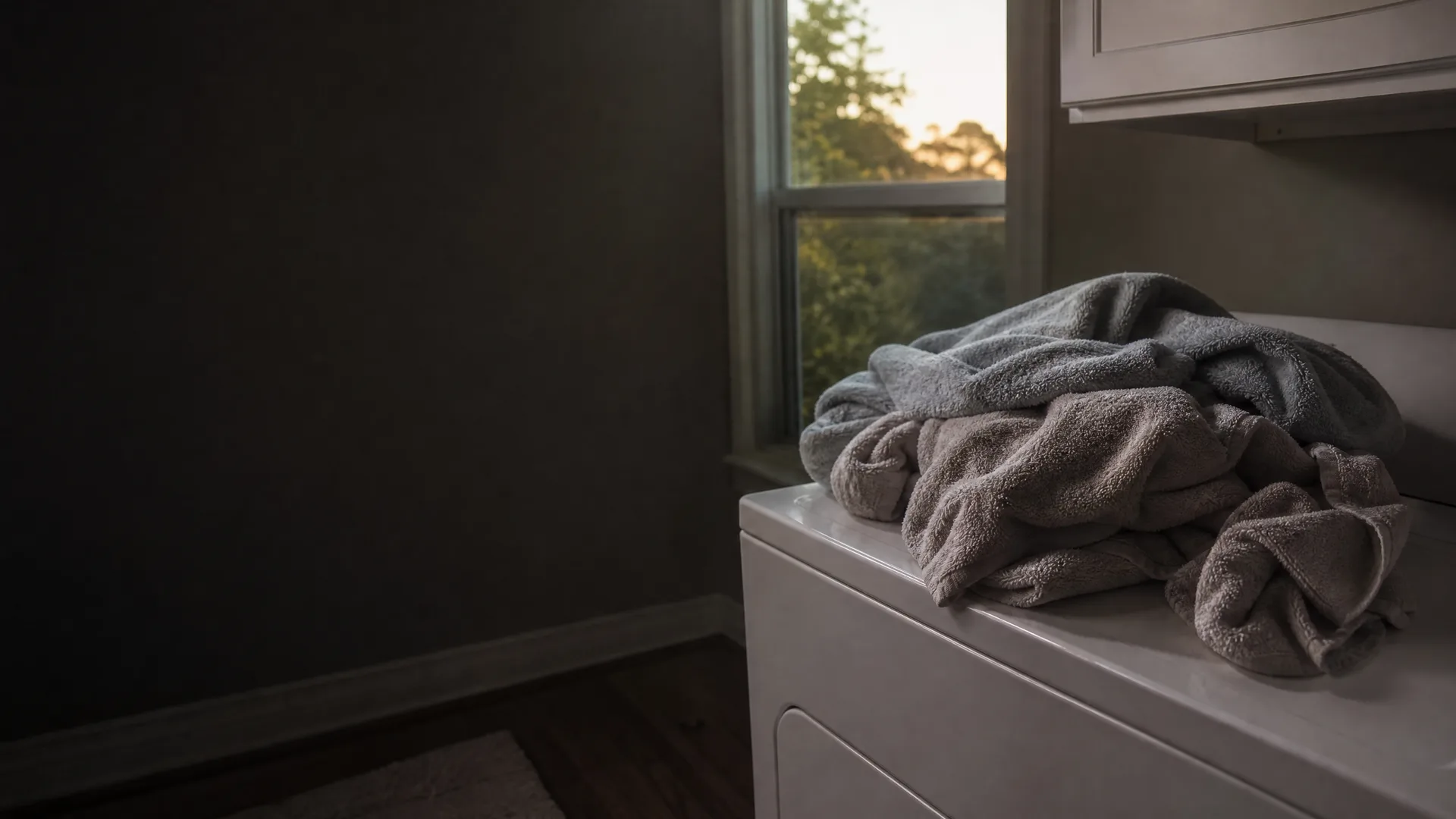
A pile of gray and taupe towels sits on top of a white laundry appliance in a dim room beside a window with trees and sunlight outside.

You're back from work, and the towels you ran before dinner are still sitting damp on top of the dryer. You run them again. Half an hour later, same thing, still damp at the folds. The room feels warmer than it should, a little close, and when you open the door the heat rolls out at you. Outside it's a mild Minnesota evening, nothing that should push the dryer this hard. You check the lint trap again even though you already cleaned it this morning. It's empty. Nothing to pull out. You stand there for a second, towels in hand, wondering what else there is to check.

Why does laundry take two or three runs now?

You've started running every load twice, maybe three times, just to get jeans and towels actually dry. The dryer gets hot to the touch on the top and sides, more than you remember from last year. The laundry room picks up a warm, dusty smell partway through the cycle. You might have noticed the outside vent hood barely moves when the dryer's running, where it used to flap or puff out air. Check the lint trap and it still fills up fine, which is why this is easy to miss. The part doing the work is the vent pipe behind the wall, and when it's packed with lint, the dryer has nowhere to push that hot moist air except back into your house, and heat has nowhere to go but to build up around the drum.

A metal hooded dryer or exhaust vent mounted with screws on gray horizontal lap siding, beside a plain off-white wall surface.

Why the vent itself clogs

The lint trap catches most of the lint, but not all of it. What gets past it rides the airflow down the vent pipe and sticks to the inside walls, especially at bends. Over time that buildup narrows the pipe until the dryer is pushing hot, damp air through a smaller and smaller opening. A straight, short vent run stays clearer longer than one with several turns, since lint settles wherever the airflow slows down or changes direction.

A white metal hooded exterior vent screwed to a square backing plate on light gray horizontal lap siding, with a blank off-white wall filling the left half of the frame.

What a clear vent looks like

Outside, the vent hood flap should swing open easily and close most of the way when the dryer is off. Lint caught in the flap, or a flap that stays open on its own, means airflow is weak. Inside, a full cycle should leave clothes dry and the vent hose warm but not hot to the touch. If you can pull the dryer out and see lint packed at the connection to the hose, there's more of it further down the line than you can reach.

Power costs 15.83 cents per kilowatt-hour statewide

A clogged vent makes the dryer run longer to finish the same load, and at 15.83 cents per kilowatt-hour that extra time shows up on your bill every month. A clean vent gets the air moving again, so the dryer shuts off when the clothes are actually dry instead of running a second or third cycle.

EIA-861 2025 statewide residential average

A smiling man in a dark navy sweater sits on a light sofa in a living room, with a glass bowl of popcorn on a wooden coffee table and bookshelves behind him.
A smiling man in a dark green sweater sits on a tan leather sofa in a dimly lit living room, with a bowl of popcorn in the foreground and a kitchen area blurred behind him.
A smiling middle-aged man in a dark shirt sits on a gray sofa in a living room, with a bowl of popcorn on a side table and shelves, a window and kitchen area behind him.
A smiling bearded man in a dark gray t-shirt sits on a gray couch in a living room, with a large glass bowl of popcorn on a wooden table in the foreground.

One request and it's handed off

Your dryer vent cleaning request goes to one local pro.

You only hire the pro if you want to.

Vent runs short and straight

Some setups have the dryer sitting right against an outside wall, so the vent run is just a few feet to the cap outside. Less pipe means less surface for lint to catch on, and no bends for it to build up behind. A run like this can go a couple of years between cleanings without giving you any trouble, especially if you keep the lint trap clear every load. If your dryer sits on an outside wall, this is probably you, and once a year is likely more than you need.


Vent runs long or turns

Other setups have the dryer in a basement or interior laundry room, so the vent travels farther to reach outside, often with one or more bends along the way. Every bend is a place lint catches and slows the airflow, and a longer pipe just gives lint more wall to stick to. If this is your setup, once a year may not be enough, and you'll likely notice the signs, longer dry times, a hot top panel, before a year is up. Check how your dryer is set up before you settle on a schedule.

A dusty white plastic dryer vent hood with lint-clogged louvers mounted on beige horizontal vinyl siding above a concrete foundation wall and a bed of rounded gray rocks.
Before you get your dryer vent cleaning
A white plastic louvered dryer vent hood mounted on beige horizontal lap siding above a concrete foundation wall bordered by gravel.
After you get your dryer vent cleaning

How Often Your Vent Needs Cleaning

  • Clean the vent once a year if it's a short, straight run with no bends to an outside wall.
  • Clean it twice a year if the run is long or has several bends, since lint catches at every turn.
  • Drying times creeping up to two or three runs per load is a sign the vent needs attention now, not later.
  • A dryer that's hot to the touch on top or sides points to restricted airflow inside the vent pipe.
  • Gas dryers push combustion byproducts out through the same vent, so a blocked pipe matters more than it does with electric.
  • A clean vent lets the dryer shut off on cue instead of running extra minutes that add up on the power bill.

Most homes in Minnesota do fine with a dryer vent cleaning once a year. That holds if your setup has a short, straight shot from the dryer to the outside wall. If your run is longer, or it has to turn a few corners to get outside, plan on twice a year instead. Lint catches at every bend, so more bends means more spots for it to build up between cleanings.

Your own dryer will tell you which schedule it's on before any calendar does. If towels and jeans are taking two or three runs to dry when one used to do it, that's lint narrowing the vent pipe right now. If the top or sides of the dryer feel hotter than they used to, that's the same problem, heat and moisture with nowhere to go but back into the machine.

For a gas dryer, this matters even more. The same vent carrying out moist air is carrying out combustion byproducts too, so a blocked pipe is a bigger deal than it would be on an electric unit.

None of this needs guessing once you know the shape of your vent run and whether drying times have crept up. Short and straight, once a year. Long or bent, twice. And if the dryer's already showing you signs, that's this season, not next one.

A woman in a dark gray sweater reclines on a couch with her eyes closed and a knit blanket over her lap, an open book resting face-down in front of her, with a lit table lamp and shelving blurred in the background.
A bearded man in a dark navy sweater over a collared shirt smiles and looks off to the side while seated at a dinner table with a glass of red wine, a lit candle, and a plate of food in the foreground of a dimly lit room.

Dryer Vent Cleaning

Done looking for a dryer vent pro

The pro who reaches out is licensed in Minnesota.

A black smartphone standing upright against a plain light gray background, its screen filled with solid green.
Duct and vent cleaningMinnesota
Step 1 of 3

What kind of equipment?


